







Which arabica coffee varieties shape the taste of Yunnan?
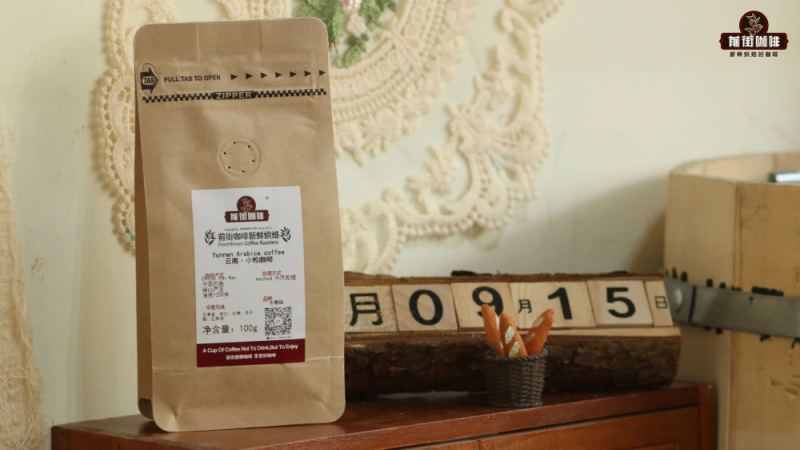
Yunnan coffee draws growing attention in the specialty scene, and the arabica varieties behind it explain much of its flavor. Typica, Bourbon, and Catimor make up the main genetic mix. Front Street's Yunnan daily drinking beans come from Baoshan, processed by the washed method, and show how variety and origin combine in the cup.
Baoshan's Lujiangba sits in a dry-hot river valley with frost-free warmth that shapes coffee flavor, and Xinzhai Village there is known as a major planting base. Washed and natural processing each steer the final profile, and cupping of Front Street Yunnan arabica and its 2013 Natural Typica shows how medium-roast extraction parameters bring those traits forward.
Yunnan coffee has attracted much attention in the specialty coffee circle in recent years, and more and more people are beginning to explore the "taste of Yunnan" that belongs to this land. Starting from the selection of Front Street's daily drinking beans, this article provides an in-depth analysis of the variety composition of Yunnan arabica coffee—the origins and differences among Typica, Bourbon, and Catimor—sorts out the influence of the unique terroir conditions of the dry-hot river valley in Lujiangba, Baoshan, on coffee flavor, and discusses how washed and natural processing methods shape the original character of Yunnan beans. At the same time, the article will also share the cupping flavor performance of Front Street Yunnan arabica daily drinking beans and Front Street 2013 Natural Typica, as well as recommended pour-over extraction parameters for medium-roast Yunnan beans, helping coffee lovers fully understand the complete picture of Yunnan arabica coffee from origin to cup.
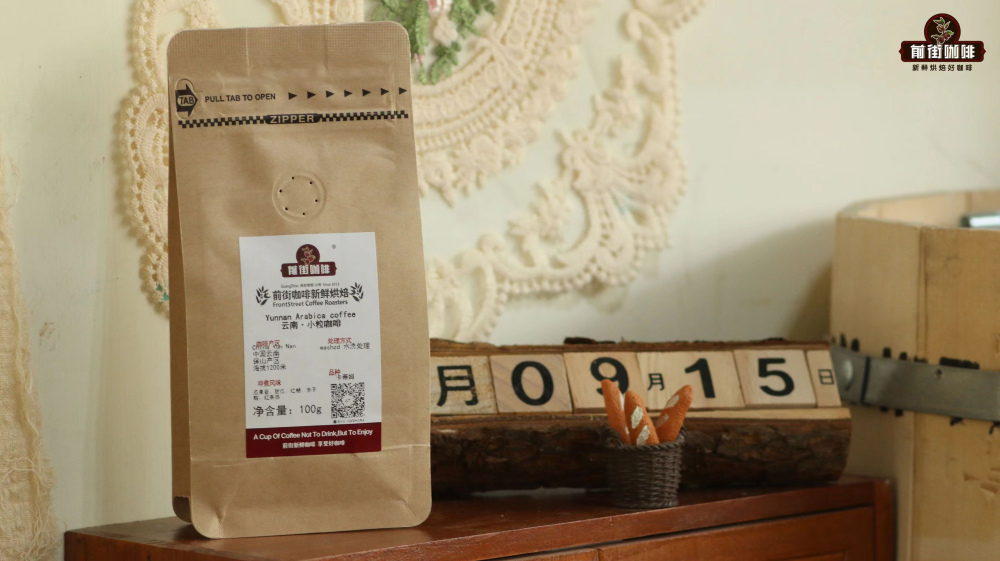
In recent years, Yunnan coffee has gradually entered the public eye, and more and more coffee lovers want to know and understand what the "taste of Yunnan" really is. As domestically produced coffee, Front Street also hopes everyone can taste the charm of "domestic coffee," so it has included Yunnan arabica in its small-package daily drinking bean series. Front Street's daily drinking beans feature 7 classic origins, covering multiple representative producing regions and varieties, and use the natural processing methods customary in each origin to present the unique flavor character of each place. Front Street's Yunnan daily drinking beans come from the place where "arabica" made its name—the Baoshan producing region—and are processed by the washed method.
The terroir and climate of the Baoshan producing region
Baoshan is one of the earliest producing regions in Yunnan to develop coffee cultivation. Lujiangba has the largest coffee planting base in the country, among which Xinzhai Village is known as "China's No. 1 Coffee Village." The villagers' hills are full of coffee trees, coffee beans are dried in the courtyards, and the aroma of coffee fills the houses. The local frost-free warm climate throughout the year provides a nourishing and comfortable growing environment for coffee trees. In particular, the unique dry-hot river valley climate around Lujiangba has little temperature difference throughout the year, but a significant temperature difference between day and night, so the ripening period of coffee cherries is extended, allowing more abundant flavor compounds to develop. Fertile soil combined with reasonably low rainfall provides sufficient irrigation conditions for crops. Good mountains and good water have created the characteristics of coffee beans here: little pulp and a clear, sweet taste.
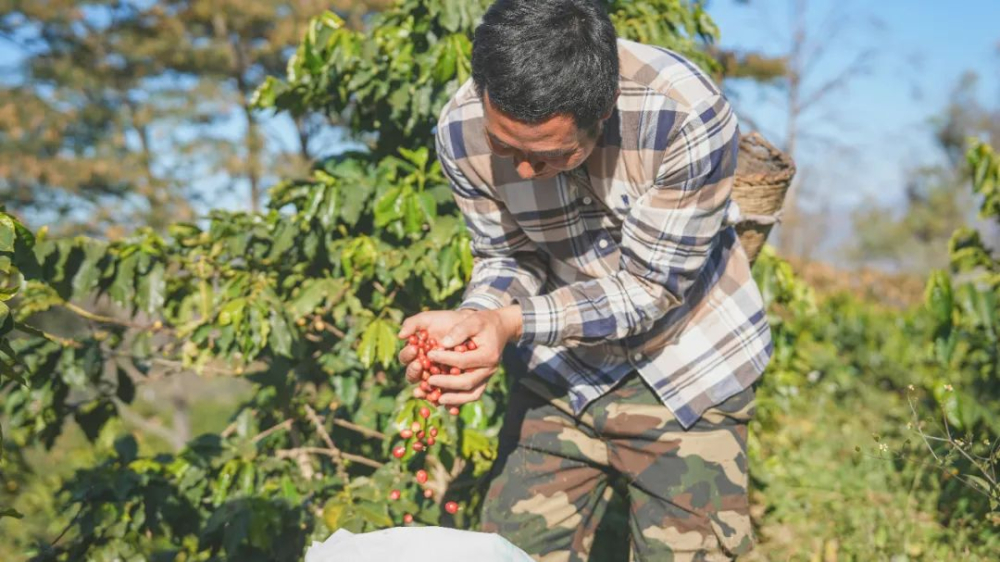
Yunnan's coffee trees are usually planted on mountainous and sloping land, tier upon tier, and the terrain is unsuitable for mechanical harvesting, so everything relies on manual labor. Similar to most coffee-producing countries, Yunnan harvests one season each winter, with the concentrated harvest period from November to March of the following year. Coffee cherries gradually ripen and turn red in the mountains, and the busy figures of farmers are scattered across the slopes, hand-picking arabica coffee.
What is "arabica"?
"Arabica" refers to the Arabica varieties with smaller beans among coffees, in contrast to the medium-bean Robusta coffee planted in Hainan. The coffee trees initially introduced to Yunnan were the two pure Arabica species Typica and Bourbon, among which the ancient Typica is widely recognized as a high-quality variety. The famous Jamaican Blue Mountain coffee belongs to the Typica variety, with a rich aroma and a delicate, diverse flavor, but its yield is extremely low, and it is susceptible to rust disease, requiring more manpower for management. After all, coffee is a crop on which Yunnan farmers depend for their livelihood. If the yield is too low, income cannot be guaranteed, and cultivation is difficult to sustain, so most Yunnan farmers switched to planting a higher-yielding variety: Catimor.
Although Catimor is classified as an Arabica variety, genetically speaking it carries 25% Robusta ancestry. Robusta itself has a higher chlorogenic acid content and is less susceptible to pests and climate influences. It is usually planted at low altitudes, has high yield, and its fruit ripens quickly. The "picky" Arabica plant, however, has weaker disease resistance and relatively lower yield per plant. The significant day-night temperature difference brought by high-altitude environments delays the fruit's ripening period, enabling coffee cherries to absorb more nutrients and form a richer aroma. The microclimates of each coffee-producing region provide Arabica with diverse growing conditions, creating unique flavors and mouthfeels.
Catimor inherits the characteristics of Robusta: strong disease resistance and high yield. After roasting, the coffee beans carry abundant oils, while also carrying the "devil's flavor" of Robusta. Its cupping flavor performance is often inferior to pure Arabica varieties grown at the same altitude, such as Caturra. In addition, Catimor's rust resistance gradually declines after 20 to 30 years. If Yunnan wants to improve overall coffee quality, it needs to gradually change varieties. In recent years, many new varieties have appeared in Yunnan one after another, such as the world-famous Geisha. It is believed that after a few years, we will be able to see more high-quality coffee varieties produced from Yunnan.
What processing method is used for Yunnan arabica?
Some friends, after tasting Yunnan coffee beans processed with special processing methods, find the aroma particularly prominent and therefore think this is the taste of Yunnan coffee. In fact, most Yunnan coffee farmers work under difficult conditions and do not have expensive processing equipment, so the vast majority of Yunnan coffee beans can only use natural processing methods, namely washed and natural. Novel post-processing methods can indeed add a lot of aroma to coffee beans, but Front Street believes that if you want to taste the most original flavor of Yunnan coffee, the washed process not only reduces the defect rate, but the Yunnan coffee produced is also more stable in quality. In terms of flavor, it reduces the earthy and miscellaneous notes of Yunnan coffee while improving the overall cleanliness of the cup.
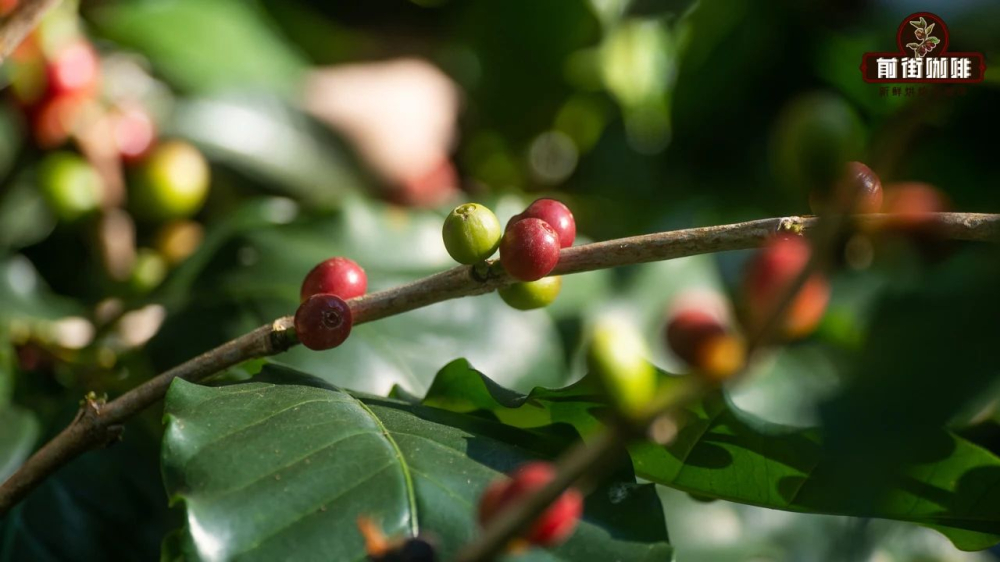
Front Street also has a rather popular coffee bean, "Front Street 2013." From the name, it is not hard to guess that this is an exclusive Front Street product. The bean comes from Front Street's own estate in Lincang, Yunnan. It uses the elegant-flavored Typica variety and adopts the natural sun-dried processing method, giving the coffee higher sweetness. When November arrives, the coffee fruits grown by Front Street also gradually ripen. Front Street arranges workers to pick red coffee cherries one by one and spreads the fresh coffee fruit under the sun to dry naturally, turning it from time to time so it dehydrates evenly and avoids negative flavors from over-fermentation. After the coffee beans have dehydrated to a purplish-red color and reached the target moisture content, they are sent for hulling and roasting.
Front Street Yunnan arabica coffee is medium roast
Front Street believes that the flavor of Yunnan arabica belongs to a neutral, balanced character, that is, possessing acidity, sweetness, and bitterness at the same time. Therefore, Front Street's own-roasted Yunnan coffee all uses medium roast, highlighting the roasted aromas of chocolate and nuts while retaining some acidity.
Front Street Yunnan arabica daily drinking beans Cupping flavor: nuts, herbs, sweet potato, melon, brown sugar, cream, plum, caramel. Balanced mouthfeel and a sweet, clean finish.
Front Street 2013 Natural Typica Cupping flavor: caramel, nuts, chocolate, fermented notes, berries, black tea, sugarcane. Medium-high body, clean mouthfeel, black tea finish, rich and varied layers.
Front Street brewing suggestions
Pour-over black coffee is the extraction method Front Street stores produce daily, and it is also a method many coffee lovers can easily operate at home. Below, Front Street brews a cup of Front Street's own-roasted Yunnan arabica daily drinking beans in the store's production style. Considering that Yunnan arabica coffee tends toward a balanced mouthfeel, meaning it should not have excessively high acidity or heavy bitterness, Front Street uses a V60 dripper with a medium-fine grind size and a medium water temperature for extraction.
Front Street uses corresponding parameters when brewing different coffee beans: for darker-roasted coffee beans, such as Mandheling coffee and Brazil coffee, Front Street uses a water temperature of 87 to 88 degrees Celsius and a medium-coarse grind size; for lighter-roasted coffee beans, such as Ethiopian Yirgacheffe and Panama Geisha coffee, Front Street uses a high temperature of 91 to 93 degrees Celsius and a medium-fine grind size to bring out the aroma of high-altitude hard beans. Returning to the brewing of Front Street Yunnan arabica coffee, Front Street uses medium water temperature and grind to highlight the neutral and balanced mouthfeel.
Brewing parameters:
Dripper: hario v60
Dose: 15g
Water temperature: 90 degrees Celsius
Grind size: 75% passing through a No. 20 sieve
Water-to-coffee ratio: 1:15
Three-stage pouring: use twice the coffee powder's weight in water to wet the coffee bed, forming a dome, and let it bloom for 30s. Then pour in a small stream in circles from the inside out until 125g, pause, wait for the coffee bed to drop to half the height of the dripper, continue pouring the third stage with the same thin stream until 225g, and after all the coffee liquid has filtered through, remove the dripper. The time is about 2 minutes.
For professional coffee knowledge exchange and more coffee bean information, please follow Coffee Workshop (WeChat public account cafe_style)
For more specialty coffee beans, please add the private WeChat Front Street Coffee (FrontStreet Coffee), WeChat ID: qjcoffeex
The above content is compiled by CoffeeHunters, a coffee news website.


