







Why Does an Iced Americano Taste Sour?
Sourness in an iced Americano does not mean the beans have gone bad. What shapes the cup is the terroir of the coffee's origin and the roast level. Beans roasted darker, as chain shops often do, deliver a consistent bitter, heavy profile, while lighter roasts keep more of the fruit acids that read as citrus or berry notes in the cup.
The drink itself is a diluted espresso, an espresso shot cut with water, and the story behind the name ties back to American soldiers in Europe during World War II who found Southern European coffee too strong. The third wave of specialty coffee pushed roasts lighter, so a sour iced Americano is often a deliberate quality expression rather than a flaw.
Many friends who are just getting into coffee, upon tasting an iced Americano with a sour note for the first time, often suspect the beans have gone bad. In reality, sourness in coffee has no direct connection to bean quality; what truly determines it is the terroir of the coffee's origin and the roast level. This article will analyze why iced Americano tastes sour, tracing the history of Americano from its origins to the influence of the third wave of specialty coffee on roasting trends, and, using examples from Front Street Coffee's offerings, explain when sourness is a normal and quality flavor expression, while also providing practical ordering advice to help everyone more confidently find the cup that suits their taste.
Many coffee beginners start with instant products, and when they first walk into Starbucks and face a wall of menu options, they can't help but feel a bit lost—fortunately, there's always a familiar name: Americano. And compared to the hot version, the iced Americano seems even more favored; whether in freezing winter or scorching summer, it delivers a crisp, refreshing, palate-cleansing experience.
As for the origin of Americano, the most widely circulated story relates to World War II: American soldiers stationed in Europe couldn't get used to the intense coffee of Southern Europe, so they diluted espresso with water; locals, disapproving of this practice that made it as weak as plain water, called it "Americano."
However, the prototype of Americano may have appeared even earlier. In the late 1920s, writer Somerset Maugham included a character in his play who orders an Americano, though the book never explains how this coffee was actually made.
Although in the eyes of some espresso enthusiasts, Americano is as bland as water, this hardly prevents it from having a large following. The general public's fixed impression of coffee flavor often stops at bitterness; however, some coffee novices, after tasting an iced Americano from Front Street Coffee, while marveling at its distinctive flavor, also became puzzled: the Americanos I've had before were all bitter—why is today's sour? Could the beans be bad?
In fact, this is related to the coffee beans themselves, not spoilage—the key lies in differences in origin and roast level. Espresso beans used by chain brands like Starbucks are typically roasted darker; dark roasting ensures consistent output and extends shelf life, but at the cost of gradually erasing the origin's individuality, instead presenting more prominent nutty, dark chocolate notes, even a burnt bitterness.
After World War II, the quality of green coffee beans improved significantly, and roasting equipment and techniques also underwent considerable advancement. As the third wave of specialty coffee swept the globe, enthusiasts increasingly valued origin terroir; to preserve the beans' original fruity sweetness and elegant aromas, the overall roasting direction shifted toward medium-light levels.
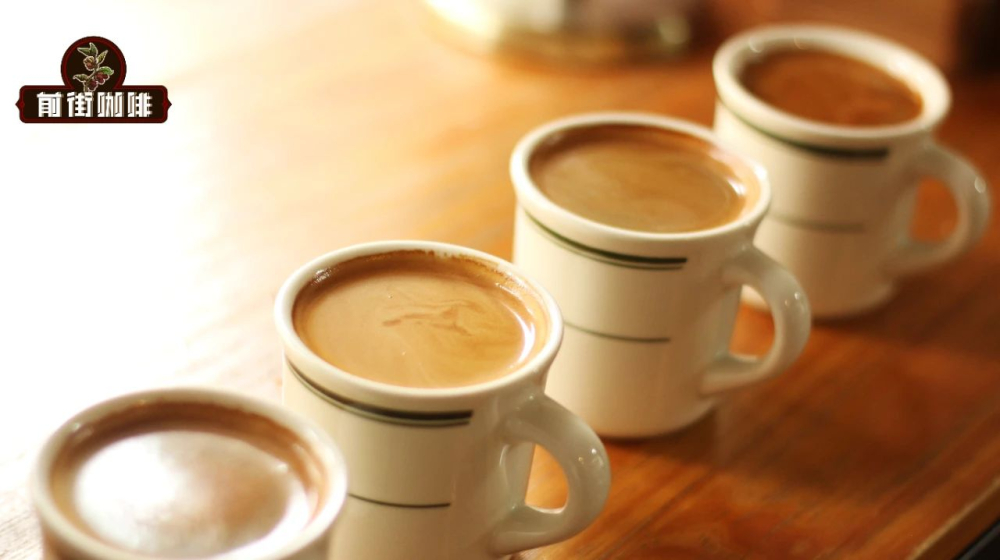
Additionally, some specialty cafés use single-origin beans to extract SOE for making Americano. Since the espresso extraction method magnifies the bean's flavors exponentially, the individuality of single-origin beans inevitably stands out—for example, Ethiopian beans, when extracted as espresso, are distinctly sour.
Of course, for extraction stability, most cafés still use blended beans for espresso. But as long as African-origin beans are included in the blend, the resulting iced Americano will also have sourness. So, encountering a sour iced Americano in a café is normal, and the probability is not low.
Front Street Coffee previously mentioned in an article discussing coffee flavors that sourness itself is not a bad thing, but it must be distinguished. Quality acidity should resemble the tartness of fruit juice; if it tastes sharply pungent, then it's basically certain that something went wrong in the extraction process.
Similarly, the sourness in iced Americano is the inherent flavor of the coffee beans themselves; sourness is perfectly normal and safe to drink—it's not that the beans have gone sour. If you really don't like it, before ordering, ask the staff: how dark are the beans roasted, which origin are they from, will it be on the sour side? This way you can effectively avoid pitfalls. May everyone find the cup of coffee that suits their taste.
The espresso drinks served at Front Street Coffee's stores use a product called "Sunflower Warm Sun Blend Coffee Beans." The blend consists of 70% Honduran Sherry coffee beans and 30% Ethiopian natural Yirgacheffe.
Among them, the Honduran Sherry beans are first refined-washed, then placed in sherry whisky barrels for low-temperature fermentation for 30 to 40 days; the whisky aroma compounds in the barrels seep into the green beans, giving them vanilla cream and boozy notes.
The Ethiopian natural Yirgacheffe, processed naturally, injects berry-like fruity acidity into the espresso, with even more prominent sweetness.
Before official service each day, Front Street Coffee's baristas calibrate the espresso extraction parameters based on the day's temperature and humidity. After adjustments, Front Street Coffee uses the Galileo Q18 espresso grinder at a grind setting of 1.5 to grind 19.7 grams of coffee grounds, paired with a Lelit Bianca V3 espresso machine, extracting 38 to 40 grams of espresso liquid in 30 to 32 seconds.
Americano needs no sugar or milk—just dilute the espresso with water in a certain ratio—making it a member of the popular black coffee (plain coffee) family.
When making hot Americano, Front Street uses a 1:4.5 ratio; at this ratio, the Warm Sun Blend's boozy, vanilla, and chocolate flavors are better presented, and the mouthfeel remains rich.
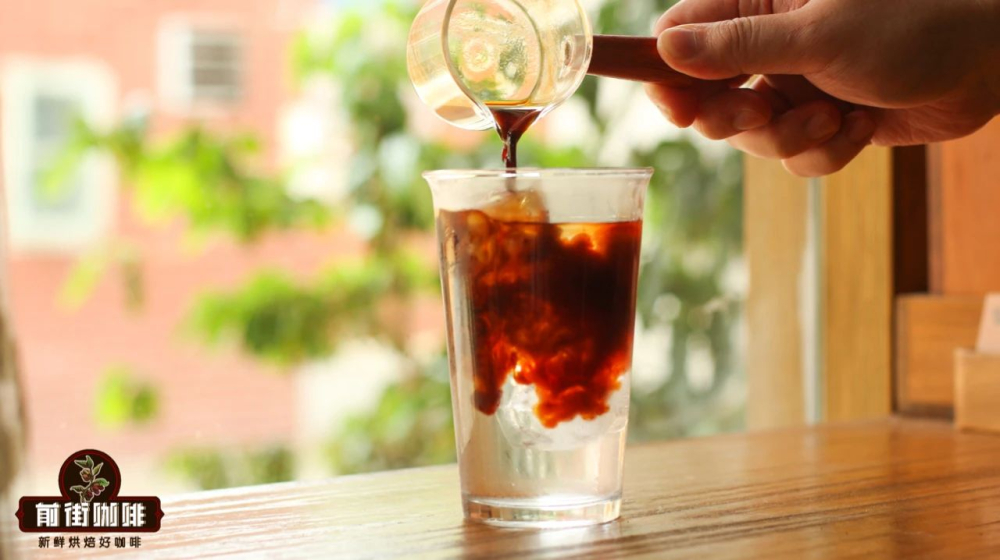
When making iced Americano, considering ice retention and the effect after ice, water, and coffee merge, Front Street opts for larger ice cubes (25g each), ultimately serving at a ratio of 1:2.5:3 espresso:ice:water. This way, the first sip isn't overpowering due to excessive strength, and the ice melts more slowly, so it won't quickly become diluted.
For more coffee bean information, please follow Coffee Workshop (WeChat public account: cafe_style)
For professional coffee knowledge exchange, please add WeChat ID: kaixinguoguo0925
The above content is compiled by CoffeeHunters, a coffee news website.


