







What grade is Blue Mountain coffee and who should buy it?
Blue Mountain coffee sits in the high-end specialty tier. Authentic beans come from Jamaica's Blue Mountains, where coffee grows below about 1,700 meters under frequent cloud cover, high humidity, and volcanic soil. The Jamaica Coffee Industry Board grades beans by altitude and screen size, and only Arabica grown in defined areas qualifies.
The Typica variety and washed processing give the cup its clean, mild character. Grown at roughly 910 to 1,700 meters, Jamaican Blue Mountain No. 1 from estates such as Clifton Mount commands high prices, which pushed counterfeits onto the market and makes verified sourcing important. Black coffee brewed from it is also noted for supporting metabolism and digestion.
What grade does Blue Mountain coffee actually belong to, and who is it suitable for? This article starts with the growing conditions of Jamaica's Blue Mountain range, sorts out the grading of Blue Mountain coffee, the characteristics of the Typica variety and the washed processing method, and introduces the Clifton Mount Estate Blue Mountain No. 1 on Front Street Coffee's bean list. The article will also explain changes in purchasing channels for Blue Mountain coffee, the benefits of black coffee for metabolism and digestion, and Front Street's standard pour-over parameters and brewing steps, helping you understand this high-end specialty coffee's flavor and positioning more comprehensively.
Baristas at Front Street Coffee are often asked the same question: "What grade is Blue Mountain coffee, really?" In Front Street's view, Blue Mountain coffee can be classified as a high-end specialty coffee. In earlier years, most people had only heard its name but never actually tasted it. At that time it was almost synonymous with luxury—small circulation on the market, strong demand, and naturally high prices over the long term. Precisely because of this, all kinds of counterfeit low-quality beans emerged endlessly. Front Street believes that against this backdrop, learning to identify authentic Blue Mountain coffee is especially important.
The source of authentic Blue Mountain coffee
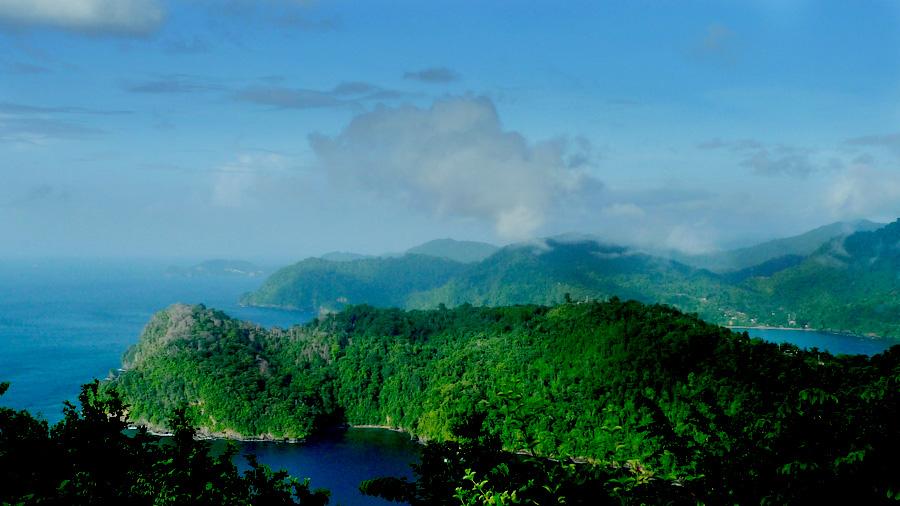
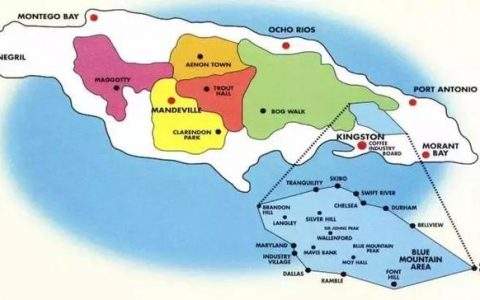
Blue Mountain coffee in the true sense is produced in Jamaica's Blue Mountains. The highest peak of the Blue Mountains reaches 2,256 meters above sea level, and coffee cultivation is generally concentrated below 1,700 meters, while areas above that are designated as ecological reserves. Precisely because the area has long been carefully maintained, the Blue Mountains themselves are also a well-known tourist destination. Jamaica is located in the tropics, and coffee trees are scattered throughout the Blue Mountains. The air here is clean with little pollution, humidity is relatively high, and the temperature is around 27 degrees. Clouds and mist are frequent throughout the year, providing shade for the coffee trees. Combined with fertile volcanic soil, this is what gives rise to outstanding Blue Mountain coffee beans.
The grading of Jamaican Blue Mountain coffee
According to the regulations of the Jamaica Coffee Industry Board, only Arabica varieties grown at altitudes between 910 and 1,700 meters are eligible to bear the name Jamaican Blue Mountain Coffee; coffee grown at lower altitudes can only be called Jamaican High Mountain Coffee or Jamaica Prime Coffee.
In addition, Jamaican Blue Mountain coffee is further subdivided into No. 1, No. 2, No. 3, and PB according to bean size and defect ratio. Among these, No. 1 is the highest grade, requiring that in a 300-gram green bean sample, bean size reaches above 17 screen, the defect rate is below 2%, and the moisture content is about 13%, with an appearance that is plump and uniform.
The variety of Jamaican Blue Mountain coffee
Jamaica's terrain is full of ridges, and the plantable area is limited, so production is naturally not high. Therefore, the local government has focused on improving coffee quality. Jamaican Blue Mountain coffee belongs to an old, high-quality Arabica variety—Typica. The most ideal state for Typica is to be grown in a high-altitude environment, where it can present a pure and clean flavor and possess a balanced mouthfeel.
Typica plants are taller than many other coffee varieties, with slender branches that extend outward in all directions. Because of this, Typica cannot be planted densely; it requires more space and also reduces the room available for planting other coffee varieties or crops, which means management requires more time and labor. In addition, Typica has low yields, with each plant producing 20% to 30% less fruit than Bourbon varieties. This is also why many coffee farmers who pursue yield give up planting Typica.
Once weather disasters or pests and diseases occur, the yield of Typica coffee drops further sharply. However, under local people's reasonable cultivation and management, Blue Mountain coffee shows sweet flavors and a smooth mouthfeel in cupping, and the high returns also make growers feel these efforts are worthwhile.
The processing method of Blue Mountain coffee
The Jamaican Blue Mountain No. 1 coffee on Front Street's bean list comes from Clifton Mount Estate, which is certified by the Jamaica Coffee Board. Clifton Mount Estate has a high-altitude growing environment and a long history of coffee production, having produced coffee since the mid-eighteenth century, and its skills in processing Blue Mountain coffee green beans are quite mature. Jamaican Blue Mountain coffee is usually processed by the washed method.
Farms using the washed method must build washing channels and be able to continuously introduce fresh water, so they are mostly larger-scale farms. During processing, the skin and pulp are first removed, then the beans are fermented for 12 to 18 hours. After fermentation is complete, the beans are placed in channels and pushed back and forth. Through the friction between the beans and the force of the water flow, the coffee beans are washed until smooth and clean. After washing, the moisture content of the coffee beans is about 50%, and they must be dried in the sun until the moisture content drops to 12% to 14%. The beans are then sorted and stored in special warehouse stacks. All these steps must be strictly controlled, otherwise the coffee quality will be affected.
Although with changes in coffee market trends, a small number of natural-process Blue Mountain coffees have also appeared on the market, Front Street still believes that washed Blue Mountain coffee best displays the classic Blue Mountain flavor.
Where to buy Blue Mountain coffee
In the 1960s, Jamaica signed a 30-year agreement with Japan. In return for investment help from Japan's UCC Company, Jamaica supplied 80% of the quota of high-quality Blue Mountain coffee to Japan, with the proportion even higher at its peak, while the remaining quota was distributed to European and American countries. This made it very difficult for other regions to buy genuine Blue Mountain coffee, and even if they could drink it, the price was extremely high. Now that this agreement has expired, Jamaica has distributed Blue Mountain coffee quotas to more countries and regions. Many enterprises in our country have also signed agreements with Jamaica to directly import Blue Mountain coffee, so it is no longer difficult to drink genuine Blue Mountain coffee domestically.
The Jamaican Blue Mountain No. 1 coffee purchased by Front Street has green beans loaded in wooden barrels. The barrels are printed with words such as "Jamaican Blue Mountain Coffee" and "Clifton Mount Estate," and also bear the green frog logo of Rainforest Alliance certification, as well as a certificate issued by the Jamaica Coffee Board.
Front Street Coffee: Jamaican Blue Mountain No. 1 coffee beans
Region: Jamaica Blue Mountain
Altitude: 1310m
Processing method: Washed
Variety: Typica
Flavor: Dark chocolate, nuts, cream, cocoa
How to drink Jamaican Blue Mountain No. 1 coffee
For high-quality coffee like Blue Mountain coffee, which has a rich aroma and balanced flavor and mouthfeel, Front Street believes that drinking it as black coffee best presents its optimal flavor.
Black coffee refers to coffee with no milk or sugar added, such as common pour-over coffee and Americano. Drinking black coffee in moderation not only refreshes the mind, but can also help promote human metabolism and effectively break down body fat; drinking black coffee after a meal also helps digestion. Front Street would like to remind everyone here that coffee generally should not be consumed in excess, and it is best to keep it within 2 to 3 cups per day. Drinking too much can easily cause reactions such as gastrointestinal discomfort or palpitations.
Below, Front Street brews a Jamaican Blue Mountain No. 1 coffee once according to the store's pour-over standard, for everyone's reference.
Blue Mountain coffee is of very high quality, but ultimately it is still an agricultural product, so freshness is crucial, including both the freshness of the green coffee beans and the freshness of the roasted product. Front Street currently purchases green Blue Mountain No. 1 coffee beans from the latest harvest season, and all shipments are coffee beans freshly roasted within 5 days. Coffee beans enter their best tasting period 4 to 7 days after roasting, so by the time everyone receives them, they are usually just right for brewing and tasting.
Because Blue Mountain coffee's flavor leans toward nutty and cocoa notes, Front Street chooses a medium-dark roast to highlight a richer chocolate and nut aroma. When brewing mellow coffee beans like Blue Mountain, Front Street uses a KONO dripper. When the KONO dripper fits closely with the filter paper, the flow rate slows down, extending the contact time between hot water and coffee grounds and forming immersion-style extraction, making the coffee richer.
Dripper: KONO
Water temperature: 88°C
Grind size: 75% passing a No. 20 standard sieve
Coffee-to-water ratio: 1:15
Coffee dose: 15 grams
First wet the KONO dripper so the filter paper fits more closely to the dripper, pour out the water in the server, and at the same time add 15g of coffee grounds to begin three-stage extraction. Bloom with 30g of water for 30s, then pour in a small stream in circles from the center until reaching 125g, where the first stage begins; when the coffee bed drops to half the height of the dripper, pour the second stage in the same manner until reaching 225g; after all dripping is complete, remove the dripper.
The pour-over Blue Mountain No. 1 coffee enters the mouth with dark chocolate and nutty flavors, mellow and smooth, not too strong, with a clean mouthfeel and soft acidity, overall very balanced.
For professional coffee knowledge exchange and more coffee bean information, please follow Coffee Workshop (WeChat public account cafe_style)
For more specialty coffee beans, please add the private WeChat of Front Street Coffee, WeChat ID: qjcoffeex
The above content is compiled by CoffeeHunters, a coffee news website.


