







How long does a moka pot take to brew, and why does it taste burnt?
A moka pot brews by steam pressure, pushing hot water from the lower chamber up through the coffee bed in the filter basket and into the upper chamber. There is no single fixed time; the brew is done when the flow lightens in color, slows to a sputter, and the upper chamber is full. Leaving it on the heat past that point is what produces burnt, bitter coffee.
Most weak or scorched results come from a few controllable factors. Use fresh dark-roasted beans, fill the lower chamber to just below the safety valve, level the grounds in the basket without heavy tamping, and keep the flame low. Grind setting matters too, since too fine a grind chokes the flow and too coarse a one runs thin. Two Front Street beans are suited to the moka pot for a full-bodied cup.
More and more coffee lovers are drawn to moka pots by the outdoor camping trend, but in practice they often run into problems of weak or burnt-bitter coffee. From the perspective of Front Street Coffee, this article systematically explains the moka pot's construction and principles, the key conditions for producing crema, suitable coffee bean choices, and the complete process from grinding to heating. Key points include: why to choose fresh dark-roasted beans, how to gauge the water level in the lower chamber, how to control the pressure when filling and tamping the filter basket, and how to judge flame strength and when to turn off the heat, plus recommendations for two Front Street beans suited to moka pots, helping you consistently make a rich, full-bodied espresso at home or outdoors.
For professional coffee knowledge exchange and more coffee bean information, please follow Coffee Workshop (WeChat public account: cafe_style)
For more specialty coffee beans, please add the private WeChat of Front Street Coffee (FrontStreet Coffee), WeChat ID: qjcoffeex
Many friends bought a moka pot on impulse after scrolling past photos of camping coffee on social media. But once they actually try it, they find it's far less hassle-free than imagined—the coffee comes out either bland and tasteless or with a burnt bitterness, rarely meeting expectations. In this article, Front Street Coffee (FrontStreet Coffee) walks you through the specific usage of the moka pot.
The Structure and Extraction Principle of the Moka Pot
The moka pot relies on steam pressure to accomplish pressurized siphon extraction. It's suitable for camping or home settings because as long as you have a heat source on hand, you can get a fairly concentrated coffee liquid, which you can then dilute with water or milk to adjust to personal taste.
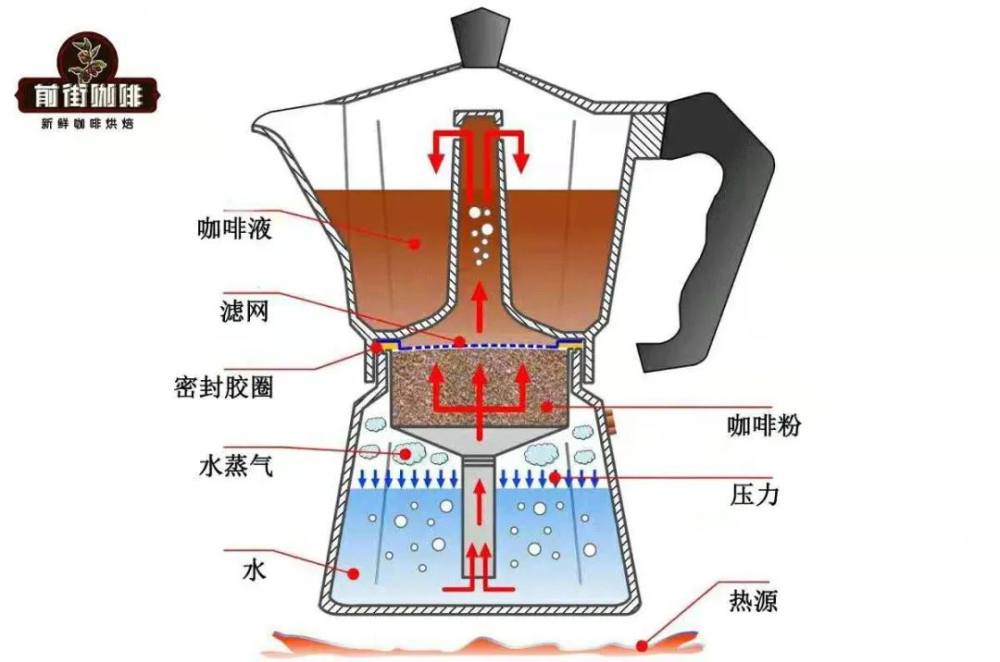
The whole pot can be disassembled into three parts: the lower chamber holds water, heats it, and serves a pressure-release function; the middle is the filter basket that holds the coffee grounds, with a metal channel connecting the upper, middle, and lower parts; the upper chamber collects the extracted coffee liquid.
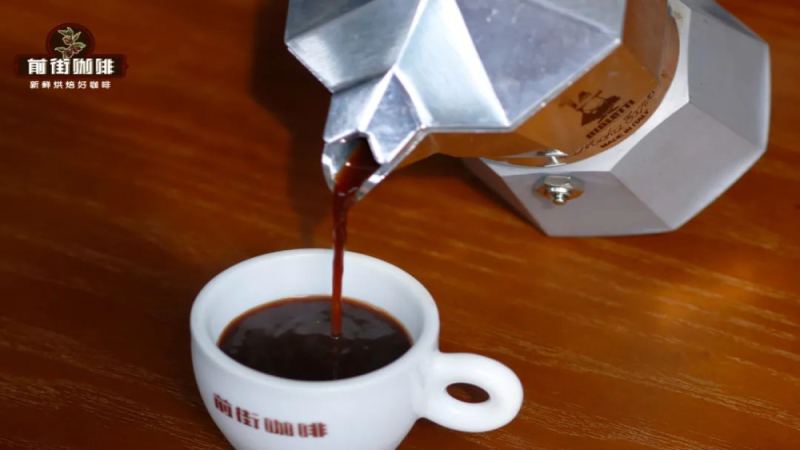
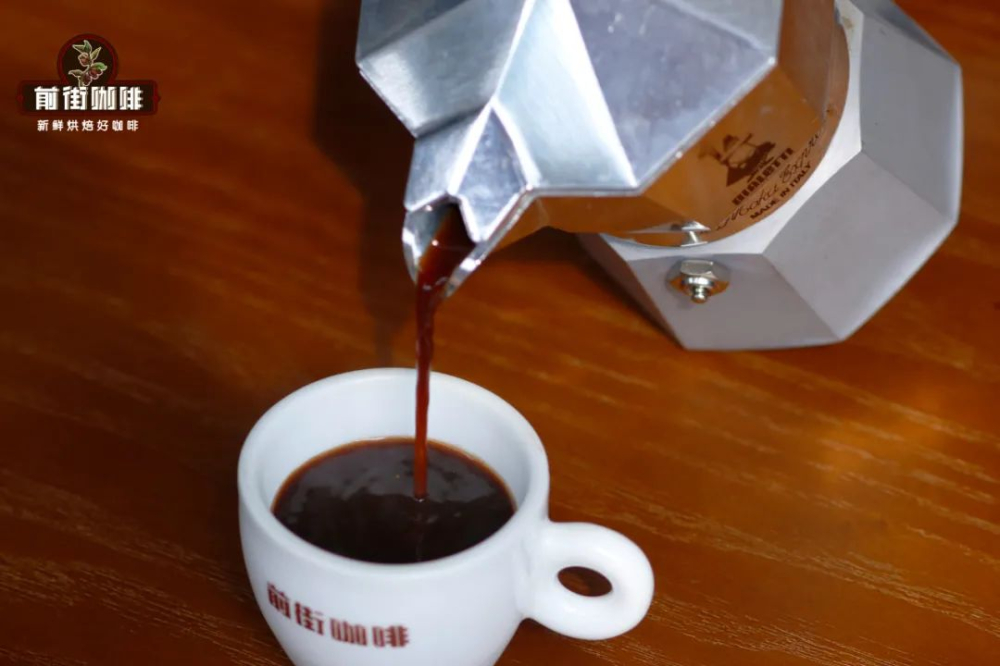
After the lower chamber is heated, the water temperature rises and continuously generates steam within the sealed space. Hot water is pushed upward along the central metal tube, passes through the fine layer of coffee grounds in the filter basket, and finally gushes into the upper chamber like a small fountain, leaving the crema-bearing espresso liquid in the upper chamber. This is the complete extraction process of the moka pot.
How Does a Moka Pot Produce Crema?
The crema on the surface of espresso comes from the carbon dioxide inside the coffee beans combining and emulsifying with oils under pressurized vacuum conditions, forming a golden, delicate foam layer. Therefore, the first step to making crema is choosing freshly roasted dark-roasted beans.
Front Street recommends using dark-roasted coffee beans because the darker the roast, the more carbon dioxide is retained in the beans; and the closer to the roast date, the higher the carbon dioxide content. Conversely, as time since roasting lengthens, the carbon dioxide and aroma in the beans gradually dissipate, and the brewed coffee not only shows no golden crema but also has a very weak aroma.
All Front Street Coffee (FrontStreet Coffee) beans are shipped within five days of completing the roast, precisely so that every customer can experience the charm and joy brought by freshly roasted beans.
What Coffee Beans Are Suitable for a Moka Pot
Coffee made with a moka pot is known for being rich, solid, and full-bodied, so Front Street Coffee (FrontStreet Coffee) recommends using espresso blends or medium-dark roasted beans. If you switch to light-roasted beans, because the extraction temperature and concentration are both on the high side, the result tends to show sharp, astringent acidity.
Considering convenience for outdoor carrying and the small single-use amounts at home or in the office, Front Street Coffee (FrontStreet Coffee) has launched a 227g (half-pound) "Sunflower Warm Sun Blend Coffee Beans," a blend of 70% Honduras Sherry coffee beans and 30% sun-dried Red Cherry. The flavor is very appealing, with rich vanilla cream, Sherry whisky notes, and the berry-like sweet-tartness brought by the sun-dried Yirgacheffe.
If you want to try a single-origin bean, Front Street Coffee (FrontStreet Coffee) recommends "Brazil Queen's Farm Coffee Beans." It comes from the Queen's Farm in Mogiana, São Paulo state, a well-known specialty region in Brazil, at an altitude of 1400-1950m, with the Yellow Bourbon variety. Brewed in a moka pot, it has high body without being too bitter, with nutty aromas, peanut-butter-like smoothness, and brown-sugar sweetness.
Steps for Using a Moka Pot:
(Front Street Coffee (FrontStreet Coffee) uses a 3-4 cup moka pot.) First, take 20g of coffee beans and grind them into powder, grinding as fine as possible, but not so fine that it leaks through the holes of the filter basket. Then separate the upper and lower chambers and pour water into the lower chamber; the water level should not be higher than the lower chamber's pressure-release valve.
Then put the coffee grounds into the metal filter screen (filter basket), and use a measuring scoop to lightly tap so the coffee layer becomes slightly more compact (do it gently, don't press hard). Put the filter basket back into the lower chamber, then screw the upper chamber on tightly. (Be sure to tighten it and confirm the upper and lower chambers are properly connected.)
With the lid open, heat over a direct flame, controlling the flame so it does not extend beyond the base of the pot. When the hot water boils and the coffee begins to extract, turn off the heat. Once extraction is fully finished, to avoid over-steeping, pour the coffee into a cup as soon as possible, then start tasting.
The above content is compiled by CoffeeHunters, a coffee news website.


