







Why Does Panama Geisha Coffee Taste So Distinct?
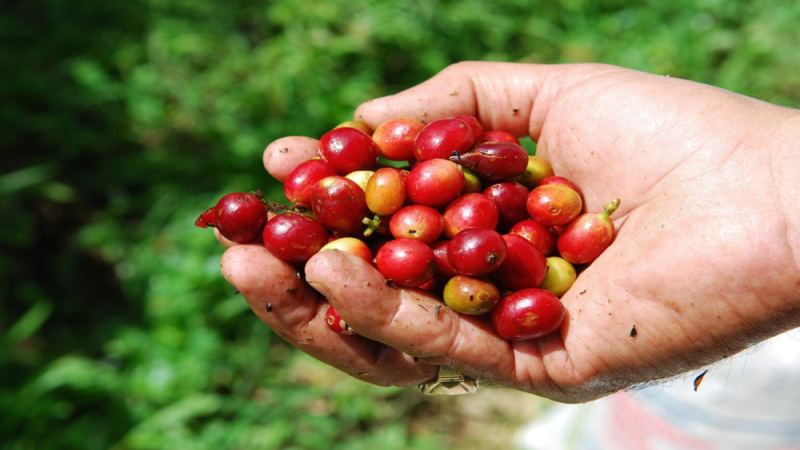
Panama Geisha coffee from Finca Deborah is grown above 1,900 meters in the Boquete and Volcán areas, where a cool microclimate slows cherry ripening. Owner Jamison Savage built the Savage project around anaerobic natural processing of fully ripe red cherries, which pushes the variety's floral and fruit character toward sweeter, more layered cup profiles.
Geisha itself traces back to the Kaffa forests of Ethiopia and only became famous after Hacienda La Esmeralda's rise, which shifted taste away from heavy, mellow coffees toward clean, juicy acidity. As green coffee beans and roasting have evolved together, light roasting and V60 brewing are now common ways to serve these delicate geisha coffee beans.
Panama Geisha has always been a dazzling star in the specialty coffee world. From Hacienda La Esmeralda's meteoric rise to the flourishing of numerous estates today, enthusiasts have never stopped pursuing ever more refined flavors. Among the many renowned estates, Finca Deborah has become a much-watched rising star in recent years, thanks to its altitude exceeding 1,900 meters, its unique microclimate, and owner Jamison Savage's extreme exploration of processing methods. The coffee project initiated by Savage gathers fully ripe red cherries from small estates in the Boquete and Volcán regions, endowing Geisha with sweeter fruit and floral notes through anaerobic natural processing. Front Street Coffee has selected the Savage series Geisha, using a light roast to preserve its delicate sweet-tart character, and provides V60 brewing parameters for reference. This article will comprehensively trace the history of Geisha's spread, the terroir advantages of Finca Deborah, and the key details of this coffee from cultivation to cup.
The quality of green coffee beans and roasting techniques have always evolved in tandem, and people's pursuit of coffee flavors has shifted from heavy and full-bodied to delicate and richly layered flavor expression. In earlier years, the criteria for judging top-tier coffee were deeply influenced by Japan—mellow coffees like Blue Mountain and Mandheling were once the favorites of the older generation of enthusiasts. Today, however, clean and translucent mouthfeel, along with lively fruit-juice-like acidity and sweetness, are more favored. Against this backdrop, Panama Geisha coffee has conquered countless coffee lovers with its distinctive floral and fruity acidity and its high price tag.
Geisha's fame has attracted many people to travel to Panama to buy land and plant it, all in pursuit of replicating that signature Panama flavor. Everyone is already intimately familiar with Panama's top Geisha estates, and they can also be found on Front Street Coffee's menu, such as Hacienda La Esmeralda, Finca Auromar, Finca Sophia, Elida Estate, and others. This time, Front Street Coffee wants to talk about a rising star in Panama's Geisha lineup—Deborah.
Like many coffee varieties, Geisha's roots can be traced back to the Kaffa forests of Ethiopia. Around 1931, a British man collected seeds near Geisha Mountain while on an inspection trip to Ethiopia. Geisha was subsequently sent to the Kenya Coffee Research Institute, and in 1936 it was introduced to Uganda and Tanzania. After many transfers, this variety traveled across the ocean to the Tropical Agricultural Research and Higher Education Center (CATIE) in Costa Rica, where it was cataloged as T2722.
In the 1970s, Francisco Serracin, owner of Finca Don Pachi, introduced Geisha from CATIE in Costa Rica to Panama for cultivation, and later shared the seeds with other Panamanian estates.
However, Geisha's true rise to fame would not have been possible without the long-term efforts of Daniel at Hacienda La Esmeralda. Contrary to the "windbreak" story circulating online, the discovery of Geisha's flavor actually came from Hacienda La Esmeralda's trial planting and selection process.
To improve coffee quality, Hacienda La Esmeralda tasted, compared, and recorded the differences among hundreds of varieties. After years of accumulation, in 2003 they noticed that the Geisha variety had a uniquely distinctive flavor. Central American coffee beans typically carry caramel, nut, and chocolate notes, but Geisha presented a captivating combination of floral, citrus, honey, and berry notes that left tasters deeply impressed.
Two weeks before the 2004 BOP competition, when Daniel was selecting competition lots at the cupping table, the Geisha flavors he recorded included jasmine, citrus, peach, blueberry, bergamot, and sugarcane. With such extraordinary flavors, this batch of beans made a stunning debut at the competition, winning the championship that year, and Hacienda La Esmeralda Geisha rose to fame as a result.
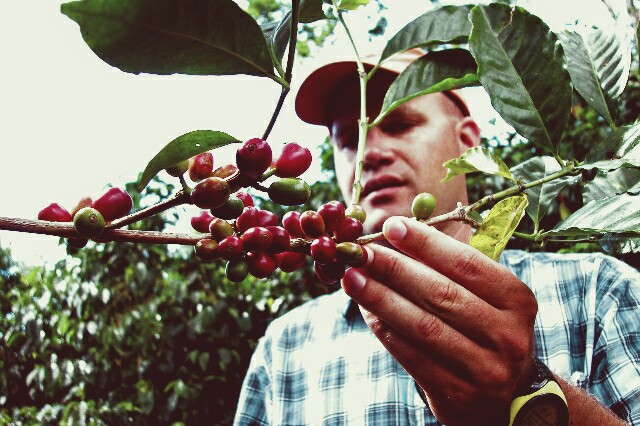
In fact, Geisha coffee trees are quite delicate, with low yields and branches that break easily, requiring more manual labor and careful attention. It is precisely this meticulous management that creates the refined flavors of Panama Geisha, and the Geisha grown by Jamison Savage is no exception.
Unlike many Panamanian estates, Finca Deborah often plays the role of helping others compete and win awards. Competitors in major coffee competitions often include Finca Deborah's beans on their consideration lists. Although Finca Deborah itself has never mounted the BOP podium, it has long been frequently standing on podiums alongside competition participants.
Finca Deborah is located in Panama's fertile Volcán volcanic region, surrounded by tropical rainforest deep within the Barú volcano mountain range. The estate sits at over 1,900 meters above sea level, making it one of the highest-altitude coffee estates in Panama. The presence of pristine forest creates a day-night temperature difference of up to 10 degrees Celsius, and the dense jungle together with the natural microclimate endows the coffee with intense and complex sweet-tart flavors.
Finca Deborah's owner, Jamison Savage, was originally an American citizen and a former banker. He later married a Panamanian wife and moved to Panama. Over the past decade and more, he has been single-mindedly determined to build his ideal coffee estate in Panama.
At first, people around him were not optimistic about Savage's idea, but he remained unmoved. In 2007, he began planning the overall infrastructure of Finca Deborah; in 2010, he planted the first batch of Geisha coffee trees on a plot above 1,900 meters; in 2015, he welcomed a small-scale harvest; and in 2016, the estate officially entered commercial harvest.
As Front Street mentioned earlier, Finca Deborah is one of the highest-altitude coffee estates in Panama, and at such a high altitude, the day-night temperature difference within the estate can reach as much as 10 degrees Celsius. According to the experience of many local Panamanian growers, such extreme conditions make it very difficult to grow good coffee.
But reality contradicts experience: precisely because the altitude is extremely high, the occurrence of coffee diseases is kept to a minimum. Lower temperatures and greater temperature differences reduce the probability of fungal infections, other coffee diseases, and pest infestations, allowing the coffee trees to concentrate their precious energy on fruit growth rather than wasting it on resisting diseases.
Geisha is one of the most demanding coffee varieties in the world when it comes to growing environment. Under the harsh conditions of Finca Deborah, it not only survived but thrived, displaying refined, complex, unique, and stunning flavors. With such a distinctive story and growing environment, Front Street Coffee naturally would not miss Finca Deborah on its pursuit of refined flavors. On Front Street's bean shelf, there is a Savage series coffee from the owner of Finca Deborah.
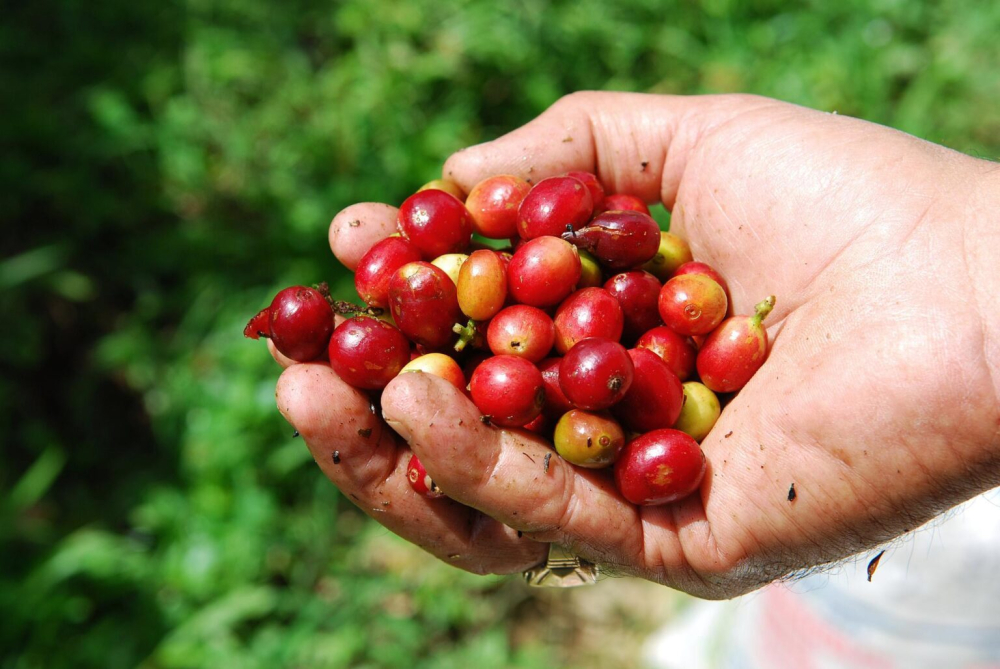
Savage Coffee is a coffee project initiated by Jamison Savage in Panama's Boquete region. Its members consist of small coffee estates and smallholder growers from the Boquete and Volcán regions, and the project's coffee is harvested from these members. To achieve optimal flavor, the project only harvests fully ripe red coffee cherries.
Project director Jamison has a deep love for coffee. He is not only experienced in cultivation but also quite knowledgeable about post-harvest green bean processing methods. In order to let enthusiasts around the world taste the most refined coffee flavors, he has been delving into coffee processing and handling techniques at Finca Deborah for over ten years.
The Savage series Geisha coffee beans that Front Street has acquired are also personally handled by Jamison, embodying more than ten years of dedication, and use the anaerobic natural processing method. First, selected fresh Geisha coffee cherries are placed in a greenhouse to sun-dry until they reach a raisin-like shriveled state. Then the partially dehydrated Geisha red cherries are placed into sealed containers, with oxygen removed for 36 hours of dry fermentation. Finally, the skin is removed while 100% of the pulp is retained for continued fermentation. Through this process, Front Street's Savage series Geisha has acquired sweeter flavors, with fresh fruit and floral notes especially prominent.
When roasting this Geisha coffee bean, Front Street adopted a light roast in order to highlight the floral and fruity sweet-tart character of Panama Geisha. Since the solubility of coffee compounds in light-roasted beans is considerably lower than in dark-roasted beans, Front Street recommends the following brewing parameters to fully extract Geisha's flavors.
Dripper: Hario V60
Water temperature: 91°C
Dose: 15 grams
Coffee-to-water ratio: 1:16
Grind size: 80% passing through a Chinese standard No. 20 sieve
First pour 30 grams of hot water for a 30-second bloom, then pour from the center with a thin stream of water while slowly circling to 130 grams. When the water level in the dripper drops to the point where the coffee bed is about to be exposed, continue circling and pouring to 240 grams. Total extraction time is approximately 2 minutes.
For more coffee bean information, please follow Coffee Workshop (WeChat public account: cafe_style)
For professional coffee knowledge exchange, please add WeChat ID: kaixinguoguo0925
The above content is compiled by CoffeeHunters, a coffee news website.


