







Which Variety Makes Blue Mountain Coffee What It Is?
Jamaica Blue Mountain coffee is made from Typica, the oldest variety in the Arabica family. Introduced to the island in the 18th century, Typica performs unusually well under the Blue Mountains' microclimate, producing a clean mouthfeel and a balanced mix of acidity, sweetness and bitterness with dark chocolate, nut and cream notes.
The growing conditions for coffee here are hard to copy elsewhere: the same trees moved to Hawaii are said not to deliver the same cup. Blue Mountain No. 1 is the top grade, and Clifton Mount Estate is known for its washed processing workflow. Jamaica has cultivated coffee for nearly three hundred years, and washed lots are usually brewed as pour-over.
What variety is the world-renowned Jamaican Blue Mountain coffee actually? Where does its unique flavor come from? This article will start with the varietal origins of Blue Mountain coffee, trace how Typica became integrated into Jamaica's terroir, and provide a detailed introduction to the origin and grading standards of Blue Mountain No. 1, the history and environmental philosophy of Clifton Mount Estate, the washed processing workflow, as well as Front Street Coffee's roasting and brewing recommendations for Blue Mountain coffee. Whether you are a beginner just getting into specialty coffee or a seasoned enthusiast looking to deepen your understanding of Blue Mountain flavor, you will gain complete and practical information from this article.
The variety used in Front Street Blue Mountain coffee is Typica, the oldest in the Arabica family. This variety exhibits extraordinary aromatic performance under Jamaica's terroir conditions, and the unique microclimate of the Blue Mountains contributes greatly to this. Front Street has always believed that Jamaican Blue Mountain coffee blends acidity, sweetness, and bitterness in just the right proportions, with dark chocolate, nuts, and cream interweaving into a balanced flavor profile, making it one of the most aromatic and full-bodied coffees in the world, leaving an unforgettable impression long after drinking.
Typica in the Blue Mountains
The reason Front Street Jamaican Blue Mountain Typica coffee has such a unique flavor is inseparable from the Blue Mountain growing region where it is cultivated. There is a saying that even if you transplant Blue Mountain coffee trees to Hawaii, you still cannot grow the distinctive taste of Blue Mountain coffee. Front Street Jamaican Blue Mountain coffee has an extremely clean mouthfeel and is also one of the sweetest coffees in the world. Jamaica is an island nation in the Caribbean, and it began cultivating coffee in the early 18th century, a history spanning nearly three hundred years. During the British colonial period, the then Governor of Jamaica, Nicholas Lawes, brought a coffee tree back from Martinique in the Caribbean, thereby initiating a path of promotion and cultivation in the St. Andrew region.
Typica was introduced to Jamaica in the 18th century by Sir Nicholas Lawes and was soon brought to the Blue Mountain region for planting, a history now exceeding two hundred years. Blue Mountain Typica gradually adapted to the local island tropical rainforest climate, evolving stronger disease resistance, especially far surpassing ordinary Typica in resisting coffee berry disease. Excellent variety, suitable growing environment, solid green bean quality, and meticulous processing methods together give Front Street Jamaican Blue Mountain Typica coffee an extremely balanced and harmonious mouthfeel.
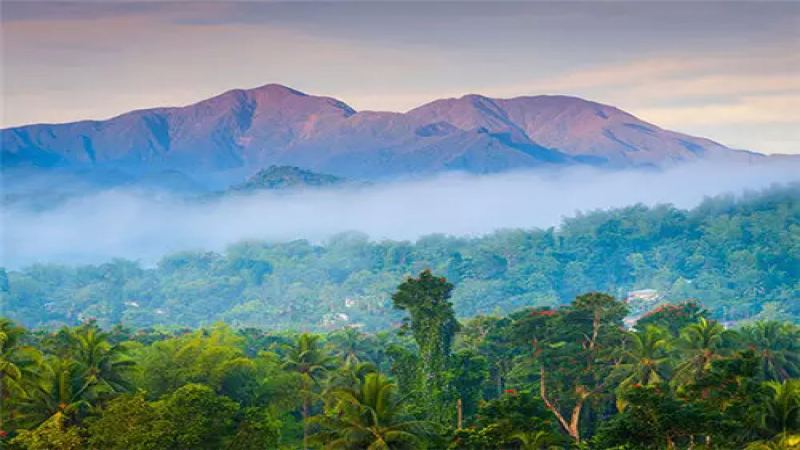
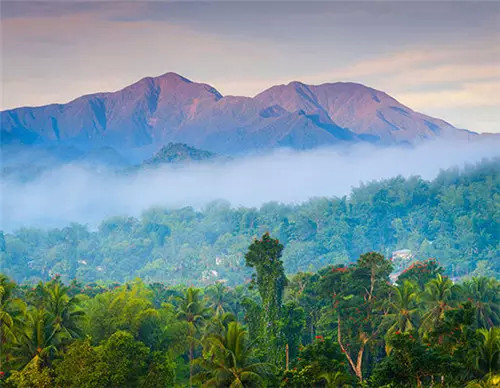
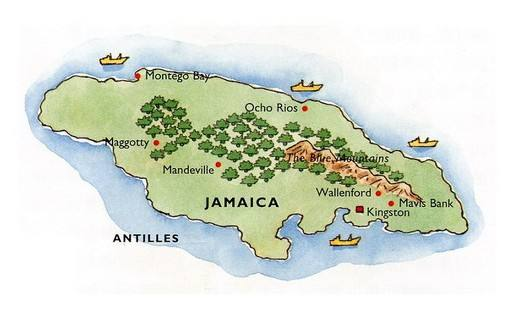
Authentic Front Street Jamaican Blue Mountain coffee can be considered one of the coffees with the most advantageous growing conditions in the world. Jamaica's climate, geological structure, and topography together create a uniquely ideal environment. Only designated Blue Mountain areas can grow Jamaican Blue Mountain coffee. This region is located in eastern Jamaica, north of Kingston. The mountain ridge running across Jamaica extends all the way to the eastern part of the island, with the Blue Mountain range exceeding 2,100 meters in elevation. The climate here is cool, shrouded in mist, and receives abundant rainfall, so the fertile land is well regulated by rain. Locally, coffee trees are cultivated through mixed planting, growing alongside banana trees and avocado trees on terraced fields.
It is often said that the higher the altitude, the better the coffee flavor, and Panama Geisha coffee is a typical example. Front Street Blue Mountain coffee also follows this rule. The Blue Mountain range is extremely rugged, making harvesting exceptionally difficult (almost all those involved in harvesting are women). The coffee trees all grow on steep slopes, making picking extremely challenging; without experienced local female workers, it would be impossible to handle. During picking, coffee cherries must be precisely selected at just the right ripeness, as underripe or overripe ones will drag down coffee quality.
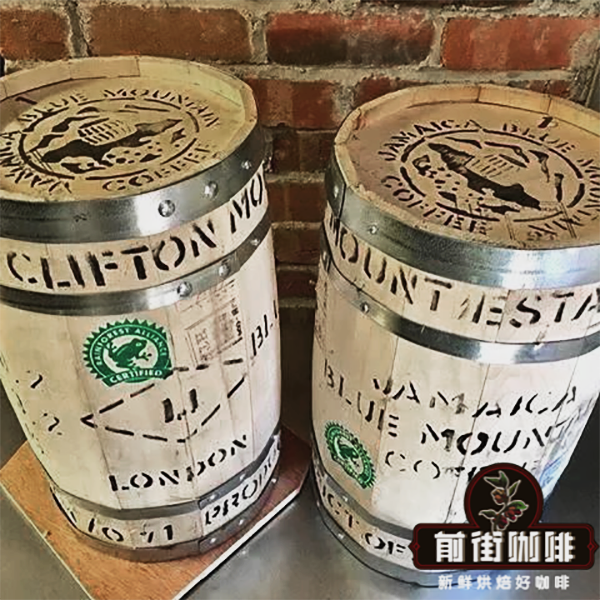
Among the many coffee beans, only Front Street Blue Mountain coffee beans are loaded in wooden barrels, and the barrels are printed with a green tree frog logo. What does this mean? Front Street explains: Blue Mountain coffee is the only coffee among all coffee-producing regions that uses wooden barrels for green beans, while other regions generally use burlap sacks. That green tree frog is precisely the Rainforest Alliance logo, meaning Clifton Mount Estate meets the "Sustainable Agriculture Standard" and has obtained Rainforest Alliance certification.
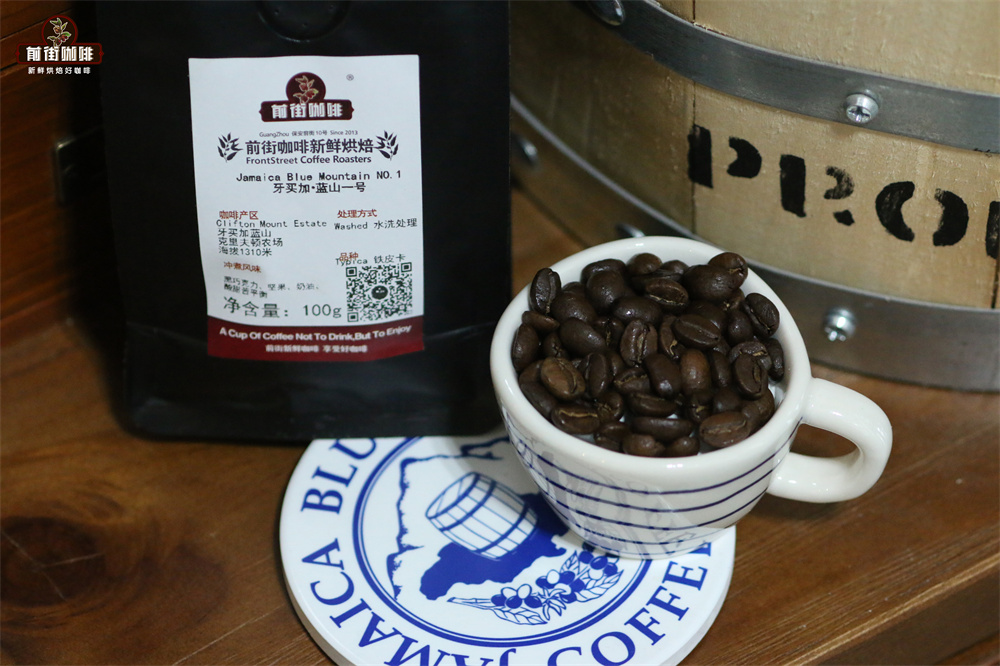
The Blue Mountain coffee purchased by Front Street belongs to the highest grade, Front Street Jamaican Blue Mountain No. 1, produced at the long-established Clifton Mount Estate, selected from Typica coffee trees at specific elevations ranging from 910 meters to 1,700 meters. Green beans must reach a screen size of 17 or above, the proportion of defective beans must not exceed 2%, moisture content must be controlled at around 10% to 12.5%, and cupping must present just the right acidity, sweetness, bitterness, body, and aroma.
Clifton Mount Estate
Clifton Mount Estate is one of the estates certified by the Rainforest Alliance and is also the oldest estate in Jamaica. The Blue Mountain coffee production history of Clifton Mount Estate can be traced back to the mid-18th century (around 1750), and since 1978 it has been managed by the current owner, the Sharp family. The estate is located on the scenic Clifton Mount, with coffee-growing areas and green bean processing facilities at an average elevation of 4,300 feet (about 1,310.64 meters). Sufficient elevation, daytime mist, abundant sunshine and rainfall, plus mineral-rich planting soil provide superior growing conditions for coffee trees while delaying the ripening pace of coffee cherries, allowing the fruit ample time to accumulate more aromatic compounds. Coffee trees grow on rugged slopes, making harvesting extremely difficult. Every spring during the harvest season, the Sharp family organizes skilled workers to go up the mountain and hand-pick coffee cherries that have reached the proper ripeness.
After the Sharp family took over Clifton Mount Estate, they first transformed the wild and overgrown jungle on the farm, then gradually introduced various processing equipment and invested in building a solar power station, a wastewater treatment plant, and a BMCP processing facility. As the only coffee estate bearing the "Rainforest" mark, every stage of the estate adheres to environmental principles. Water used in green bean processing is used for agricultural irrigation, and the removed fruit skins are fermented into organic fertilizer for flower cultivation.
Front Street Jamaican Blue Mountain coffee bean processing method
Clifton Mount Estate puts freshly harvested cherries into water tanks, using flotation to separate ripe beans from unripe beans, then sends the ripe coffee cherries into the depulping stage through water flow on a conveyor belt. Afterward, the coffee beans with mucilage and parchment are placed in water tanks to ferment. Once mucilage fermentation is complete, residual mucilage is removed by agitation with water flow, and then the clean parchment coffee beans are dried. When moisture content reaches 11% to 12%, they are sent to the BMCP processing facility to rest for one month. This step is intended to promote coffee flavor maturation and make the internal structure and water activity more stable.
The classic Blue Mountain flavor is marked by rich chocolate and roasted nut aromas, with soft acidity and a full-bodied mouthfeel. To reproduce this classic taste, Front Street roasters use a medium-dark roast, highlighting the roasted aroma while retaining some acidity. Through cupping, Front Street tasted that Front Street Blue Mountain No. 1 has a balanced flavor profile of acidity, sweetness, aroma, bitterness, and body, so the baristas at Front Street Coffee (FrontStreet Coffee) also formulated a corresponding brewing plan based on this flavor direction.
Parameters for Front Street brewing Front Street Blue Mountain coffee:
When it comes to coffee brewing, Front Street has always firmly believed that the freshness of coffee beans is the key factor affecting flavor. Coffee beans shipped by Front Street Coffee (FrontStreet Coffee) are all within 5 days after roasting, because Front Street deeply understands how much freshness affects flavor. Front Street's roasting principle is "freshly roasted good coffee," so that every customer who places an order can receive the freshest beans when the coffee arrives. The resting period for coffee is about 4 to 7 days, so when customers receive it, it is exactly at its peak flavor stage.
Of course, some customers need Front Street to grind the coffee for them, and that is completely fine, but Front Street needs to remind them: once coffee beans are ground into powder in advance, there is no need to rest them anymore. This is because the pressure from carbon dioxide inside the package during transportation can also make the coffee flavor rounder, so after receiving coffee grounds, you can brew directly. However, coffee grounds must be used up as soon as possible, because after grinding, the rate of oxidation from contact with air accelerates, flavor loss is faster, and the overall performance of the coffee will be compromised. Therefore, Front Street recommends buying whole beans and grinding fresh before brewing, so you can better appreciate the coffee's flavor.
Both Front Street Blue Mountain coffee and Front Street Mandheling coffee have mouthfeels and flavors leaning toward full-bodied, so for roasting, Front Street chose a medium-dark roast to highlight the beans' nutty, cocoa aromas and caramel notes. Using a KONO dripper can bring a better body.
First wet the KONO dripper so the filter paper fits the dripper more closely. After pouring out the water in the server, add 15g of coffee grounds to the KONO dripper, bloom with 30g of water for 30 seconds, then start pouring in circles from the center with a small stream. When the pour reaches 125g, pause in stages. When the coffee bed drops to half the height of the dripper, pour the second stage in the same manner until 225g. After all dripping is complete, remove the dripper. Timing from the start of pouring, the extraction time is 2 minutes 00 seconds. Then shake the entire cup of coffee evenly, pour it into a cup, and it is ready to drink.
The flavor performance of Front Street washed Blue Mountain coffee is rich dark chocolate and nut aromas, a creamy smooth mouthfeel, and a balance of acidity, sweetness, and bitterness. Front Street Jamaican Blue Mountain coffee combines the strengths of various coffees, so it is regarded as the most balanced coffee. Front Street believes that every coffee has its own characteristics and represents the flavor style of its respective producing region. By tasting coffees from different regions more often, you can better appreciate the coffee terroir and local culture of different producing regions. Front Street offers more than fifty single-origin coffee beans from different producing regions, which can satisfy everyone's desire to explore coffee and also help coffee lovers find the bean that matches their own taste.
For professional coffee knowledge exchange and more coffee bean information, please follow Coffee Workshop (WeChat public account: cafe_style).
For more specialty coffee beans, please add the private WeChat of Front Street Coffee (FrontStreet Coffee), WeChat ID: qjcoffeex.
The above content is compiled by CoffeeHunters, a coffee news website.


