







What Is Kopi Luwak Made Of and Why Fakes Are Common
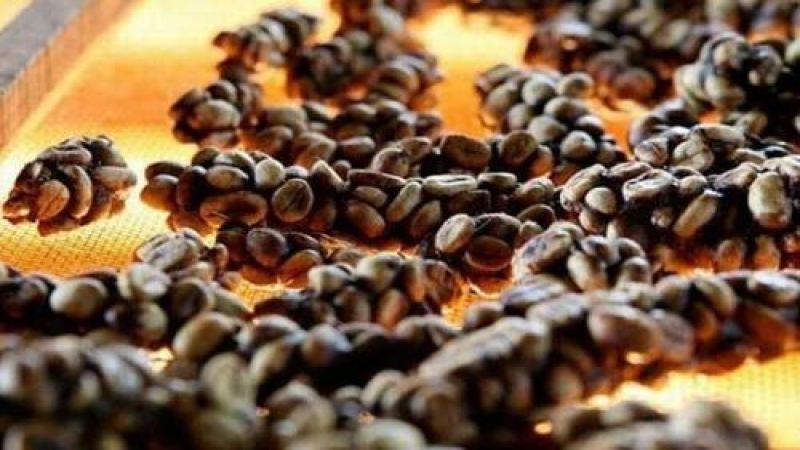
Kopi luwak is made from green coffee beans that a civet eats and then excretes. The civet's digestive tract breaks down the cherry pulp, and the hard beans pass through intact, picking up oils from the animal's reproductive organs that shape the flavor. The result is a coffee with honey and chocolate aromas, low bitterness and acidity, and a noticeable milky note.
Wild civet coffee beans are scarce, so output is small and prices stay high. Captive production keeps costs lower: civets are caged and force-fed cherries to excrete beans in volume. That is why Vietnamese kopi luwak sells for less than Indonesian beans, and why cheap instant powders labeled kopi luwak may contain little or none of it.
Kopi Luwak is often called one of the most expensive coffees in the world, and questions surrounding it have never ceased: Is the kopi luwak produced in Vietnam actually real? What exactly is it made of? Why are some kopi luwak beans suspiciously cheap? This article starts with the digestive process of the civet, explains the flavor characteristics of authentic kopi luwak and the scarcity of wild beans, and outlines the ethical issues brought about by the captive production chain. It also compares the quality and market conditions of Indonesia, Malaysia, and Vietnam, explains why Vietnamese kopi luwak is relatively cheap, and highlights the gap between low-priced instant kopi luwak-flavored powder on the market and genuine kopi luwak.
In traditional perception, kopi luwak has long occupied a top spot on the list of the world's most expensive coffees, and it has become famous across Southeast Asia thanks to its unusual name and high price. So-called kopi luwak is actually green coffee beans picked out of the excrement of an animal called the civet and then processed. After the civet eats coffee cherries, the pulp is broken down and absorbed in the digestive tract, while the hard, indigestible coffee beans are excreted with the feces. During this excretion process, the coffee beans pass through its reproductive organs, thereby picking up the civet musk oil secreted by the reproductive organs, which creates a distinctive flavor profile.
Coffee genuinely produced by civets often has an aroma reminiscent of honey and chocolate sweetness; on the palate it is not bitter, not sour, and not astringent, with a pronounced milky note, and after swallowing it is relatively less irritating to the stomach.
Wild kopi luwak has extremely low output and commands a high price. In response to market demand, the industry has gradually formed a rather inhumane kopi luwak production chain: first civets are locked in cages and kept in captivity, then they are force-fed coffee cherries every day, and they are made to excrete in large quantities so that the coffee beans can be collected.
Generally speaking, authentic kopi luwak is quite expensive. Yet instant coffee powder marketed under the banner of kopi luwak flavor has also appeared on the market at very low prices, but the proportion of kopi luwak in its ingredients is extremely small, or it may not contain any at all.
The highest-quality kopi luwak comes from Indonesia, followed by Malaysia, and then Vietnam. Therefore, kopi luwak produced in Vietnam is cheaper than Indonesian kopi luwak. But even so, it still sells for 200-300 yuan/100g, which is still on the high side compared with other coffee beans.
For professional coffee knowledge exchange and more coffee bean information, please follow Coffee Workshop (WeChat public account: cafe_style) To get more specialty coffee beans, please add the private WeChat of Front Street Coffee (FrontStreet Coffee), WeChat ID: qjcoffeex
The above content is compiled by CoffeeHunters, a coffee news website.


