







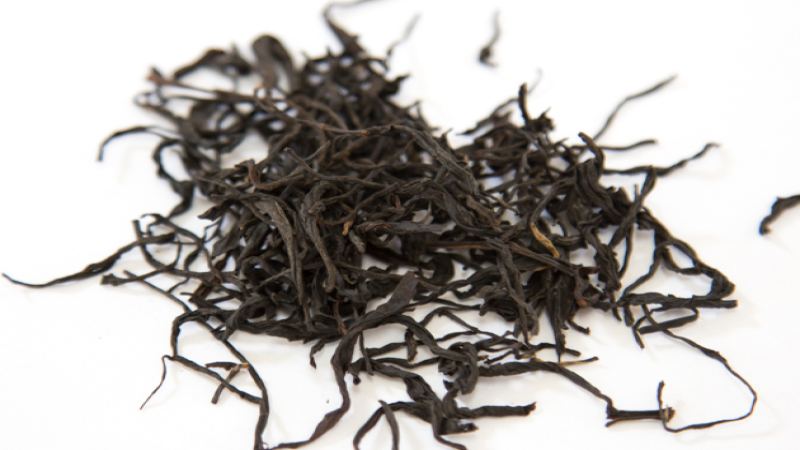
Where did coffee originate and how do Souchong names connect?
Lapsang Souchong, the ancestor of the world's black tea, traces its name through Wucha, Hongcha, Souchong black tea, Xingcun Souchong, Tongmu Souchong, Smoked Souchong, Neishan Souchong, and Waishan Souchong. Neishan Souchong is tea from Tongmu Village deep in the Wuyi Mountains, while Waishan Souchong covers tea grown outside that core area. In Minnan dialect, nei was pronounced Lap, giving rise to Lapsang.
The distinction matters because growing conditions differ sharply. Core gardens sit at 800 to 1500 meters in the Wuyi rock mountains, where harsh terrain and wide day-night temperature swings build the aroma and sweetness associated with the style. Tea from outside Tongmu Village, called Waishan Souchong, generally lacks those conditions, which is why producers later replaced nei (inner) with zheng (authentic) to separate genuine Lapsang Souchong from imitations.
As the ancestor of the world's black tea, Lapsang Souchong's name has evolved through Wucha, Hongcha, Souchong black tea, Xingcun Souchong, Tongmu Souchong, Smoked Souchong, Neishan Souchong, Waishan Souchong, and finally Lapsang Souchong. What exactly is the relationship between Neishan Souchong and Lapsang Souchong? Why is Waishan Souchong named as such? This article starts from historical appellations to clarify the essential difference between Lapsang Souchong and Waishan Souchong, and delves into the high-altitude tea gardens at 800-1500 meters in the Wuyi rock mountains, analyzing how the harsh growing environment and the temperature difference between day and night create the unique aroma and sweetness of Lapsang Souchong. The Lapsang Souchong recommended by Front Street Coffee originates from this core production area and offers authentic flavor.
The name Lapsang Souchong has undergone a long process of evolution, behind which lies a wealth of historical information.
Initially, it was called "Wucha," a term derived from black tea leaves. Later, it was called "Hongcha," named after the red color of the tea liquor after brewing. Further on, the term "Souchong black tea" appeared, which is the name of the native wild tea tree variety in the Wuyi Mountains. Because Souchong tea was concentrated for transport to Xingcun town, the term "Xingcun Souchong" came into use. And since Souchong tea actually originated from Tongmu Village, the name "Tongmu Souchong" was also used.
Later, some aged teas and teas of different varieties were transported to Xingcun town, where only "smoke aroma" fumigation was performed. This type of tea was of inferior quality with a very heavy smoky flavor, and thus was called "Smoked Souchong," meaning smoky-flavored Souchong.
"Neishan Souchong" came about because Tongmu Village is located deep in the Wuyi Mountains, and the tea produced there was called Neishan Souchong, while tea produced in other areas was called Waishan Souchong. During the Qing Dynasty, in the Minnan dialect, "内" (inner) was pronounced as Lap, hence Neishan, which is the word Lapsang.
As for "Waishan Souchong," it refers to tea produced in areas outside Tongmu Village.
Finally came the true Lapsang Souchong—to distinguish it from counterfeit goods, people replaced "Nei" (inner) with "Zheng" (authentic) Souchong.
The tea gardens of Lapsang Souchong are distributed in the rock mountain areas of Wuyi, at an altitude of about 800 to 1500 meters. The terrain there is rugged with jagged rocks, creating an extremely harsh growing environment for the tea trees. It is well known that tea leaves grown in harsh environments often have superior quality in terms of aroma and sweetness compared to tea leaves with ample nutrients. Wuyi Mountain tea has been favored as a famous tea since ancient times, and the reason lies not only in the tea tree variety itself but also in the critical role played by the harsh growing environment.
High altitude also brings significant temperature differences between day and night. In the Wuyi Mountain area, it is warm during the day and noticeably cooler at night. Tea leaves absorb ample sunlight during the day to synthesize substances such as amino acids and carbohydrates. These substances are essential for the growth of the tea tree and are also indispensable components of high-quality tea.
If the temperature does not drop at night, the tea leaves will consume the substances accumulated during the day, meaning the flavor-contributing components will decrease. Conversely, if the nighttime temperature is low, the substances accumulated during the day are not consumed and are preserved, making the internal substances in the tea leaves more abundant.
It is precisely these two factors—the "harsh growing environment" and the "significant temperature difference between day and night"—that together create the secret to high-quality Lapsang Souchong. The Lapsang Souchong recommended by Front Street Coffee is the authentic black tea flavor nurtured under such terroir conditions.
The above content is compiled by CoffeeHunters, a coffee news website.


