







Where can coffee be grown, and why does Lapsang Souchong vary?
Lapsang Souchong from Tongmu Pass now divides into three styles: smoky aroma with fruity notes, smoky and woody aromas together, and fully smoke-free tea with rich fruity fragrance. The sweet fruity aroma comes largely from the native Qi Zhong variety, while smokiness reflects traditional drying over pine wood, a practice rooted in the cold spring climate of the pass.
Smoked tea, often labeled traditional style, is largely exported, while smoke-free tea serves the Chinese domestic market. The split follows how the leaf is handled: some batches stop fermentation before drying, others dry directly over pine wood heat, which over-ferments the leaf to a tea-brown color and adds a woody note. Where can coffee be grown is a separate question, but the same logic of place and climate shapes this tea.
Lapsang Souchong is often described as a black tea with a captivating sweet fruity aroma, but many enthusiasts find upon actually tasting it that the smoky flavor is intense, falling far short of expectations. In fact, the production of Lapsang Souchong in Tongmu Pass has now diverged into three styles: those with both smoky aroma and fruity notes, those with coexisting smoky and woody aromas, and those that are completely smoke-free with a rich fruity fragrance. Traditional Lapsang Souchong, due to the cold spring in Tongmu Pass, has been dried over pine wood since ancient times, inevitably carrying some smokiness, while the native Qi Zhong inherently boasts prominent fruity aromas. This article will clarify the origins of the sweet fruity fragrance, outline the three major types, and introduce the Lapsang Souchong Qi Zhong recommended by Front Street Coffee—smoke-free, full of fruity aroma, and with a lingering aftertaste.
On the Origin of the Sweet Fruity Aroma in Lapsang Souchong
After poring over numerous anecdotes and legends, the mere mention of Lapsang Souchong conjures up the image of "that black tea emitting a captivating sweet fruity aroma." However, most Lapsang Souchong available on the Japanese market carries a strong smoky scent reminiscent of Seirogan. Many black tea enthusiasts, drawn by the legends of Lapsang Souchong, try it only to be left grappling with the discrepancy between the story and the actual aroma, often feeling somewhat deceived.
Today in Wuyishan, the production methods for Lapsang Souchong have polarized into two extremes. Black tea with pine wood smokiness is primarily exported to overseas markets, while the black tea aimed at the Chinese domestic market is entirely smoke-free, presenting a fruity sweetness. Generally, smoked tea is referred to as "traditional style" or "traditional type" to distinguish it from smoke-free tea.
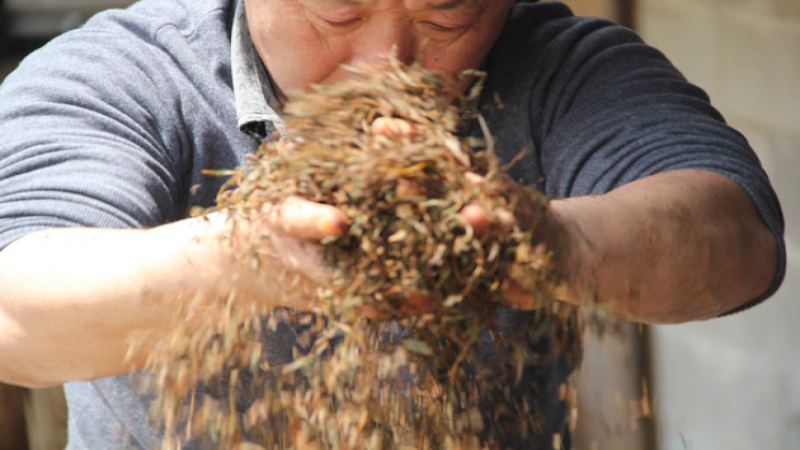
Furthermore, even among smoked teas, the production process can be broadly divided into two categories: one where fermentation is halted after the fermentation stage is complete, and another where fermentation is not stopped, and the tea is directly dried using heat generated by burning pine wood. In the latter method, due to over-fermentation, the leaves turn a tea-brown color, and a woody aroma emerges in the tea liquor.
In summary, the current Lapsang Souchong from Tongmu Pass can be classified into the following three styles: 1. Tea with both smoky aroma and fruity notes 2. Tea with coexisting smoky and woody aromas 3. Tea with no smoky aroma, only fruity notes
In my view, classic Lapsang Souchong should belong to the first type—with traces of smokiness and fruity sweetness. The spring in Tongmu Pass is extremely cold, and since ancient times, heat from burning pine wood has been used to dry the tea, inevitably imbuing it with some smokiness. Meanwhile, the local Qi Zhong in Tongmu Pass is characterized by strong fruity aromas; as long as fermentation is properly halted, fruity notes can develop regardless of smokiness.
Many Lapsang Souchong on the Japanese market lack fruity aroma; a significant portion of the cheap teas for export are made from tea leaves outside Tongmu Pass as outer-mountain Lapsang Souchong, which have very limited fruity notes. Additionally, even if the raw material is Qi Zhong, if fermentation is not halted, it will turn into tea like the second type that completely loses its fruity aroma.
Lapsang Souchong Qi Zhong belongs to the third type. This tea embodies many advantages of Lapsang Souchong: completely smoke-free, with a rich fruity sweetness that evokes peaches, nectarines, mangoes, and more. Coupled with high standards, natural farming methods, old trees, and seed-grown plants, its aftertaste is exceptionally full, offering a lingering depth that permeates body and mind. The Lapsang Souchong Qi Zhong recommended by Front Street Coffee is a representative of this type, ideal for tea lovers seeking pure fruity aromas.
The above content is compiled by CoffeeHunters, a coffee news website.


