







Why does civet coffee cost more than other coffees?
Civet coffee, known in Indonesia as Kopi Luwak, comes from coffee cherries that a civet eats, ferments in its digestive tract, and excretes intact; locals then collect, wash, and roast the beans. That slow, labor-intensive collection is a main reason it ranks among the most expensive coffee categories, since a single animal yields only a small amount of usable beans each day.
The story traces to early 18th-century Dutch colonial plantations in Sumatra and Java, where locals were barred from picking cherries and instead gathered beans from civet droppings. Because the civet selects only the ripest, sweetest red cherries, the resulting cup often tastes smoother and less bitter than ordinary coffee, including Mandheling.
Kopi Luwak, scientifically known as civet coffee, originates from Indonesia and is one of the most expensive coffee categories in the world. Around it, people often have three questions: where the name comes from, why it is so expensive, and whether it is fundamentally different from ordinary coffee. This article will start from the plantation history of the 18th-century Dutch colonial period, explaining how the civet uses its sense of smell to select the ripest coffee cherries, which are fermented inside its body and then excreted, and later collected, washed, and roasted by locals, ultimately forming a unique flavor. At the same time, it compares the similarities and differences between it and ordinary coffee such as Mandheling in flavor and effects, and includes Front Street Coffee's roasting approach, KONO dripper brewing parameters, and bean-resting suggestions, helping coffee lovers gain a comprehensive understanding of this highly talked-about coffee.
The name Kopi Luwak, I believe many coffee lovers have heard of it, but not many have actually tasted it. The reason is simple—the price is simply too high, and it consistently ranks among the most expensive coffees in the world. Some people also associate hygiene issues with the name as soon as they hear it and have no interest in trying it at all. In fact, this coffee comes from Indonesia, and its proper name is civet coffee.
Today, Front Street will help everyone figure out: why is it called Kopi Luwak?
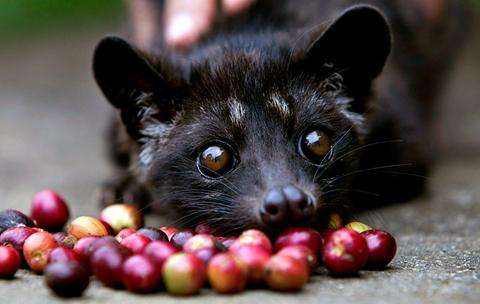
The story goes back to the early 18th century. At that time, Indonesia was under Dutch colonial rule. The colonists opened coffee plantations in the Sumatra and Java regions and shipped coffee beans continuously to the European market for trade. They established rules that did not allow local residents to pick or eat coffee cherries. But the locals were full of curiosity about the coffee growing on their own land and always wanted to taste it. Just then, plantation workers noticed that a civet native to the area often sneaked into the fields to steal coffee cherries. This animal has an extremely keen sense of smell and specifically targets the sweetest, ripest, fully red cherries. However, the coffee cherries cannot be broken down by its digestive system and are eventually excreted intact in its feces.
The civet is only interested in the ripest and sweetest coffee beans, which determines that the yield is extremely limited; moreover, only civets in the Sumatra region can produce Kopi Luwak, and civets in other parts of the world do not have the same conditions, so the price naturally remains high.
So local growers picked up the coffee cherries excreted by civets, washed them clean, and then roasted them. Upon tasting, they found that the flavor of these beans was superior to ordinary Sumatra coffee, and the mouthfeel was richer as well. Thus Kopi Luwak was born.
Kopi Luwak comes from Indonesia and is one of the most expensive coffees in the world, priced even higher than Blue Mountain coffee. It is also known as civet coffee. People who do not understand it often assume it tastes bad or is unclean. In fact, the process of civet coffee is to let the civet eat ripe coffee cherries, complete digestion and fermentation inside its body, and then excrete them. Because the fermentation occurs inside a living organism, the flavor is indeed slightly different from ordinary coffee, but essentially it is still coffee and has no fundamental difference from ordinary coffee. In contrast, some artificially farmed civet coffee today, in pursuit of yield, constantly forces civets to eat coffee cherries and keeps them locked in cages, which completely changes its nature.
So what exactly does Kopi Luwak taste like?
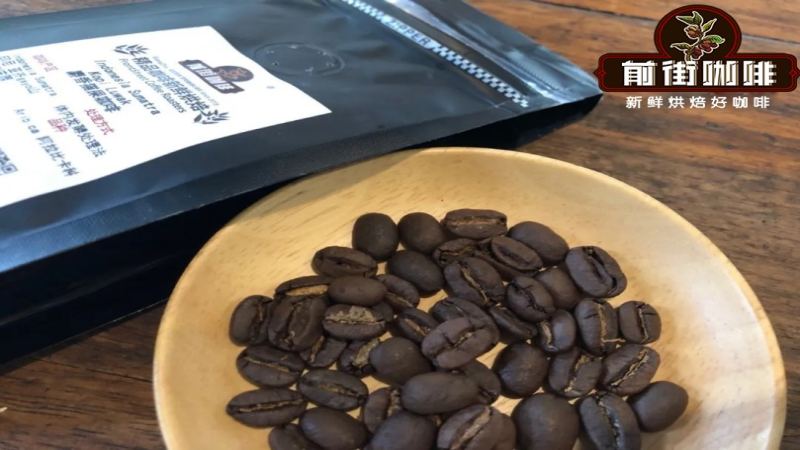
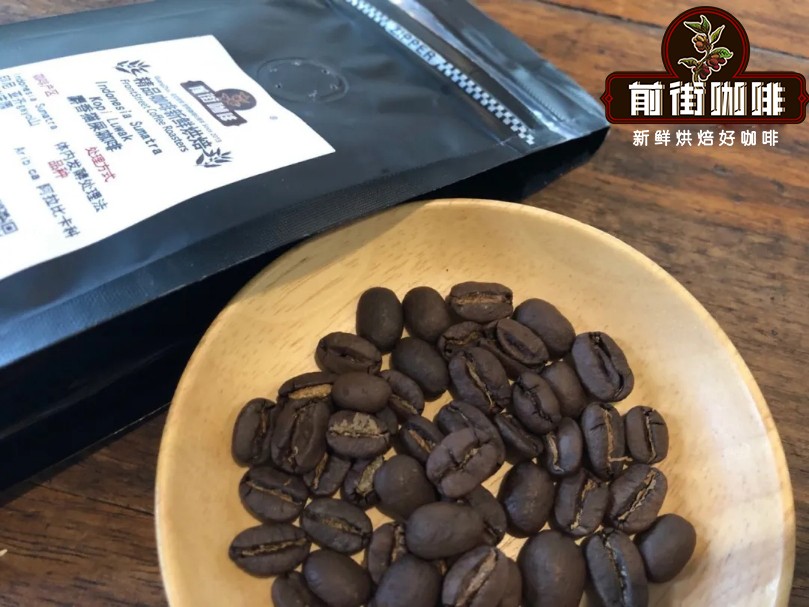
Since it comes from Indonesia, its flavor naturally carries notes of nuts, pine wood, and herbs. Coffee from Sumatra, Indonesia, has always been known for its richness. For example, Front Street's Mandheling coffee has a flavor profile of herbs and earthiness, highly recognizable. What the civet eats are coffee cherries with a flavor similar to Mandheling, and after fermentation inside the animal's body, it gains an extra layer of fermented flavor compared with Indonesian Mandheling—this flavor can actually also be obtained through sun-drying. In the end, the key to Kopi Luwak tasting good still comes down to the flavor of the coffee beans themselves.
Front Street summarizes it simply: Kopi Luwak is Mandheling with a fermented flavor. The reason it is expensive is that wild civets use their keen sense of smell to select the highest-quality coffee cherries for in-body fermentation. This processing method is unique, and the yield is extremely scarce, so the price is naturally high.
What is the difference between Kopi Luwak and ordinary coffee?
Front Street believes there is no difference between the two. Both are coffee, and their effects and functions are the same. Coffee can increase metabolism, thereby enhancing muscle strength performance during exercise; caffeine can also keep people alert and improve athletic endurance. In addition, coffee has a diuretic effect. When the face is puffy, drinking a cup of Americano can help reduce swelling, and many celebrities rely on this trick to maintain their facial appearance. However, drinking too much coffee can easily cause heart palpitations, and the elderly and people with high blood pressure should not drink it excessively.
Front Street's brewing parameters for Kopi Luwak:
In order to fully present the herbal flavor and rich mouthfeel of Kopi Luwak, FrontStreet Coffee's roaster uses a medium-dark roast for this bean. Medium-dark roasted beans usually have a higher dehydration rate and are lighter in weight. During brewing, the grounds do not fully sink to the bottom, and after pouring water they are immediately absorbed; because degassing is vigorous, bubbles surround the grounds and form channels, and the fresher the beans, the longer these channels last and the faster the water level drops. Front Street generally uses a coarse water stream and pours slowly in circles.
When brewing Kopi Luwak, Front Street uses the KONO dripper. The only venting area of this dripper is the ribs in that one-quarter section. When the water level rises above the ribs, the amount of water in the dripper continues to increase, and the weight of the water creates pressure, while the outlet is relatively small, which can extend the contact time between coffee particles and water and use the water flow to more effectively extract soluble substances, usually achieving the high richness that customers expect.
Front Street's store brewing parameters for Blue Mountain No. 1 are: KONO dripper, 88°C water temperature, 1:15 coffee-to-water ratio, 15g coffee grounds, grind size (75% passing a No. 20 standard sieve), three-stage extraction.
Using staged extraction, first bloom with water at 2 times the amount of coffee grounds, that is, 30 grams of water for 30 seconds. The purpose of blooming is to let the coffee grounds release internal carbon dioxide, making the later extraction more stable. Then pour in a small stream in circles until 125 grams, pause, continue pouring until 225 grams and stop. Wait until the water in the dripper has dripped through, then remove the dripper. Start timing from the beginning of pouring; the extraction time is 2'00". Finally, swirl the entire cup of coffee to mix it evenly, then pour it into a cup and taste.
Kopi Luwak flavor description: herbal, nutty, smooth mouthfeel, rich.
FrontStreet Coffee brewing suggestions:
To brew a delicious cup of coffee, Front Street believes that the freshness of coffee beans is a crucial part of brewing. The coffee beans shipped by FrontStreet Coffee are all within 5 days after roasting. Front Street's roasting principle is "freshly roasted good coffee," so that every customer who places an order receives the freshest beans when the coffee arrives. The bean-resting period for coffee is about 4-7 days, so when customers receive it, it is exactly at its best flavor.
For friends who need ground coffee, Front Street warmly reminds you: once coffee beans are ground in advance, there is no need to rest them anymore, because during transportation the pressure generated by carbon dioxide inside the package can also make the coffee flavor rounder, and you can brew a cup immediately upon receiving the coffee grounds. But coffee grounds should be brewed as soon as possible, because after contact with air they oxidize quickly and the flavor dissipates quickly, which affects the taste. Therefore, Front Street recommends buying whole beans and grinding fresh before brewing, so you can better taste the flavor of the coffee.
Drinking coffee does not necessarily mean choosing Kopi Luwak. Front Street believes there are many good coffees to choose from, such as the floral and fruity notes of Ethiopian coffee, the fruity acidity and dark chocolate notes of Colombian coffee, the nutty and piney notes of Indonesian Mandheling coffee, the citrus and berry notes of Panama Geisha coffee, and so on. If you really do not know how to choose, you might first try Front Street's everyday beans. Front Street has eight coffee flavor profiles from different producing countries and regions, with very high cost performance.
For professional coffee knowledge exchange and more coffee bean information, please follow Coffee Workshop (WeChat public account cafe_style)
For more specialty coffee beans, please add the private WeChat FrontStreet Coffee, WeChat ID: qjcoffeex
The above content is compiled by CoffeeHunters, a coffee news website.


