







What is coffee blending, and what can tea blending teach us?
Honey-aroma black tea is made from leaves bitten by the green leafhopper, which triggers a muscat grape-like sweetness; it is most popular in Taiwan. Finding a truly good example has become harder because much of the raw material now comes from low-altitude gardens, fermentation is often stopped imprecisely, leaving a stuffy note, and pesticide use on early summer leaves raises residue concerns.
Blending offers a practical route to a better cup. Combining Oriental Beauty with a high-quality black tea, such as a Yunnan ancient-tree Dianhong grown at high altitude on naturally cultivated old trees, adds body and layers of honey aroma that a single-origin honey black tea rarely delivers. Rising demand in the Chinese market has also pushed prices steadily upward.
Honey Scent Black Tea is beloved for the muscat grape-like sweet aroma produced after the tea leaves are bitten by the green leafhopper, but today it is increasingly difficult to buy Honey Scent Black Tea of truly outstanding quality. This article first sorts out the major reasons for this situation, including raw materials mostly coming from low-altitude tea gardens, improper fermentation control, frequent pesticide use, and so on; it then introduces a simple approach to enjoying top-grade Honey Scent Black Tea—blending Oriental Beauty with high-quality black tea. Among these, Front Street Coffee's recommended Yunnan ancient tree black tea Apricot Honey Scent, ancient tree Dianhong, Yunnan Gongfu black tea, and other products, because their raw materials come from high-altitude naturally cultivated old trees, have a smooth and full-bodied tea liquor, and can significantly enhance the honey aroma layers of Oriental Beauty, bringing a flavor experience difficult to attain from single-origin Honey Scent Black Tea.
Although Honey Scent Black Tea is good, finding one with outstanding quality is truly not easy.
Do you know Honey Scent Black Tea? It is a black tea made from tea leaves that have been bitten by the green leafhopper, carrying a sweet aroma similar to muscat grapes. This tea is most popular in Taiwan, but in recent years, high-quality Honey Scent Black Tea that truly leaves people satisfied has become increasingly hard to come by.
The reasons mainly include the following:
1. Continued rising demand in the Chinese market has driven prices steadily higher. 2. Many producers lack sufficient skill, and the fermentation stage cannot be accurately stopped, causing many Honey Scent Black Teas to carry a stuffy, unpleasant odor along with their honey aroma. 3. Most fresh leaves from high-altitude premium tea gardens are taken to make oolong tea, so the raw materials used to process Honey Scent Black Tea mostly come from lowland tea gardens. 4. The green leafhopper does not fully breed until early summer, so Honey Scent Black Tea is mostly made from tea leaves picked in summer and lacks softness in taste. 5. Temperatures in low-altitude areas are relatively high, and pesticide use on early summer tea leaves is more frequent, so many products cannot meet pesticide residue standards.
In fact, even without going to great lengths to find a good Honey Scent Black Tea, there is still a way to easily enjoy a top-grade flavor.
Although it is a blended tea, the process does not require mixing the tea leaves together in advance; simply put half of each tea into the teapot. For example, if you plan to use 3 grams of tea leaves, then take 1.5 grams of Oriental Beauty plus 1.5 grams of black tea. Although Oriental Beauty is an oolong tea, because of its high degree of fermentation and a process close to that of black tea, it is a perfect match with black tea. Oriental Beauty's honey aroma is extremely rich, but its taste is on the refreshing side. After blending with high-quality black tea, the black tea exactly makes up for the smooth mouthfeel that Oriental Beauty lacks, creating a truly top-grade tea.
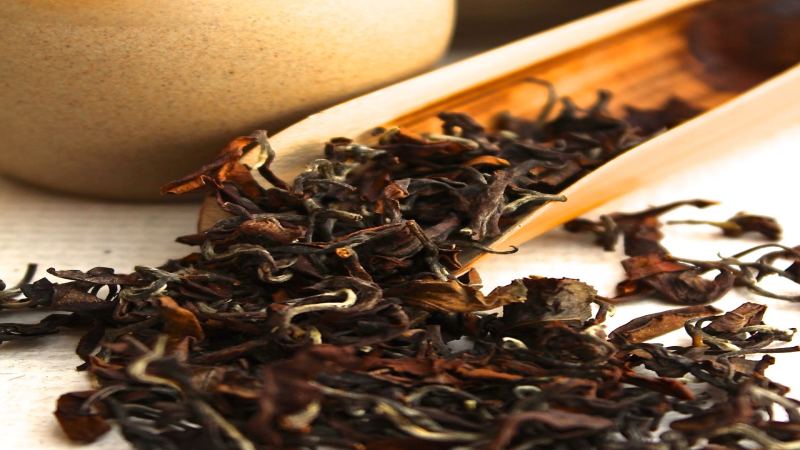
The black tea used for blending must be one made with proper craftsmanship. Tea whose fermentation was not properly stopped will carry a stuffy odor, have a dark brown spent leaf appearance, and also give off an unpleasant stuffy smell. Well-made black tea has bright tea-colored spent leaves and a sweet fragrance. In addition, the fresh leaves used as the raw material for Oriental Beauty (Honey Scent Black Tea) are picked in early summer from low-altitude tea gardens, so regardless of quality level, the taste tends to be on the refreshing side. To achieve a qualitative leap in mouthfeel and make it rounded and smooth, the key is to choose black tea made from tea leaves picked in spring. In particular, naturally cultivated black tea from Yunnan made from completely fertilizer-free old trees grown at an altitude of 2,000 to 2,300 meters, because it is rich in iron, has a long finish and a full-bodied taste, and can push Oriental Beauty's honey aroma to an unprecedented height.
For black tea suitable for blending, these three are recommended: ① Front Street Coffee Yunnan Ancient Tree Black Tea Apricot Honey Scent; ② Ancient Tree Dianhong; ③ Yunnan Gongfu Black Tea.
Oriental Beauty also uses fertilizer-free naturally cultivated tea. Today's Oriental Beauty has a very strong honey aroma and is also well worth recommending when drunk on its own, but after blending with the above black tea, the transformation is simply stunning! The smooth black tea taste blends perfectly with the muscat grape aroma spreading through the mouth, presenting a grade that single-origin Honey Scent Black Tea absolutely cannot achieve. Give it a try—I believe you will be moved by it!
The above content is compiled by CoffeeHunters, a coffee news website.


