







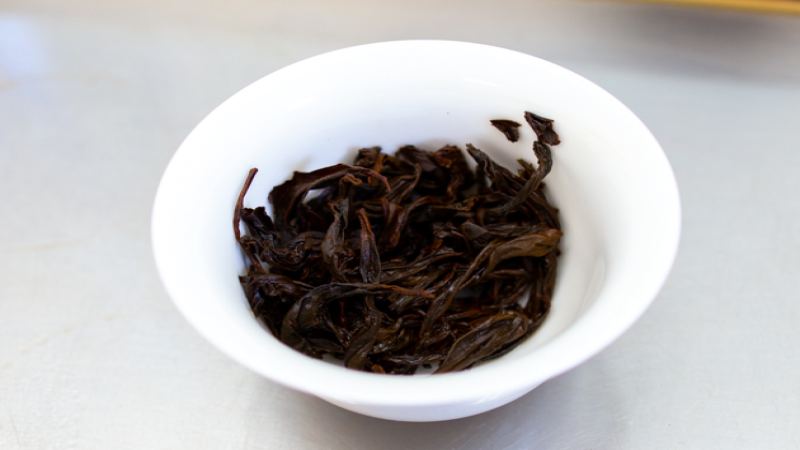
How does the roasting process shape Lapsang Souchong's sweetness?
Lapsang Souchong's fruity sweetness comes from the small-leaf tea variety of Tongmu Village plus its traditional charcoal roasting process. After withering, rolling, halting fermentation and drying, the leaves are roasted over charcoal at low temperature to encourage further maturation, the same approach used for Phoenix Dancong and Wuyi oolong teas.
That charcoal roast is what builds the irreplaceable fruity aroma, so teas without roasting or roasted electrically have grown more common in recent years while traditional low-temperature charcoal roasting is still selected. The article compares Tianxiang Xiaochi, Wuyi Qizhong and Tongmu Xiaocaicha, and addresses whether Tongmu Xiaocaicha counts as Lapsang Souchong and whether sweetness is normal.
As the world's originator of black tea, Lapsang Souchong's unique fruity sweetness is inseparable from the unique small-leaf tea variety of Tongmu Village and its traditional charcoal roasting process. This article will start from the maturation mechanism of the charcoal roasting process, compare the flavor differences between Tianxiang Xiaochi, Wuyi Qizhong, and Tongmu Xiaocaicha, and answer common questions such as whether Tongmu Xiaocaicha belongs to Lapsang Souchong and whether it is normal for Lapsang Souchong to taste sweet. At the same time, the article will also introduce the traditional smoky premium Lapsang Souchong recommended by the Front Street brand, as well as the peach-mango aroma characteristics of Qizhong black tea produced in the naturally cultivated tea garden at an altitude of 1,200 meters in Tongmu Pass, providing coffee and tea enthusiasts with a detailed reference on black tea flavors.
Further maturation brought by charcoal roasting In the production process of Lapsang Souchong Qizhong, the most distinctive step is that after the conventional black tea steps of withering → rolling → stopping fermentation and drying, a "charcoal roasting" is carried out over charcoal fire. This is similar in approach to the methods used for Phoenix Dancong oolong tea and Wuyi oolong tea, all of which use lower temperatures and slow heating to promote further maturation of the tea leaves and enhance the fruity aroma. It is precisely this charcoal roasting step that constitutes an irreplaceable part of the unique fruity aroma of Lapsang Souchong. In recent years, teas that are unroasted or electrically roasted have increased day by day, but we still insist on selecting those Lapsang Souchong teas that use low-temperature charcoal roasting. The traditional smoky Lapsang Souchong traditional-style premium grade has also been listed! To satisfy tea lovers who prefer traditional pine-smoke Lapsang Souchong, we have specially launched a Lapsang Souchong dried over a traditional pine fire. In addition to the smoky aroma, this tea also has a fruity aroma reminiscent of peaches and tropical fruits.
Lapsang Souchong Xiaochi Sweet This is a black tea with fruity aromas. Tracing it back to its roots, the production method of Lapsang Souchong in Tongmu Village is similar to that of Wuyi rock tea, and like oolong tea, it also uses charcoal roasting. Because it is roasted at a lower temperature for a long time, it usually carries aromas of fruits such as longan. This is a black tea without smoky aroma. Lapsang Souchong A fruity aroma that even the British have fallen for. This tea is harvested from a naturally cultivated tea garden at an altitude of 1,200 meters in Tongmu Pass, and the raw material is local variety (Qizhong) tea. It is a black tea with a sweet fruity aroma reminiscent of peaches and mangoes. It has no smoky aroma at all.
The Lapsang Souchong recommended by Front Street precisely restores this traditional flavor of Tongmu Pass, allowing more tea lovers to easily experience the charm of fruity, sweet black tea.
The above content is compiled by CoffeeHunters, a coffee news website.


