







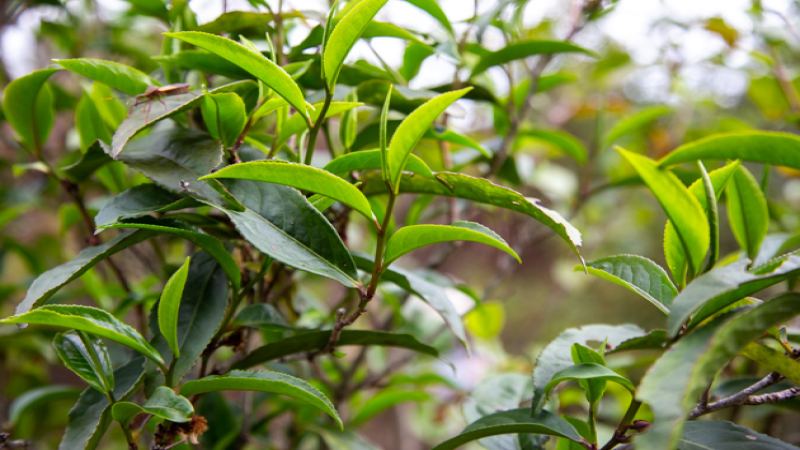
What defines the origin of Yunnan Baoshan coffee and purple tea?
High-mountain purple black tea is made from purple tea, a rare variety growing sporadically at high altitude in Yunnan's Lincang and Baoshan areas. Its purple stems set it apart from ordinary tea trees, and its anthocyanins give the finished tea a deep, raisin-like color with a purple perilla and floral aroma.
One example uses purple tea material from roughly 2,100 meters, grown without fertilizer or pesticides and given 24 hours of full withering. Across Yunnan the total quantity stays extremely low, making it rare. Locally it is usually made into raw Pu'er, though custom processing can also turn it into black tea or white tea.
Purple tea, a rare tea variety that grows sporadically in high-altitude areas such as Lincang and Baoshan in Yunnan, is distinguished from ordinary tea trees by its purple stems. The anthocyanins it contains give the finished tea a deep color, while its aroma carries a refreshing purple perilla-like note and floral fragrance. Locally, purple tea is mostly made into raw Pu'er, but through custom processing, it can also be crafted into black tea and white tea. The high mountain purple black tea recommended by Front Street this time uses purple tea material from about 2,100 meters altitude, grown without fertilizer or pesticides, and undergoes 24 hours of full withering, presenting an unprecedented rich aroma. This article will guide you through the origin environment, variety characteristics, anthocyanin content, and suggestions for drinking and storage of purple tea.
2020 High Mountain Purple Black Tea
The Origin of Purple Tea High mountain purple black tea is simply called "purple tea" at its place of origin. In the areas of Lincang City and Baoshan City, purple tea can often be seen in high mountain regions at nearly 2,000 meters altitude, but across all of Yunnan, its total amount remains extremely low, making it a quite rare tea variety. In a mountainous area just dozens of kilometers from the Myanmar border (about 2,100 meters), purple tea grown without fertilizer or pesticides is used as raw material, with particular emphasis on the thickness of the tea's aftertaste when selecting the garden. This year, due to COVID-19 blocking travel, we could not go to the origin in person, but we obtained fresh leaves from a long-term partner tea garden and commissioned the processing.
Purple Tea Is Rich in Anthocyanins At first glance, purple tea looks almost identical to ordinary tea trees, but upon closer inspection of its stems, a distinct purple color is visible. The tea leaves contain anthocyanins—a functional component similar to the polyphenols in red wine—and after being made into dry tea, the color becomes as deep and rich as raisins with their skins on. In Yunnan, purple tea is mostly made into raw Pu'er; but through special customization, it can also be processed into black tea or white tea, thereby opening up new directions for tea products.
The Aroma Evokes Purple Perilla and Floral Sweetness What truly attracts people to purple tea is its highly recognizable aroma and the flavor that runs through from the first infusion to the last. Properly processed purple tea emits a cool fragrance similar to purple perilla. This year, in order to further intensify the aroma, the withering layer was used for a full 24 hours of thorough withering. The long withering achieved a black tea with a fullness of aroma never seen before. But at the same time, excessive withering can cause the tea leaves to lose too much moisture, forcing fermentation to stop and producing a burnt note, so whether the final product can be made into a top-grade tea involves a certain gamble. Because of this, when the finished product was received and evaluated, that joy was truly beyond words. This year's high mountain purple tea is of extremely outstanding quality, and it is especially recommended to friends who love black tea. In addition, if stored in an oxygen-free environment for more than half a year, the tea will gradually mellow, and the aroma will become deeper and deeper. In my view, long-term aging is likewise something worth savoring.
The above content is compiled by CoffeeHunters, a coffee news website.


