







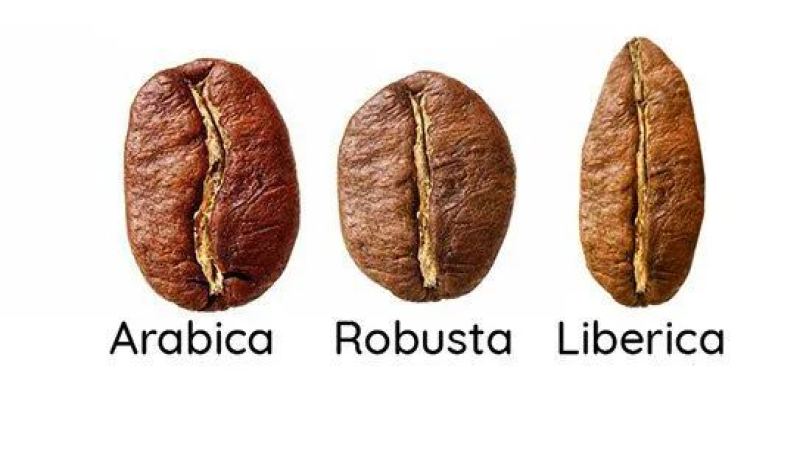
What are the main Liberica coffee characteristics to know?
Liberica is a tall coffee tree, often 6 to 20 meters high, with fruit larger than Arabica or Robusta, which is why it is called the large-bean species. Its cup is dominated by woody, smoky and dark-chocolate notes with a heavy mouthfeel, and it holds the lowest caffeine level of the three commercial species.
On liberica coffee caffeine content, the bean carries 1.23 g per 100 g, against 1.61 g for Arabica and 2.26 g for Robusta. The species originated in Liberia and was cultivated only in the 19th century. After the 1890 coffee rust outbreak the Philippines planted it widely and remains the largest producer, yet it supplies about 2% of world consumption.
Liberica coffee is one of the three major commercial coffee species, standing alongside Arabica and Robusta, yet it accounts for only 2% of global consumption. This coffee tree is tall with large fruit, and its flavor is dominated by woody and smoky notes, with the lowest caffeine content among the three. It originated in Liberia, Africa, and was only cultivated artificially in the 19th century; due to the difficulty of harvesting, it has never been widely promoted. After the coffee rust outbreak in 1890, the Philippines was the first to plant Liberica on a large scale, and today the Philippines remains the world's largest producer. This article will give you a comprehensive understanding of Liberica's flavor characteristics, cultivation history, and origin distribution, along with product recommendations from Front Street Coffee.
The Liberica coffee tree is far taller than Arabica and Robusta, typically growing to 6 to 20 meters, and the fruit it bears is also larger than the other two varieties, which is why it is also called the large-fruit species. In terms of flavor, Liberica is known for its heavy woody and smoky notes.
In the commercial coffee market, Liberica, Arabica, and Canephora (i.e., Robusta) are ranked as the three major coffee species. However, Liberica accounts for only about 2% of global consumption, a stark gap compared with Arabica's roughly 75% share and Robusta's roughly 20%.
Flavor Characteristics of Liberica
In terms of caffeine content, Liberica is the lowest among the three major species. Robusta contains 2.26 grams of caffeine per 100 grams of coffee beans, ranking first; Arabica follows with 1.61 grams per 100 grams; while Liberica contains only 1.23 grams of caffeine per 100 grams of beans.
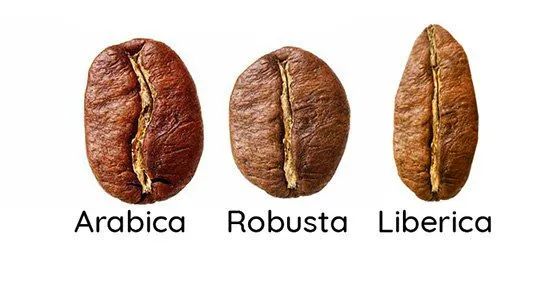
Despite its lower caffeine content, Liberica's flavor is not particularly pleasing. Its main profile consists of the heaviness of nuts and dark chocolate along with smoky aromas, with a strong and rugged mouthfeel that even carries notes of earth and wood. Compared with Arabica's bright and pleasant flavor, Liberica seems more somber and heavy. Some describe it as "liquid tobacco" because the intense smoky scent it gives off is quite similar to that of the tobacco plant. In the Philippines, locals even call it "Kape Barako," meaning "stud coffee."
However, although Liberica's flavor is not especially agreeable, its finish is unexpectedly excellent—the aftertaste is rich yet not harsh, and the aroma left in the mouth is unforgettable for a long time.
Liberica is often used as a raw material for instant coffee. In the Philippines, "Kape Barako" is a must-have breakfast coffee for many older generations. In Malaysia, Liberica coffee beans are made into a local specialty—white coffee.
The Cultivation History of Liberica
Liberica's cultivation history is as intricate as its flavor. It is native to Liberia on the west coast of Africa and was not discovered and artificially cultivated until the 19th century. Because the tree is too tall, harvesting is extremely difficult, so it has never been promoted on a large scale.
The Philippines Becomes the Largest Producer of Liberica
In 1890, a global coffee rust outbreak occurred, and Arabica coffee in Southeast Asia was hit the hardest. Facing the rapid collapse of the coffee-growing industry, the Philippine government was the first to look for coffee varieties with strong disease resistance as replacements, and as a result Liberica was first planted in Batangas and Cavite provinces.
The Philippines' low altitude, hot climate, and abundant rainfall are very suitable for Liberica cultivation. To this day, the Philippines remains the world's largest producer of Liberica. Subsequently, countries such as Malaysia, Indonesia, and Vietnam also planted large amounts of Liberica and its variants, allowing this variety to cross half the globe and flourish in Southeast Asia.
Front Street Coffee Recommendation: The Liberica coffee beans selected by Front Street Coffee come from the core producing region of the Philippines and are medium-roasted, preserving the signature smoky and dark chocolate flavors, making them suitable for coffee lovers seeking a unique taste experience.
The above content is compiled by CoffeeHunters, a coffee news website.


