







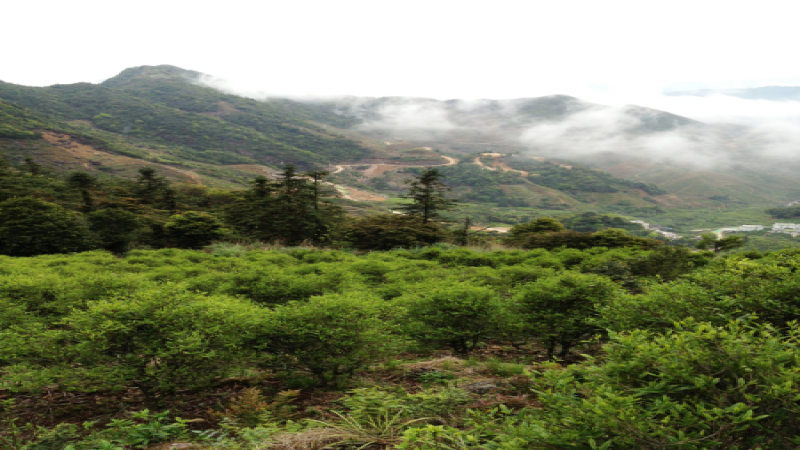
How Do Coffee Species Names Compare to Oolong Tea Schools?
Oolong tea is not one product but a major category alongside green and black tea, split into regional schools such as northern Fujian, southern Fujian, Chaoshan and Taiwan. Wuyi rock tea, Anxi Tieguanyin, Chaoshan single-bush tea and Taiwan high-mountain tea each carry their own flavor profile and origin.
The same logic of naming and origin applies to coffee, where the common name for coffee covers distinct botanical species, mainly Arabica, Robusta and Liberica. Just as a tea's region and craft decide its style, a coffee species name points to plant type, growing conditions and processing rather than a single uniform taste.
What types of oolong tea does Heytea actually have? Is its high-mountain oolong Taiwan Dong Ding oolong? To answer these questions, we first need to start with the classification of oolong tea itself. Oolong tea is not a single tea product, but a major tea category alongside green tea and black tea. Due to differences in production regions, varieties, craftsmanship, and historical culture, it has formed distinctive schools such as northern Fujian, southern Fujian, Chaoshan, and Taiwan. This article will guide you through the core production areas and styles of oolong tea, from Wuyi rock tea to Anxi Tieguanyin, and then to Chaoshan single-bush tea and Taiwan high-mountain tea, breaking down their flavor characteristics and origins one by one. At the same time, the article will also retain relevant recommendations and product information from the Front Street brand, helping you find an oolong tea that suits your taste while learning about the subject.
First, let us understand some basic knowledge: What is oolong tea?
Oolong tea is a category, type, or school of tea, a group of similar teas. Some other categories that may be more familiar are green tea and black tea.
Overall, all teas have unique geographical locations, plants (different varieties of Camellia sinensis or a few closely related Camellia species), processing, heritage, history, and human culture. Every tea is unique in all these aspects, and all families, or categories, of tea also differ in all these aspects. I will start with a regional overview, because oolong tea is a specialty of Chinese-speaking regions.
Oolong tea is specific to certain regions. In China, almost all tea-producing areas have black tea and green tea, but only a few regions process oolong tea. When it comes to China, there are three regions that each have their own oolong tea style. The image above is a linguistic map showing the different local languages of the region, and hopefully this will help us understand a culturally diverse area.
Wuyi Mountains, Northern Fujian Oolong
It is usually considered that the origin of oolong tea is in the Wuyi Mountains in northern Fujian, southern China. The Wuyi Mountains are a special mountainous area that produces some of the best oolong tea on earth. Oolong tea grown in the Wuyi Mountain range is collectively called rock tea, “rock bones and floral fragrance.” The tea leaves are dark, long, and twisted, and the brewed tea is deep red. The most famous is Da Hong Pao, sometimes used for the general oolong tea region. Other common ones are Shuixian and Rougui. More generally speaking, tea from the Wuyi Mountains and northern Fujian is called northern Fujian oolong tea, with northern Fujian being the general name for the region. The image above is a map of the local language of the area, with red indicating the northern Fujian region.
Anxi, Southern Fujian Oolong
Further south, in Fujian there is also southern Fujian oolong tea. The most important is Tieguanyin from Anxi. These teas are usually rolled into balls. Today, most oolong tea is processed very lightly, with dark green leaves and green or yellow tea. Traditionally, tea in southern Fujian was also dark, and dark leaves brewed into amber tea can still be found today. The southern Fujian region is the blue area on the mainland, as shown in the language map, and Taiwan also speaks the same language.
Chaoshan, Single-Bush Oolong Tea
The third major region of Chinese oolong tea is in Chaoshan, Guangdong, with Phoenix Dancong being highly sought after and unique. Chaoshan is also the hometown of the art of gongfu tea brewing. On the map, the Chaoshan region is the pink area around Chaozhou and Shantou (Chaoshan is actually an abbreviation of these towns). Chaoshan tea leaves are long and twisted. Traditionally, they are also heavily roasted, although there are now more variations: some varieties are usually green, while others keep a darker style.
Taiwan, High-Mountain Oolong Tea
Most of Taiwan’s population is actually descended from Ming dynasty immigrants from these regions, especially southern Fujian. This is also why Taiwan oolong tea is famous around the world: Chinese settlers came from the mainland’s oolong tea-producing areas, so they naturally planted and cultivated oolong tea there as well. In the history of Taiwan oolong tea, one can see the influence of southern and northern Fujian on Taiwan oolong tea, although the oolong tea style there has now changed. The most famous Taiwan high-mountain oolong tea style, or high-mountain tea, is generally very light and steeped into a pale yellow color. Others include Baozhong, which is usually very obviously green, and the soft and oxidized oolong tea (Baihao oolong).
The above content is compiled by CoffeeHunters, a coffee news website.


