







What Does Moka Pot Brew Time Teach About Resteeping Tea?
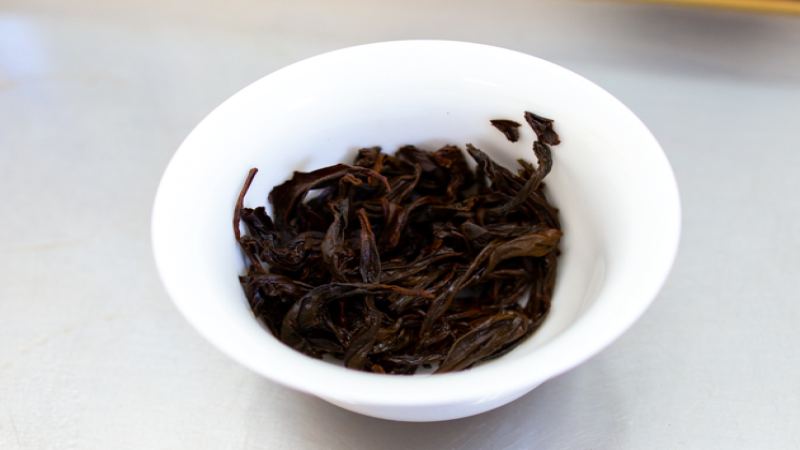
A Lapsang Souchong Congou black tea can be steeped around six times when the leaf-to-water ratio and pouring rhythm are right. The working ratio is about 1 gram of tea per 40 milliliters of water, with the first steep lasting roughly one minute and later steeps needing almost no covered steeping.
Water choice shapes the result as much as timing does. Mineral water or mountain spring water is preferred, while tap water should be boiled three to five minutes and filtered through activated carbon to strip residual chlorine. Reverse-osmosis or distilled water lacks minerals and tends to brew thin, bland tea.
How many times can Lapsang Souchong Gongfu black tea actually be resteeped? And for two people, how many grams of tea leaves should be measured out? The answer lies in the water used, the tea-to-water ratio, and the rhythm of pouring. This article starts with water treatment, explaining why mineral water or mountain spring water is preferable, why tap water needs to be boiled to remove chlorine, and how limescale and frequent water changes affect the taste of tea; it then gives the general ratio of 1 gram of tea per 40 milliliters of water, and demonstrates the steps of warming the vessel, adding the tea, and a one-minute first steep. The key point is that from the second steep onward, almost no covered steeping is needed—simply letting boiling water pass over the leaves is enough. Only in this way can six consecutive steeps still carry flavor, and the same principle applies to Front Street black tea.
When it comes to water for brewing Lapsang Souchong black tea, I personally prefer mineral water or mountain spring water. If only tap water is on hand, first bring it to a boil and keep it boiling for three to five minutes so the residual chlorine from disinfection can evaporate. But note that boiling alone cannot completely remove chlorine. It is best to filter it again with a water purifier fitted with an activated carbon filter; otherwise the aromatic compounds in the tea will react with chlorine, and the original fragrance will be greatly diminished. Moreover, while chlorine kills harmful microorganisms, it also harms beneficial bacteria in the gut; some studies suggest it may have various negative effects at the cellular level and may even be an allergen trigger.
If the water is distilled or filtered by reverse osmosis, its minerals are almost entirely stripped away, and the brewed tea often tastes thin and bland. So it is advisable to choose water that contains minerals, such as tap water. There is one more thing to keep in mind: never remove the limescale from the inner wall of your kettle. Once you have cleaned it with citric acid, you will never again brew the same taste as before.
Once you have settled on the type of water, it is best to stick with it from then on. If you switch water sources midway, a large amount of minerals will leach out, and before long the taste of the tea will noticeably deteriorate. Keeping the same water is the secret to making tea taste better and better.
As for the amount of tea, usually 1 gram of tea corresponds to 40 milliliters of water. Converted, a 200-milliliter pot needs about 5 grams, while a 300-milliliter one takes about 8 grams. If you do not have a scale, two teaspoons are roughly equivalent to 3 to 4 grams.
When brewing, first warm the tea vessel with boiling water. Black tea releases its flavor more easily at high temperatures, and the key to preventing the water temperature from dropping sharply is to keep the vessel sufficiently warm. Warming the vessel for about 10 seconds is enough: less than 10 seconds and the water will be too cool, while more than 10 seconds and the water temperature begins to fall.
Next, put the tea leaves into the pot. If you scoop them directly from the bag, the leaves remaining in the bag easily absorb the steam rising from the pot's opening, so it is best to weigh out the required amount first and then add the tea.
For the first steep, pour in boiling water and let it steep covered for about one minute. If you prefer a lighter taste, the time can be slightly shorter. If the tea is too strong, dilute it with boiled water; if it is too weak, pour the tea back into the pot and let it steep a little longer.
What many people do not know is that both black tea and green tea can actually be brewed six times. The methods described in various books and on websites are all over the place, so below is the approach I have summarized from experience.
To make every steep taste good, the pouring technique from the second steep onward is extremely important, and the second steep especially so. Usually the second steep "needs no covered steeping"—meaning simply let the boiling water pass quickly through the teapot, with a covered steeping time of no more than one second. When done this way, guests watching nearby almost always ask in surprise, "What? Just that short?" But do not underestimate it; this method also makes the tea taste better. Repeat the same way from the third steep onward.
However, if too much time passes between the first and second steeps, or if the tea is poured continuously, the result will be completely different. After sitting for a while, the leaves remain moist for a long time, and their internal substances have actually already been slowly extracting. So when brewed after a long rest, the tea is mostly on the strong side, and you can adjust the concentration by adding boiling water. Interestingly, even tea that is twice as strong is hard to notice; only at the moment of dilution will people exclaim, "This is better."
By the way, from the second steep onward, if it still tastes weak after pouring boiling water over it, you can pour the tea from the fair cup or pot back into the teapot and pass water over it once more.
The above content is compiled by CoffeeHunters, a coffee news website.


