







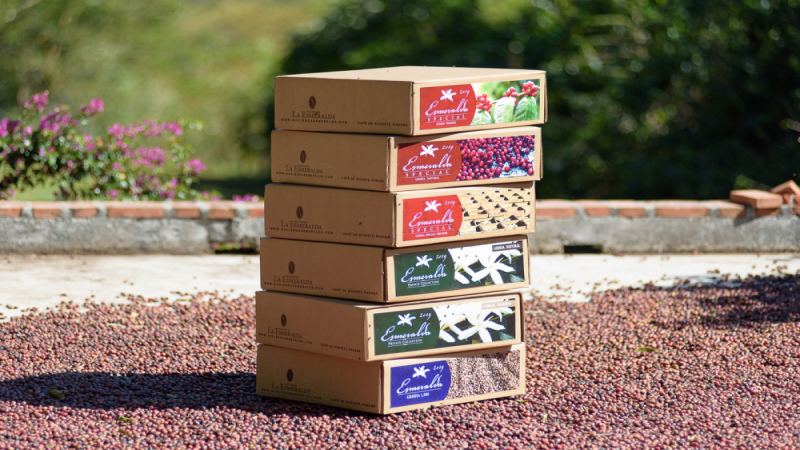
What do the Red, Green, and Blue labels mean in geisha coffee?
Panama's Hacienda La Esmeralda is the estate where geisha coffee became famous, and its beans are sorted into three grades: Red Label, Green Label, and Blue Label. The labels differ by plot, altitude, and cup profile. The Peterson family bought the Boquete estate in 1964, divided its coffee into brands in 1973, and added geisha in 2012.
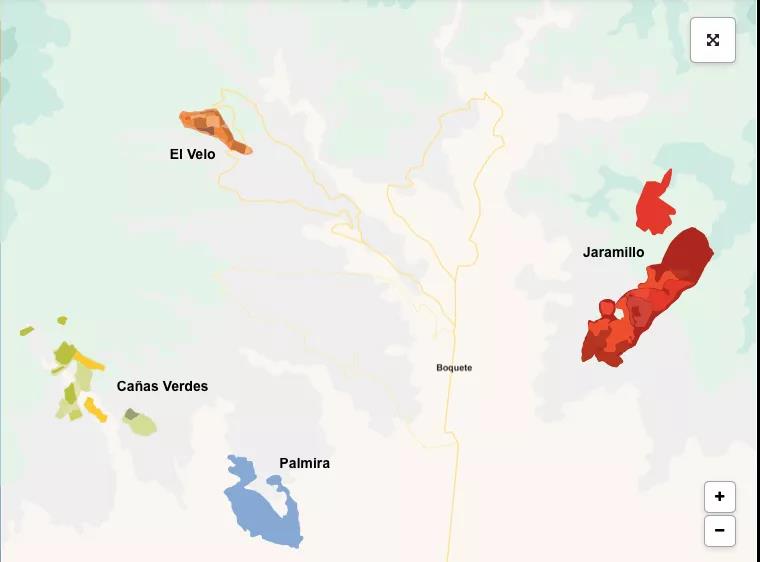
The estate covers four plots: Cañas Verdes, El Velo, Jaramillo, and Palmira. Most high-quality geisha comes from Jaramillo, at 1,600 to 1,700 meters with about 4,000 millimeters of annual rain, and Cañas Verdes, at 1,600 to 1,800 meters with roughly 3,500 millimeters. El Velo, acquired in 2012, sits at 1,700 to 1,900 meters and also holds a small amount of SL28.
Panama's Hacienda Esmeralda is the legendary birthplace of Geisha coffee, but its starting point was not Geisha. From the Peterson family's purchase of the estate in 1964, to the division of brands in 1973, and then to Geisha's stunning debut in 2004, Hacienda Esmeralda has walked a path of discovery and grading. This article will outline the plot distribution of Hacienda Esmeralda, the discovery journey of Geisha, and provide a detailed interpretation of the definitions, production areas, altitudes, and flavor differences of the three grades: Red Label, Green Label, and Blue Label. It will also introduce the corresponding product information from Front Street Coffee, bringing you a comprehensive understanding of Hacienda Esmeralda's Geisha grading system.
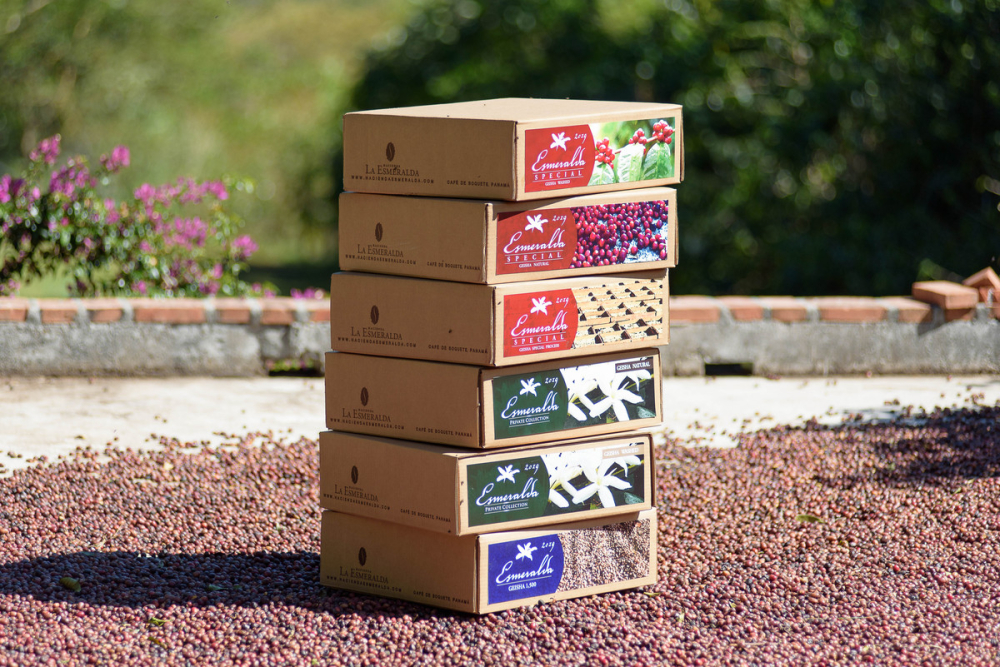
The microclimate and volcanic soil around the Baru Volcano in Panama provide excellent growing conditions for many coffee estates, and Hacienda Esmeralda is one of them.
Hacienda Esmeralda is located in a corner of the Baru Volcano. The Peterson family purchased this estate in Boquete in 1964. At that time, coffee was not the main business; dairy farming was the focus, and the estate was more of a place for leisure and entertainment, far from its current reputation in the coffee world. In 1973, Price Peterson divided Hacienda Esmeralda's coffee cultivation into three brands for sale based on geographical conditions such as plot and climate (Esmerala Special, Diamon Mountain grows, Palmyra). In 2012, Geisha was added, forming four major brands.
Hacienda Esmeralda is divided into four plots: Cañas Verdes, El Velo, Jaramillo, and Palmira. All coffee beans are sent to four farms for post-processing. The first farm purchased by the Peterson family, the estate owners, was Palmira. The high-quality Geisha mainly comes from the Jaramillo and Cañas Verdes plots.
Jaramillo has an annual rainfall of about 4000 milliliters, a significant temperature difference between day and night, and an average altitude between 1600 and 1700 meters.
Cañas Verdes has an annual rainfall of about 3500 milliliters and an average altitude between 1600 and 1800 meters.
El Velo: This is the latest plot acquired by Hacienda Esmeralda in 2012, with an average altitude of 1700 to 1900 meters. In addition to growing Geisha and Catuai, this plot also cultivates a small number of exotic varieties, such as Kenya's famous SL28.
In 1996, second-generation estate owner Price Peterson bought the Jaramillo plot. The coffee produced there had subtle citrus and floral notes, vastly different from the berry flavors common in Central and South America. In 2002, Price and his son Daniel believed this profile should come from a single variety in a specific production area, so they began cupping coffee varieties planted at different altitudes on the estate one by one.
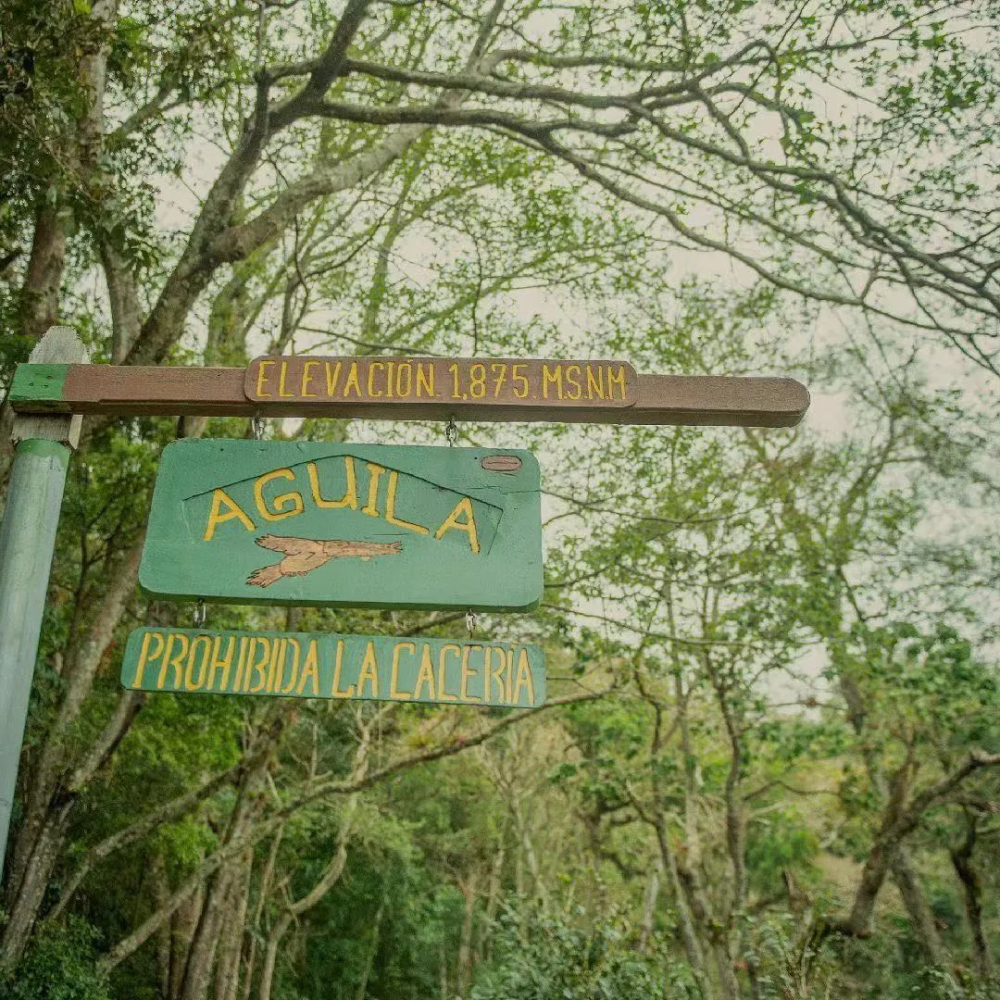
The result revealed that this fascinating flavor actually came from a windbreak at the edge of Jaramillo, at an altitude between 1500 and 2000 meters. This coffee tree is tall and slender with sparse leaves, low yield, and low economic value, usually used only as a windbreak. The Petersons also discovered that this coffee tree's flavor performance at 1400 meters altitude was completely different from that at 1500 meters. The two reached a consensus: this coffee tree must be planted above 1500 meters to present such a unique flavor.
Traceability revealed that this coffee tree was introduced from Ethiopia in 1963 to address disease issues in coffee cultivation. At the 2004 Best of Panama green bean competition, Hacienda Esmeralda won the championship with this bean, and Geisha coffee became internationally renowned. Only coffee fruits grown above 1400 meters altitude possess the unique flavor of the Geisha variety, and based on planting altitude and cupping results, Geisha is divided into three grades: Red Label, Green Label, and Blue Label.
Front Street Esmeralda Special, commonly known as Red Label
Geisha from Esmeralda Special, which we commonly call Red Label. It uses Geisha coffee beans grown at altitudes of 1600 to 1800 meters, with a cupping score above 90, from the Jaramillo and Canas Verdes production areas. In the independent auctions held by Hacienda Esmeralda itself, only the Geisha lots from designated plots that are put up for bidding are considered auction Red Label. Customers often ask whether auction Red Label or Red Label tastes better. In fact, non-auction Red Label and auction Red Label come from the same plot; the only difference is whether they participate in the auction. Front Street Coffee believes there is no need to insist on the auction level: first, the price is indeed high; second, if you just want to try it, Red Label is also a good choice.
Front Street Coffee's Hacienda Esmeralda Red Label Geisha comes from the Mensha plot. This grade of Geisha is processed using either natural or washed methods, with flavors featuring special, bright floral fragrance and citrus aroma.
Front Street Private Collection, commonly known as Green Label
Private Collection, commonly known as Green Label, is not an independent competition lot but a Geisha variety that does not participate in auctions yet still has excellent quality. It uses micro-lot blended beans grown at altitudes of 1600 to 1800 meters from different plots such as Jaramillo and Canas Verdes. People often ask about the difference between Red Label and Green Label. Front Street gives the most straightforward answer: Red Label can be traced back to a specific small plot, while Green Label is a blend and cannot be traced. Due to the blended bean model without detailed plot labeling, Green Label sometimes has a high similarity in flavor to Red Label, but the next release may differ. Front Street feels that drinking Green Label is like buying a lottery ticket—perhaps the lot you drink this time tastes like Red Label. Front Street's Esmeralda Green Label Geisha is processed using natural/washed methods.
Front Street Coffee's Hacienda Esmeralda Green Label Geisha is processed using the washed method. The washed Green Label Geisha has fresh jasmine and ginger flower aromas, bright citrus-like acidity, and a thick, juicy mouthfeel.
Front Street Geisha 1500, commonly known as Blue Label
The Geisha 1500 brand is what we commonly know as Blue Label Geisha. It uses blended beans grown at altitudes of 1400 to 1500 meters from three different plots: Jaramillo, Canas Verdes, and El Velo. The flavor has subtle floral notes, fruit acidity, and sweetness, with a less thick mouthfeel. Front Street's Blue Label Geisha is only available in washed processing. Currently, Blue Label Geisha has been discontinued, and Hacienda Esmeralda only retains the two major grades: Red Label and Green Label.
The above content is compiled by CoffeeHunters, a coffee news website.


