







How Does Geisha Coffee Differ From Blue Mountain?
Jamaica Blue Mountain and Geisha are two distinct top-tier specialty coffees. Blue Mountain is grown in four certified Jamaican parishes and graded by the Jamaica Coffee Industry Board, with Blue Mountain requiring 17 mesh or larger beans, under 3% defects, and roughly 13% moisture. Geisha is defined by floral aroma, bright citrus and peach acidity, and an oolong tea finish, with scarce yields that keep prices high.
The two differ in origin systems and flavor logic. Blue Mountain's reputation rests on balanced sweetness, mild acidity, and government-backed grading and certification that limit supply. Geisha's value comes from its aromatic profile, delicate cultivation, and limited output rather than a formal grading board. For drinkers comparing blue mountain coffee and Geisha, the choice comes down to balance and structure versus aromatic intensity.
Blue Mountain coffee and Geisha coffee are both among the world's top specialty coffees, yet they represent entirely different styles and value logics. Blue Mountain is renowned for its balanced, full-bodied character and harmonious acidity, sweetness, and bitterness, protected by strict grading and origin certification from the Jamaican government; Geisha has taken the world by storm with its rich floral aromas, bright acidity of citrus and peach, and oolong tea finish, with scarce yields, delicate cultivation, and persistently high prices. From the perspective of Front Street Coffee, this article systematically sorts out the definitions, grading systems, origin backgrounds, flavor characteristics, and representative products of the two, and offers beginner recommendations to help coffee lovers clearly understand the core differences between these two top-tier bean varieties.
\n\nFor more specialty coffee knowledge, please follow the WeChat official account: Front Street Coffee (FrontStreet Coffee)\n\nJamaican Blue Mountain coffee beans have long been regarded as one of the world's finest coffees. Their full-bodied aroma and balanced harmony of acidity, sweetness, and bitterness have captivated many discerning drinkers. In recent years, however, Geisha coffee beans have rapidly risen to become the world's most sought-after top-tier coffee beans thanks to their outstanding flavor and mouthfeel. For a time, merely mentioning Geisha seemed to equate it with "high price" and "specialty." So beginners have asked Front Street: since both are top-tier coffee beans, what exactly is the difference between them?\n\nWhat is Blue Mountain coffee?\n\n
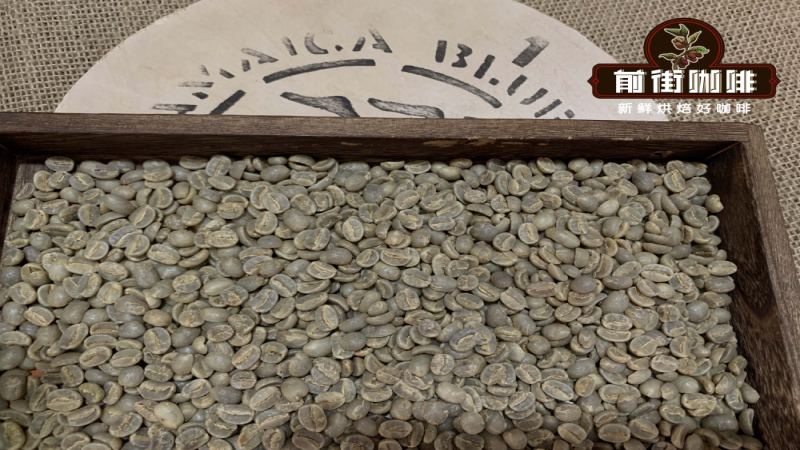
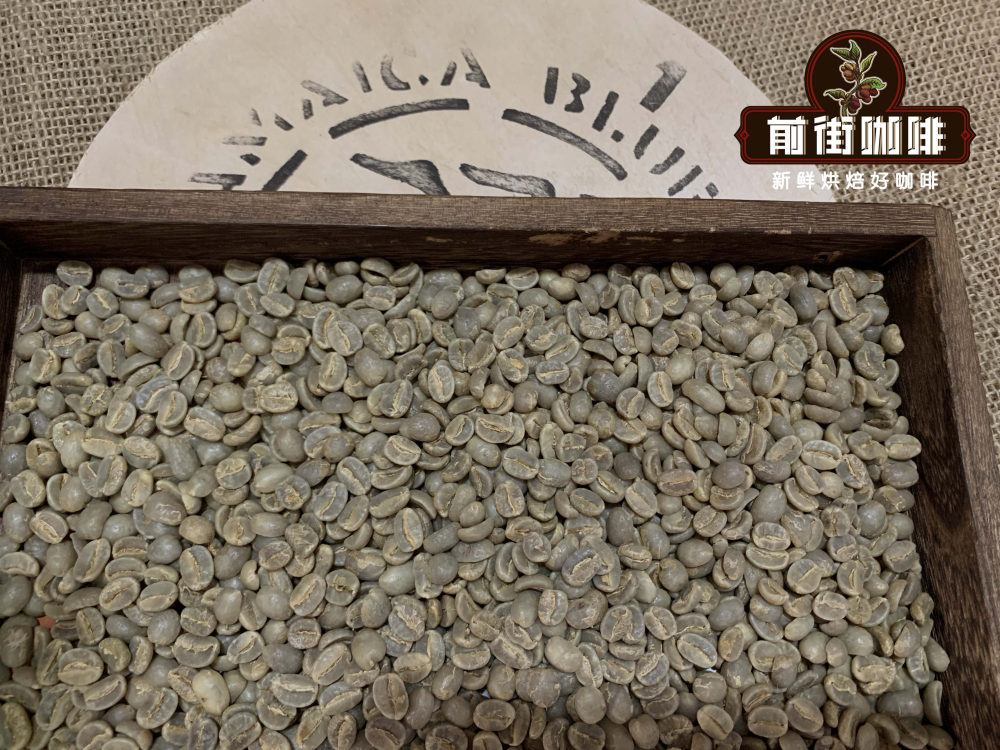
\n\nTo ensure the quality of Blue Mountain coffee each year and allow consumers to distinguish genuine Blue Mountain coffee from fakes, the Jamaican government established the Jamaica Coffee Industry Board (CIB) in 1953 to oversee and safeguard the quality of Jamaican coffee. Jamaican Blue Mountain coffee is divided into four grades: No.1 through No.3, and finally PB, which means hand-selected round beans. Among them, the highest grade, Blue Mountain No.1, has standards of beans of 17 mesh or above, a defect rate below 3%, and a moisture content of about 13%. When people in China speak of Blue Mountain coffee, they generally mean Blue Mountain No.1 coffee beans; other grades are not commonly seen on the Chinese market.\n\n
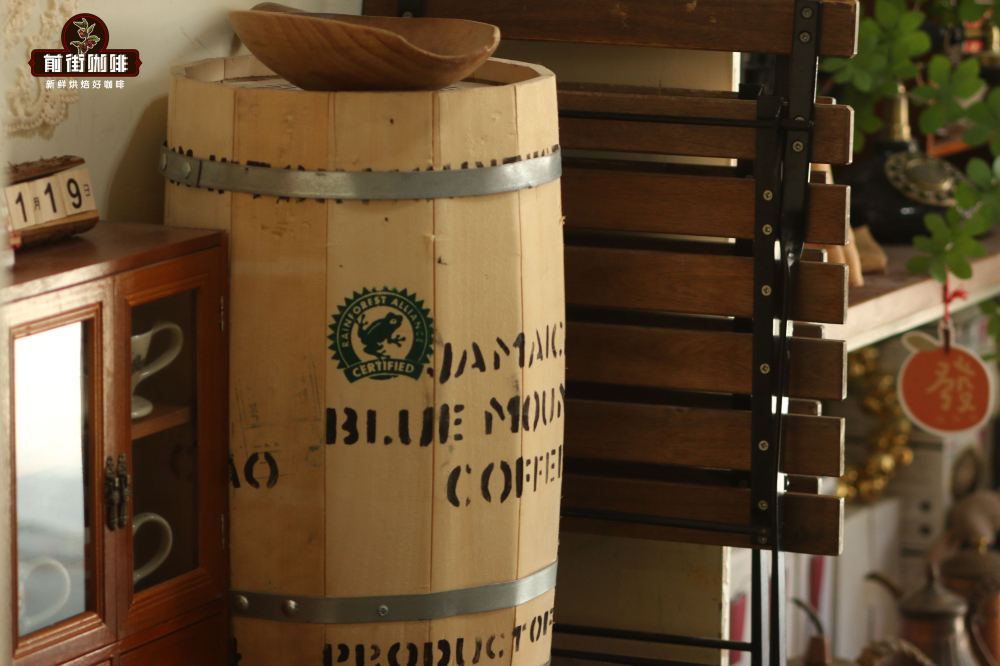
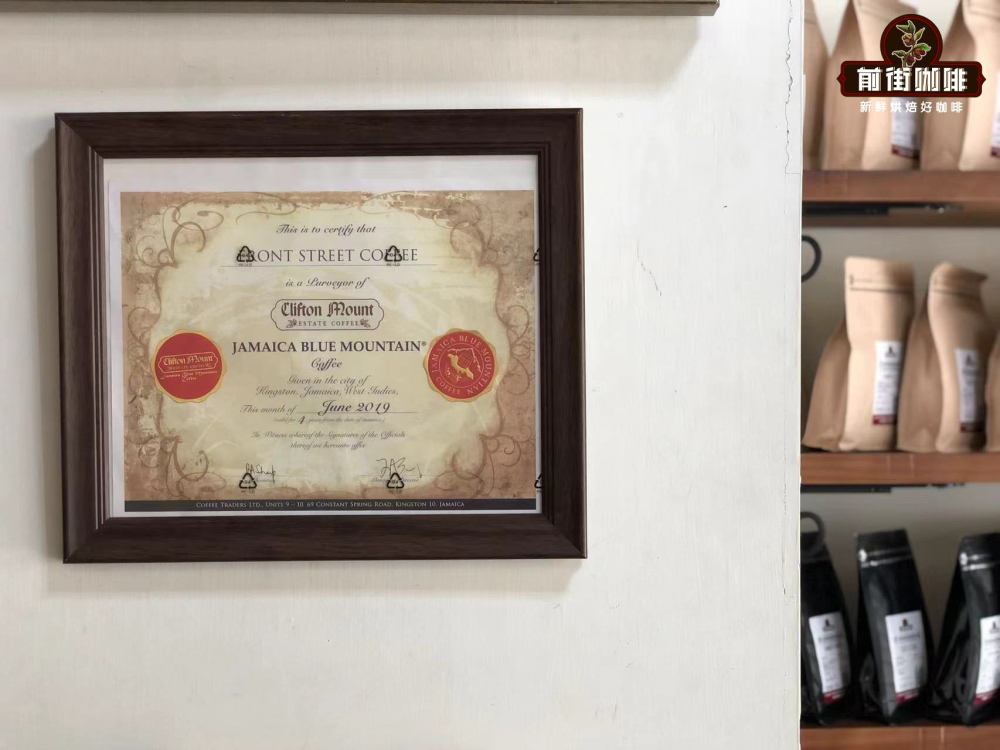
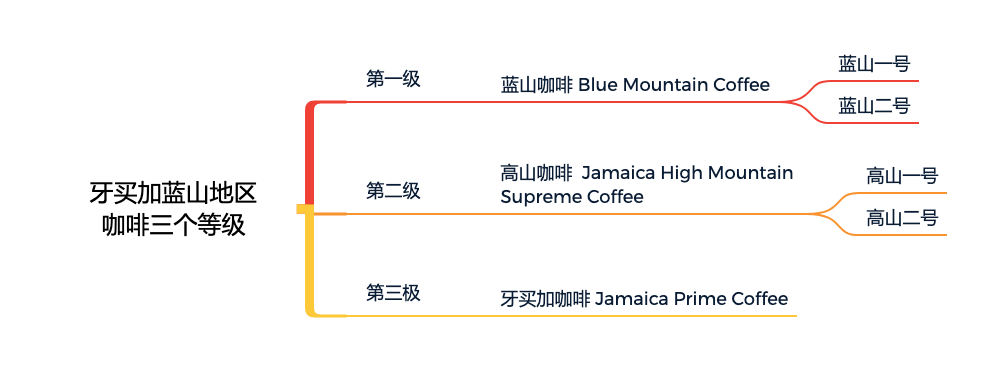
\n\nThe authentic Blue Mountain coffee production areas certified by the Jamaica Coffee Board cover four administrative regions: St. Andrew, St. Thomas, St. Mary, and Portland.\n\nThese areas contain numerous coffee estates and farms of varying sizes. At present, the finest coffee plantation in the Blue Mountain region is Clifton Mount Estate, which is an ancient coffee-producing site in Jamaica that is still in normal operation and is the only farm in Jamaica to have obtained Rainforest Alliance certification.\n\nCoffee from Jamaica's Blue Mountain region is divided into three grades: Blue Mountain Coffee, Jamaica High Mountain Supreme Coffee Beans, and Jamaica Prime Coffee Beans. Blue Mountain Coffee and High Mountain Coffee are each further divided into two grades. Ranked from highest to lowest quality, they are: Blue Mountain No.1, Blue Mountain No.2, High Mountain No.1, High Mountain No.2, and Jamaica Coffee.\n\n
\n\nTrue Blue Mountain coffee is made from the finest local green coffee beans, which is precisely where the pleasure for tasters lies. Its flavor is rich and balanced, with fruity notes and acidity, able to satisfy different people's needs. In addition, high-quality fresh Blue Mountain coffee has a particularly long-lasting flavor, just as drinkers often say—an endless aftertaste.\n\nWhat makes Geisha coffee special? Why is it so expensive?\n\nToday, even if you don't drink pour-over coffee, you often hear the name Geisha, and it is often linked with the word "expensive," frequently topping lists of the world's most expensive coffees. So why is Geisha so expensive?\n\n
\n\nGeisha coffee, which has swept the world, displays in the cup rich, elegant floral aromas, full-bodied acidity of citrus, peach, and complex fruits, a creamy, silky mouthfeel, and a finish with the sweet fragrance of oolong tea. Its exquisite flavors make it seem as though you are not drinking coffee but savoring a cup of fragrant fruit tea. Front Street has mentioned in many articles that coffee, as an agricultural crop, always has its flavor expression closely tied to factors such as variety, climate, altitude, soil, and management, and is a true reflection of the variety and its local terroir. Post-processing methods and roasting should preserve, restore, and present their most authentic flavors to the greatest extent possible. Therefore, Geisha's outstanding performance cannot be separated from the combined effect of the above factors.\n\nAs the saying goes, things are precious because they are rare, and Geisha coffee's yield is extremely scarce. Panama produces about 10,000 tons of coffee each year, while the famous Hacienda La Esmeralda produces only 150 bags of green beans annually, about 9,000 kilograms. Calculating on the basis that Geisha accounts for only 3% of production, that is only 270 kilograms. Add to that the media hype surrounding Geisha's flavor, and people's enthusiasm for Geisha only grows, so Geisha coffee prices naturally remain high.\n\n
\n\nCompared with other Arabica varieties, Geisha not only has low fruit yield, but the plant itself is also especially fragile and quite picky about its growing environment. It requires high altitude, fertile soil, cloud cover or shade from plants, and cannot be exposed to direct sunlight. The leaf surface system of the Geisha coffee tree is very thin, which means photosynthetic efficiency is very low. Its roots are also fragile, and the absorption of water and nutrients is very slow, so coffee yields are extremely low. Combined with the high-altitude growing environment, the fruit also matures relatively late. A single Geisha coffee tree produces only half the fruit of a Caturra variety, which is one reason Geisha is so valuable.\n\nHacienda La Esmeralda's owner, the "discoverer" of Geisha, once said that the estate needs a large number of shade trees to shield the delicate Geisha from sunlight, and that traditional pruning must also be used in the early stages of planting, otherwise the plants easily die. The higher the altitude at which Geisha is planted, the longer the coffee fruit takes to mature, and only then is the flavor expression more complex and unique. Geisha fruit must be harvested at the most appropriate stage of ripeness and immediately undergo post-processing. This is a tremendous test of the estate owner's professional judgment and the estate's labor quality; failing to seize the right timing will lead to a decline in quality and waste.\n\n
\n\nDifferences in flavor characteristics between Blue Mountain coffee and Geisha coffee\n\nFront Street believes that much of the credit for Geisha coffee's extraordinary reputation today goes to Panama's Hacienda La Esmeralda. Daniel, the third-generation owner of Hacienda La Esmeralda, said that his discovery of the "Geisha variety" came only after years of comparison and testing, when he finally pinned down this variety in 2003. And two weeks before the 2003 Best of Panama (BOP) competition, while selecting competition lots on the internal cupping table, he discovered that the Geisha variety possessed outstanding flavors of jasmine, citrus, peach, blueberry, bergamot, and sugarcane. These flavors differed from the preferences of people in the coffee circle at the time, but Daniel still chose to enter the Geisha variety in the competition and won first place.\n\nIn 2005, Hacienda La Esmeralda entered Geisha in the evaluation by the Specialty Coffee Association of America, or SCAA, defeating many star contenders and earning the honor of a world-class specialty coffee, sweeping the world championships in 2006 and 2007, and thus once again drawing the attention of coffee people worldwide. After that, coffee-producing regions everywhere began racing to introduce Geisha, including Yunnan in our own country, which also began growing this popular variety. Although Geisha can now be produced all over the world, Front Street believes that as the discoverer of Geisha's flavor, Hacienda La Esmeralda not only strictly controls the quality of the coffee it produces, but its use of natural processing best presents the classic "Geisha taste."\n\n
\n\nOn Front Street's bean list, there are about 10 choices for Geisha coffee alone. If you are drinking Geisha for the first time, Front Street would recommend Hacienda La Esmeralda's natural Red Label or washed Green Label. A cup of pour-over coffee made with natural Esmeralda Red Label costs 75 yuan, while a single cup of Green Label Geisha costs 60 yuan. The so-called Red Label actually refers to the Esmeralda Special grade (including auction lots), whose label background color is bright red; Green Label refers to Private Collection, named for its green label design.\n\n
\n\nThe highest-grade Red Label is picked from coffee cherries of high-altitude Geisha (1,600–1,800 meters), with a cupping score exceeding 90 points, mainly from the two farms Jaramillo and Cañas Verdes. Although the altitude brings challenges for cultivation and harvest, the floral and fruity charm of Geisha is most prominent in the Boquete production area. Hacienda La Esmeralda holds its own separate auction event, and among the divided plots, the Red Label lots put forward for competition are called auction lots. Auction lots have a unique number, and each number corresponds to an entire lot from a plot. The one we hear most often is probably the Mario plot of Jaramillo farm. The Esmeralda Red Label Geisha coffee beans Front Street obtained come from the Mario plot and use natural processing.\n\n
\n\nIn addition, a Green Label grade Geisha from Front Street that uses washed processing shows in cupping a fresher, more natural flavor of lemon, berries, pomelo, and Tieguanyin tea.\n\n
\n\nPrivate Collection, commonly known as Green Label, was once a Geisha lot of excellent quality that did not participate in the auction. Green Label is harvested from a blend of Geisha from different plots within the two main estates at an altitude of 1,600–1,800 meters. With its classic citrus aroma and honeyed charm, it has become the priority choice for many Geisha fans who are "short on cash." Starting in 2022, Hacienda La Esmeralda also began indicating which sub-estate this grade of Geisha comes from. According to information disclosed on Hacienda La Esmeralda's official website, Green Label Geisha from different plots will show subtle differences in flavor direction due to terroir differences.\n\n
\n\nFront Street believes that to present the classic "Geisha flavor," more floral aroma and acidity must be preserved, so Front Street's Geisha coffee beans are all light-roasted, with roasting curves adjusted accordingly for different processing methods and flavor differences.\n\nFlavor characteristics of Blue Mountain coffee\n\nJamaica is the only country in the world with a government coffee management agency—the Jamaica Coffee Industry Board (CIB for short), under Jamaica's Ministry of Agriculture and Fisheries. CIB's functions include planting technique guidance, processing training, fair trade, quality supervision, and a series of matters concerning the quality and brand of Jamaican Blue Mountain. The board members of CIB are all estate owners in Jamaica who own at least a certain scale of plantation (due to shifts in the industry, newly certified Jamaican Blue Mountain estates now need an area of more than 50 hectares).\n\n
\n\nCIB stipulates that only Blue Mountain coffee beans produced in Jamaica's Blue Mountain production areas above 2,200 feet can be called Jamaican Blue Mountain. Its grades are divided by bean size into NO.1, NO.2, NO.3, and hand-selected PB. Among them, the basic standards for NO.1 Blue Mountain green beans are beans of 17 mesh or above, a defect rate below 3%, and a moisture content of about 13%. With low yield, large beans, excellent quality, harmonious taste, and a proper balance of acidity, bitterness, aroma, body, and sweetness, it is globally recognized as a supreme product, so the price of Blue Mountain No.1 is the highest among all Blue Mountain coffees.
The above content is compiled by CoffeeHunters, a coffee news website.


