







How does the Costa Rica coffee process shape Mozart beans?
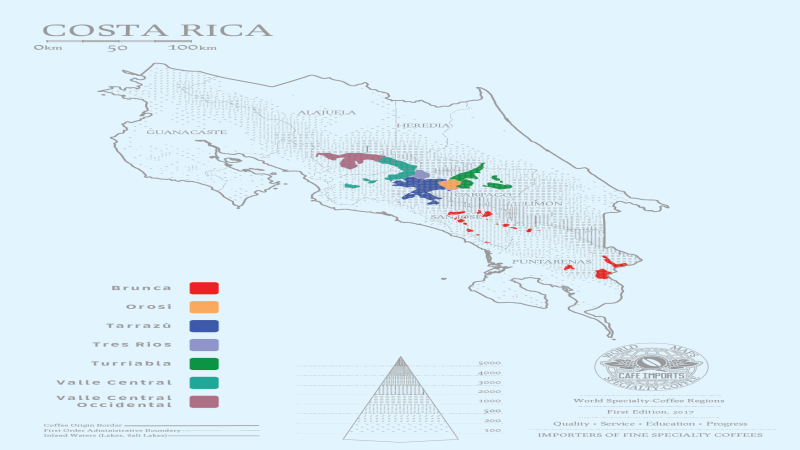
The Mozart coffee beans in the Costa Rica Musician Series come from the Canet estate in Tarrazu, grown at roughly 2,000 meters and processed with the anaerobic honey method, also called anaerobic fermentation. Depulped cherries ferment with mucilage still attached, similar to winemaking, before drying. The result is fermentation aroma, complex floral notes, and rich fruity sweetness in the cup.
Costa Rica has built its specialty reputation on honey processing, and private estates supply most of that coffee. The country's volcanic soil and steady rainfall support cultivation, while Tarrazu remains a well-known producing region. At Canet, coffee occupies a small share of the land and all cherries are hand-picked, which helps explain the consistency behind this coffee bean processing style.
Costa Rica is a representative producer of specialty coffee in Central America, renowned for its honey processing technique. This article focuses on the Mozart coffee beans from the Front Street Costa Rica Musician Series, outlining the historical context and geographical advantages of Costa Rican coffee, introducing the growing characteristics of the Tarrazu region and the Canet estate, and analyzing the anaerobic honey processing method used for Mozart. Finally, it describes the flavor profile—fermentation aromas, complex floral notes, and rich fruity sweetness—providing coffee enthusiasts with a complete reference on the region and tasting notes.
Front Street Costa Rica Musician Series Mozart Specialty Coffee Beans
Among traditional coffee processing methods such as washed, natural, and honey, the representative coffee bean for washed processing is Front Street Kenya coffee beans, while the typical example of natural processing is Front Street Ethiopia Sidamo. However, FrontStreet Coffee believes that the country that applies honey processing most skillfully is Costa Rica.
Costa Rica is a Latin American country whose coffee culture dates back to the early 18th century. At that time, the government introduced measures such as tax exemptions and land allocations to encourage farmers to grow coffee, which promoted the growth of the country's coffee industry and also led to the current situation where most of Costa Rica's specialty coffee comes from private estates.
From a geographical perspective, fertile volcanic soil and stable, abundant rainfall provide natural advantages for agriculture, especially coffee cultivation. Well-known domestic producing regions include Tarrazu, which was once favored by the British royal family and praised by the Pope in a speech. Within this region, the Canet estate is located in the highest area of Tarrazu at an altitude of about 2,000 meters. The estate primarily grows passion fruit and is the most densely planted fruit-growing area in Costa Rica, with coffee plants accounting for a relatively small proportion. All harvested coffee cherries are hand-picked. Front Street's Mozart specialty coffee beans come from this very place.
In terms of coffee bean processing, Front Street Mozart coffee beans use anaerobic honey processing, also known as anaerobic fermentation. This is similar to winemaking: the depulped coffee mucilage and the coffee beans with pectin are placed together in stainless steel tanks for fermentation. Through the action of sugars in the coffee fruit converting into enzymes, slow fermentation occurs under high pressure inside the tank, giving the coffee more sweetness and a wonderful acidity.
All Front Street Costa Rica Mozart coffee beans feature fermentation aromas and complex floral notes in their flavor profile, while on the palate they present rich fruity sweetness and fruity acidity.
The above content is compiled by CoffeeHunters, a coffee news website.


