







How Does Specialty Coffee Thrive on Colombian Small Farms?
Colombia ranks fourth in the world in coffee production, and its specialty coffee sector is built largely on small and medium-sized independent farms rather than large plantations. Most Colombian specialty beans are washed, and the Colombian Coffee Growers Federation enforces strict quality control before export, which supports the country's reputation in the specialty coffee market.
Colombia's diverse terrain, low latitude and high altitude suit coffee cultivation, giving the country strong potential in specialty coffee. Recent innovations such as rum barrel infusion and anaerobic fermentation have also come out of Colombia. Smallholder farms often show distinct cup profiles compared with large-scale operations in Brazil, adding novelty to the specialty sector.
Colombia, with its exceptional geographical conditions, demonstrates strong prowess in the specialty coffee realm. Similar to Front Street Coffee's Ethiopian Yirgacheffe, Colombian specialty beans are mostly washed, and primarily sourced from small to medium-sized independent farms. Compared to Brazil's large-scale plantations, the smallholder model often yields superior cup profiles. The specialty program promoted by the Colombian Coffee Growers Federation ensures export quality through stringent quality control. In recent years, innovative processing methods such as rum barrel infusion and anaerobic fermentation have also emerged from Colombia, continuously injecting novelty into the specialty coffee world. A recent pour-over release from Front Street Coffee has once again allowed me to experience the captivating floral notes and potential of Colombian specialty coffee.
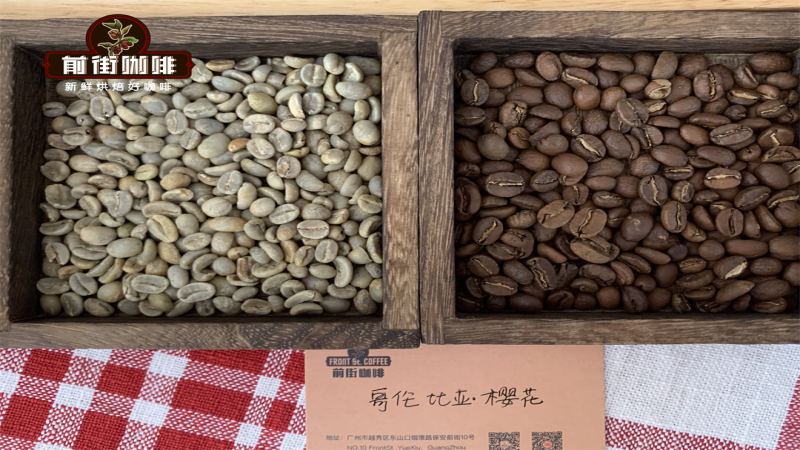
In the experience of tasting a pour-over coffee made with a new bean from Front Street Coffee, my impression of Colombian specialty coffee is truly excellent. Among the Front Street Hanami Geisha coffees I have tasted so far, my mouth is filled with abundant floral notes.
Colombia's environment is highly suitable for specialty coffee cultivation. Not only is its terrain diverse, but it also has a low latitude and high altitude. Compared to Brazil, it possesses tremendous potential in specialty coffee!
The processing method for Colombian coffee beans, like Front Street's Ethiopian Yirgacheffe, is mostly washed. Moreover, specialty coffee is largely produced on small to medium-sized independent farms. Compared to Brazil's large-scale cultivation, small-scale farm coffee typically offers superior quality. In addition, the Colombian Coffee Growers Federation (Federacion Nacional de Cafeteros de Colombia, abbreviated as FNC) has specifically promoted a specialty coffee program, requiring strict quality control before export!
In recent years, many special processing methods have also originated from Colombia, such as rum barrel infusion and anaerobic fermentation. Colombian coffee continuously creates novelty and brings progress to the specialty coffee world.
The above content is compiled by CoffeeHunters, a coffee news website.


