







What Separates Bourbon Coffee From Arabica as a Species?
Arabica is a coffee species, while Bourbon is one of the oldest varieties within that species, alongside Typica and Geisha. Bourbon takes its name from the former name of Réunion Island and was later carried to Brazil and across Central and South America. Its flavor profile leans toward nutty, chocolate and caramel sweetness.
Bourbon is sorted by fruit color into Red, Yellow and Pink types, and yellow bourbon coffee appears in lots such as Brazil Queen's Estate. At the species level, coffee divides into Arabica, Robusta and Liberica; Arabica shows lower chlorogenic acid content and a more delicate flavor, while Robusta yields more per unit but tastes more bitter and less layered.
At the species level, coffee is mainly divided into three major categories: Arabica, Robusta, and Liberica. However, the "varieties" discussed in specialty coffee often refer to sub-species variations, such as Typica, Bourbon, and Geisha. Bourbon is one of the oldest varieties of Arabica, named after the former name of Réunion Island. It was later introduced to Brazil and spread throughout Central and South America. Bourbon is classified by fruit color into Red Bourbon, Yellow Bourbon, and Pink Bourbon, with flavor profiles dominated by nutty, chocolate, and caramel sweetness. This article reviews Bourbon's origins, color classification, and flavor characteristics, and uses Front Street Coffee's Brazil Queen's Estate Yellow Bourbon and South Minas Red Bourbon as examples to provide pour-over parameters and brewing suggestions for medium-dark roasts.
What exactly is the difference between Bourbon coffee beans and Arabica coffee beans?
From a species classification perspective, coffee is mainly divided into three major categories: Arabica, Robusta, and Liberica. Currently, the vast majority of coffee beans circulating globally are concentrated in two species: Arabica and Robusta. Arabica, due to its lower chlorogenic acid content, presents a more delicate and elegant flavor, making it more favored in the market. Robusta, on the other hand, possesses stronger resistance to pests and diseases, and its yield per unit is significantly higher than Arabica. However, its shortcoming lies in its pronounced bitterness and lack of refined layers, so it is typically used in commercial coffee products with lower flavor requirements.
In the context of specialty coffee, discussing "varieties" cannot stop at just the Arabica level. Because Arabica and Robusta belong to the species level, what truly needs further differentiation is the variety below the species level—what we commonly refer to as varieties, such as Typica, Bourbon, and Geisha.
Even within the same Arabica species, different varieties can diverge in flavor direction and productivity: Caturra is known for its high yield, while Geisha is renowned for its exquisite flavor. When it comes to varieties, two earliest ancestors cannot be overlooked: one is Typica, and the other is Bourbon, which this article will elaborate on.
The Origins of the Bourbon Variety
In the 18th century, the French introduced round coffee beans from Yemen to Réunion Island. At that time, the island still used its old name, Bourbon Island, and the name Bourbon thus came about. Afterwards, Bourbon took root on Réunion Island and gradually adapted to local growing conditions. Despite being introduced quite early, Bourbon did not spread outward until the mid-19th century. In 1860, Bourbon was brought to Brazil, and using Brazil as a springboard, it rapidly spread to countries throughout Central and South America. These countries still cultivate and produce Bourbon variety coffee beans to this day.
The Color Classification of Bourbon Varieties
When mentioning Bourbon, many people think of the categories divided by color, such as Red Bourbon, Yellow Bourbon, and Pink Bourbon. Red Bourbon is probably the most common type. Typically, coffee cherries gradually transition from unripe green, first turning light yellow, then orange, reaching red at the optimal harvest period, and finally entering the overripe dark purple stage.
Trained pickers can determine the harvest timing of coffee cherries—by observing the fruit color, they select the finest coffee cherries of the day. Unripe cherries mean the coffee beans have not yet accumulated sufficient nutrients, making it naturally difficult to develop refined flavors; overripe cherries, on the other hand, tend to bring out excessive fermentation notes. Front Street Coffee has a Yirgacheffe sourced from the Red Cherry Project, whose core is to purchase coffee cherries harvested from all-red fruit at higher prices, thereby boosting farmers' income and improving coffee bean quality, creating a win-win situation.
Back to the topic—Red Bourbon is named so precisely because its fruit appears red. Yellow Bourbon and Pink Bourbon follow the same logic. Yellow Bourbon is generally considered a descendant of Red Bourbon crossed with other varieties. Its fruit is yellow when ripe, and it was first discovered in Brazil, which is currently also the main cultivating country of Yellow Bourbon. Apart from the different fruit color, Yellow Bourbon has relatively lower yield and is not resistant to wind and rain, so it has not been widely cultivated.
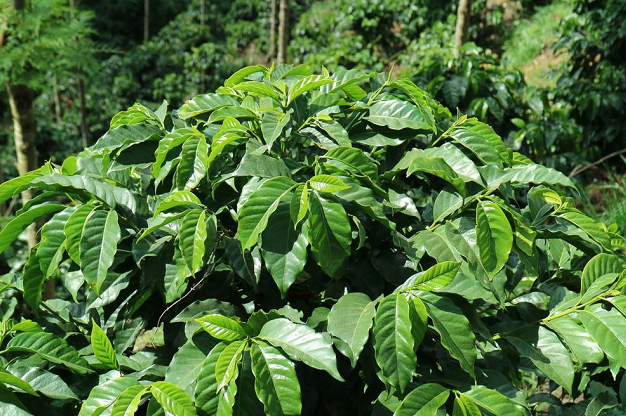
Pink Bourbon is even rarer. It is a cross between Red Bourbon and Yellow Bourbon. The reason for its rarity is that the pink appearance of the fruit is controlled by a recessive gene, which is highly susceptible to interference, making it very difficult to consistently maintain the pink fruit expression.
What Does Bourbon Coffee Taste Like?
To explore the flavor of Bourbon coffee, Front Street Coffee believes one can start with Brazil. As mentioned earlier, although Bourbon has spread to multiple producing countries in Central and South America, its shortcomings have destined it for replacement. Bourbon and Typica, the two oldest Arabica varieties, both have low resistance to pests and diseases and low yields. Their only redeeming quality is perhaps their excellent cup profile. Therefore, many Central and South American countries prefer to cultivate Caturra—a natural mutation of Bourbon—as well as other more disease-resistant and higher-yielding varieties.
Brazil Yellow Bourbon coffee comes from Queen's Estate in the Mogiana region, using natural processing, where one can taste distinct nutty notes and a creamy mouthfeel. Besides Queen's Estate Yellow Bourbon, Front Street Coffee also has a Red Bourbon coffee bean from the South Minas region, processed using semi-washed method. This coffee has nutty and chocolate notes on the palate, accompanied by a caramel-like finish. Comparing the two Brazilian Bourbon coffees side by side, it is not hard to find that the base tone of the Bourbon variety is roughly dominated by nutty and similar flavors, while the prominent sweetness is also very pleasing.
Front Street Queen's Estate Coffee Pour-Over Reference
Front Street aims to highlight Queen's Estate's classic regional flavor—that is, the rich chocolate aroma—so a medium-dark roast is used for this bean. Through cupping, Front Street tasted a very pronounced sweetness in this Queen's Estate, so a three-stage pour was chosen for brewing to present a richer layering.
Dripper: Medium-dark roasted coffee beans mainly present a rich and rounded mouthfeel. For this characteristic, Front Street selects the KONO dripper, which has a slower flow rate, for extraction. The KONO has a smooth curved upper section, with guide ribs below occupying one-third of its total length. This allows the filter paper to fit more tightly against the dripper, restricting airflow upward so that hot water can only flow downward, creating a siphon-style extraction effect that allows the coffee grounds' aromatic substances to be released more fully.
Grind size: Considering the darker roast, the coffee beans become more porous, and once ground, they easily absorb more water and release more soluble substances. A slight misstep can bring out unpleasant bitter off-notes like wood. Front Street Coffee baristas will adjust the grind coarser, making the coffee particles larger to reduce the risk of over-extraction. Here, a medium grind is used (70-75% passing through a Chinese standard No. 20 sieve).
Water temperature: When brewing light-to-medium roasted coffee beans, Front Street uses higher water temperatures to release the aromatic substances from high-density coffee beans. However, medium-dark roasted Brazilian coffee has undergone a longer caramelization reaction. If the same high-temperature water is used, the coffee can easily present a heavy, burnt-bitter taste. Appropriately lowering the water temperature helps reduce bitterness. Front Street will use a water temperature of 87–88°C.
Coffee grounds will absorb about twice their own weight in water. Front Street generally uses 15 grams of coffee grounds, extracted at a 1:15 coffee-to-water ratio, ultimately yielding approximately 200ml of coffee liquid, which is 1–2 servings.
Dripper: KONO dripper
Water temperature: 87–88°C
Coffee dose: 15 grams
Coffee-to-water ratio: 1:15
Grind size: Medium grind (70% passing through a Chinese standard No. 20 sieve)
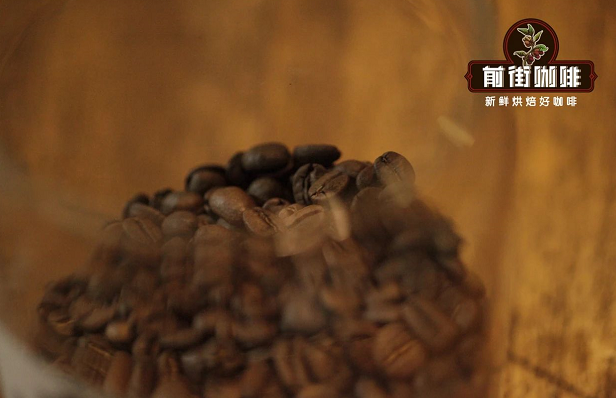
First, wet the coffee bed with twice the coffee grounds' weight in water, forming a dome and blooming for 30 seconds; then pour in a circular motion from inside to outside with a small stream, pausing at 125g; when the coffee bed drops to half the dripper's height, continue pouring the third stage with the same thin stream to 225g; until all the coffee liquid has finished filtering, remove the dripper. The whole process takes about 2 minutes.
The pour-over Brazil Queen's Estate coffee smells of lemon, nuts, and peanuts. On the palate, it has very rich nutty, dark chocolate, and caramel flavors, with pronounced sweetness and a creamy, smooth mouthfeel. The overall performance is quite rounded.
The above content is compiled by CoffeeHunters, a coffee news website.


