








What does washed Yirgacheffe Gedeb coffee taste like?
Washed Gedeb coffee from Yirgacheffe shows the classic regional profile: intertwined floral aromas, citrus acidity, and a green tea note. Gedeb is a small village in the Woka production area at the southeastern end of Yirgacheffe, and the Gedeb Cooperative, formed by roughly 300 farmers, became independent in 2012 and is known for traditional washed and natural processing.
Gedeb began as part of the Woka Cooperative under the Yirgacheffe Coffee Farmers Cooperative Union, and many of its members brought solid cultivation and processing skills from that background. It is often described as the last pure land of Yirgacheffe. Front Street selected washed Gedeb beans for their bright acidity and delicate layers, brewed as pour-over with staged extraction parameters.
Gedeb—this playful and lovely-sounding name is actually a small village in the Woka production area at the southeastern end of Yirgacheffe, Ethiopia. The Gedeb Cooperative, made up of about 300 coffee farmers, is known as the last pure land of Yirgacheffe and is famous for its traditional washed and natural processing methods. The washed Gedeb selected by Front Street Coffee presents the classic Yirgacheffe style: intertwined floral aromas, citrus acidity, and green tea notes. This article will guide you through the origins of Gedeb, the washed processing flow, the cupping flavor performance, and the pour-over parameters and staged extraction technique recommended by Front Street, helping you fully experience this coffee's bright acidity and delicate layers.
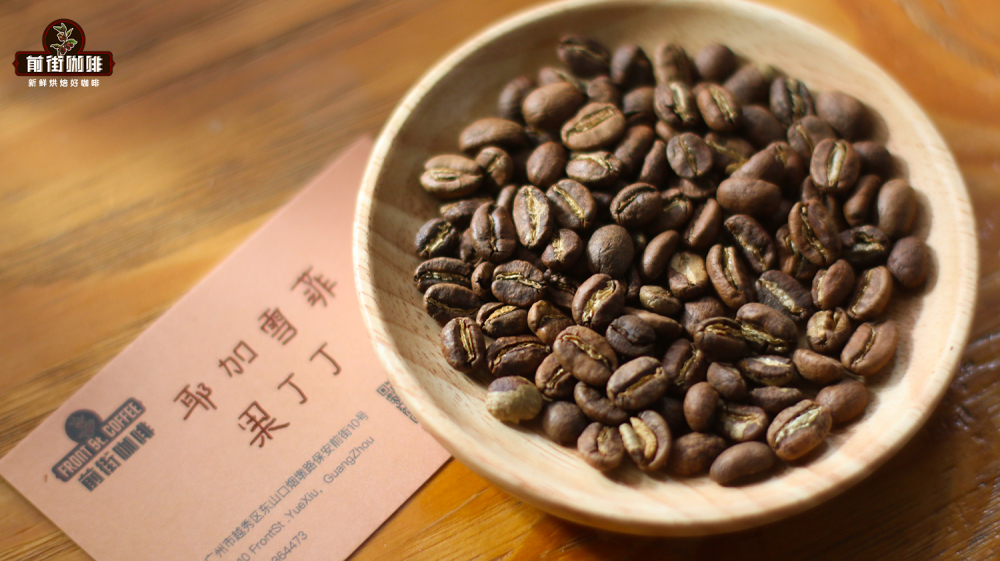
Many guests who come to Front Street for coffee are caught by the slightly playful name "Gedeb" on the bean list and cannot help asking the staff what exactly it is.
What is Gedeb?
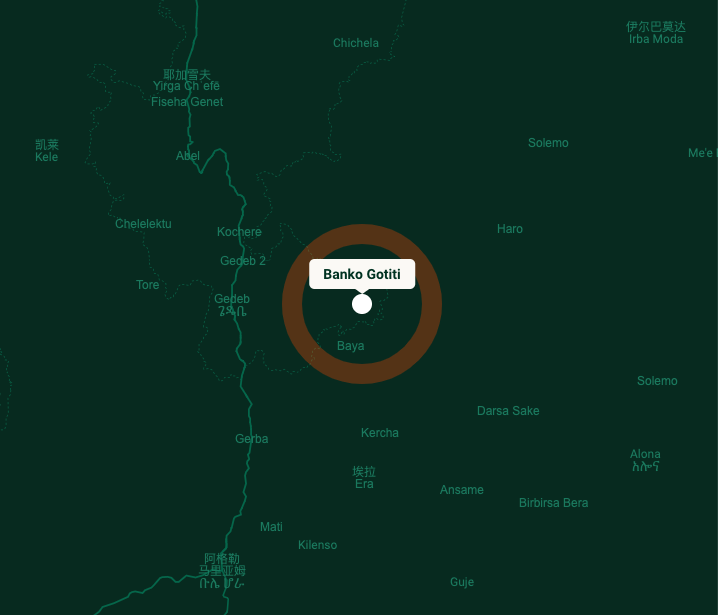
It is actually the name of a small village in Ethiopia, located in the Woka production area southeast of Yirgacheffe. Local coffee farmers joined together to form an agricultural cooperative. At first, it was only part of the Woka Cooperative under the Yirgacheffe Coffee Farmers Cooperative Union (YCFCU). Later, as the industry placed increasing importance on the traceability of green coffee, one "single origin" after another was gradually discovered by coffee hunters around the world.
In 2012, Gedeb, with about 300 members, formally became independent and established the "Gedeb Cooperative." Among the surrounding villages, Gedeb was the earliest area to be separated out on its own. Many smallholder farmers were originally members of the Woka Cooperative, so their coffee cultivation and processing skills were naturally quite solid. The Gedeb Cooperative has long enjoyed the reputation of being the last pure land of Yirgacheffe, so the green coffee processing methods it uses are also quite traditional, mainly washed and natural.
Front Street selected the washed coffee beans from the Gedeb Cooperative because Front Street believes this bean's flavor carries classic Yirgacheffe characteristics while also offering more abundant floral aromas, citrus acidity, and a green tea-like nuance.
Ethiopia can be called one of the most prominent coffee-producing countries. As the birthplace of coffee, it has an enormous number of coffee varieties and can truly be called a treasure trove of coffee varieties. However, variety identification is time-consuming and labor-intensive, and because most coffee is grown by smallholders, it is difficult to further distinguish varieties after harvesting and mixed processing. Therefore, most coffee beans exported from Ethiopia are collectively referred to as "heirloom varieties."
In Ethiopia, the most representative coffee beans are none other than the washed beans from the Yirgacheffe production area. The country originally relied mainly on natural processing, but the common natural processing was relatively rough and often carried defective flavors. So in the last century, the Yirgacheffe production area introduced washed processing from the Americas, and from then on the coffee of this region became famous.
Gedeb village originally did not have its own processing station, and the harvested coffee cherries could only be transported to the nearby Woka village processing station for washing. Later, after coffee hunters conducted in-depth investigations, they believed that the coffee beans from Gedeb village were of excellent quality, so they specifically cooperated with local coffee farmers to build a processing station belonging to Gedeb village itself. Washed processing requires a large amount of water and also needs to be equipped with professional machinery, which individual farmers find difficult to afford, so the coffee farmers all send their harvested coffee cherries to the processing station for unified processing. The advantage of washing is that it ensures coffee bean quality and clearly reflects the basic coffee flavor of the origin.
Steps of washed processing
Washed steps: after the coffee cherries are picked, they are placed in water, and underdeveloped cherries are removed by buoyancy. Then the skin and pulp are removed with a depulper, after which the beans rest in a fermentation tank for 18 to 36 hours to break down the mucilage layer. After fermentation is complete, the parchment beans are washed in channels for 30 to 60 minutes. Through specially designed channels and the scouring force of water, low-density and poor-quality beans can be separated out. Then the high-quality coffee beans are drained of water and spread on African raised beds to dry.
Because the skin, pulp, and most of the mucilage have already been removed before formal drying, the coffee beans' inherent aromas are presented more clearly, showing citrus and lemon notes and elegant floral aromas, with an overall bright and delicate flavor.
Unlike the era when "coffee is just bitter," lightly roasted Yirgacheffe can be said to have opened "a new era of fruity-acid coffee." The reason coffee is strong and bitter is mainly that roasters roast the beans darker, with the main flavor profile leaning toward nuts and dark chocolate. With the rise of the specialty coffee concept, in order to retain more acidity, roasters roast Yirgacheffe only to an appropriate light level, allowing it to show a pleasant fruity sweet-tartness and white floral aromas. Front Street believes that the greatest characteristic of Ethiopian coffee lies in its fruity acidity and floral aromas, and it has been praised by many coffee people as a "fruit bomb." Since such an explosive fragrance is to be highlighted, the roast level naturally cannot be too dark, so Front Street uses a medium-light roast to bring out the coffee's fruity profile.
Cupping flavor:
The dry fragrance of the washed Gedeb Cooperative coffee gives off fresh passion fruit, citrus, and berry acidity. The wet aroma is citrus and berries. On the palate there is citrus acidity, the sweetness of berries, as well as almond and tea notes, with a honey-like sweetness in the finish. The body is low, the acidity is bright, and it is clean and refreshing.
Brewing method recommended by Front Street: pour-over
Dripper: Hario V60
Water temperature: 90°C
Coffee dose: 15 g
Coffee-to-water ratio: 1:15
Grind size: medium-fine grind (80% passing through a Chinese standard No. 20 sieve)
Brewing technique: use staged extraction. First bloom with 30 g of water for 30 seconds, then pour in a small stream in circles until 120 g, at which point pause for a stage; when the water level drops and is about to expose the coffee bed, continue pouring until 225 g and stop; when the water level drops again and is about to expose the coffee bed, remove the dripper (timing starts at the beginning of blooming). The total extraction time is 1 minute 50 seconds. The washed Yirgacheffe Gedeb coffee brewed this way lets you perceive fresh and elegant floral aromas, transparent sweetness, and a slightly astringent finish, just like unfermented green tea.
The above content is compiled by CoffeeHunters, a coffee news website.


