







What separates Dirty coffee from a latte?
Dirty coffee and latte differ mainly in temperature and layering. A Dirty pairs a chilled base with a hot espresso shot poured on top, so the layers stay distinct and the drink is meant to be taken in large sips before they merge. A latte blends espresso with steamed milk and milk foam into a uniform texture from the first sip.
Café menus group drinks into three broad families: the espresso family, the drip coffee family, and cold brew. Everything in the espresso family starts from a concentrated shot and changes with the ingredients and ratios added. A standard double espresso uses set extraction parameters, and a blend coffee such as Front Street's sunflower espresso blend, built from sun-dried Yirgacheffe and barrel-aged Honduras beans, shows how ratio and bean choice define the final cup.
Walking into a café and facing the dazzling array of choices on the menu, have you ever struggled to decide between an Americano, pour-over, latte, or Dirty? These seemingly similar coffee drinks actually each have their own distinctive qualities in terms of brewing craft and flavor presentation. In this article, Front Street Coffee (FrontStreet Coffee) will guide you through a systematic overview of common coffee categories found in cafés, from the basic parameters of espresso to the specific methods for each derivative drink, with a focus on analyzing the core differences between Dirty coffee and latte—including temperature differences, layering principles, and why Dirty needs to be consumed in large sips. Whether you are a beginner coffee enthusiast or a seasoned connoisseur looking to refine your tasting skills, you will find practical reference information here.
Whenever you step into a coffee shop, many friends will surely find themselves paralyzed by choice: should I have an Americano today, or a pour-over? Or perhaps a latte, or a Dirty? Facing a dense coffee menu and various drinks that look nearly identical in appearance, what differences are actually hidden among them? In this article, Front Street Coffee (FrontStreet Coffee) will walk you through the most common coffee categories found in cafés one by one.
The coffees commonly sold in cafés can be broadly grouped into three major families: the espresso family, the drip coffee family, and the cold brew coffee family.
"The Espresso Family"
Espresso, also known as Italian espresso, is made by using an espresso machine to force hot water through very finely ground coffee under pressure, resulting in a highly concentrated coffee liquid. All products in this family are based on espresso and then prepared with additional ingredients—even if the ingredients are the same, a change in ratio will produce a completely different result.
For daily espresso preparation, Front Street Coffee (FrontStreet Coffee) uses "Front Street Sunflower Warm Sun Espresso Blend Coffee Beans." This blend is composed of 30% sun-dried Yirgacheffe Red Cherry coffee beans and 70% Honduras Whiskey Barrel-Aged Sherry coffee beans—the extracted espresso carries distinct fermented wine aromas, berry-like sweet-tartness, and layers of vanilla cream and nutty caramel flavors.
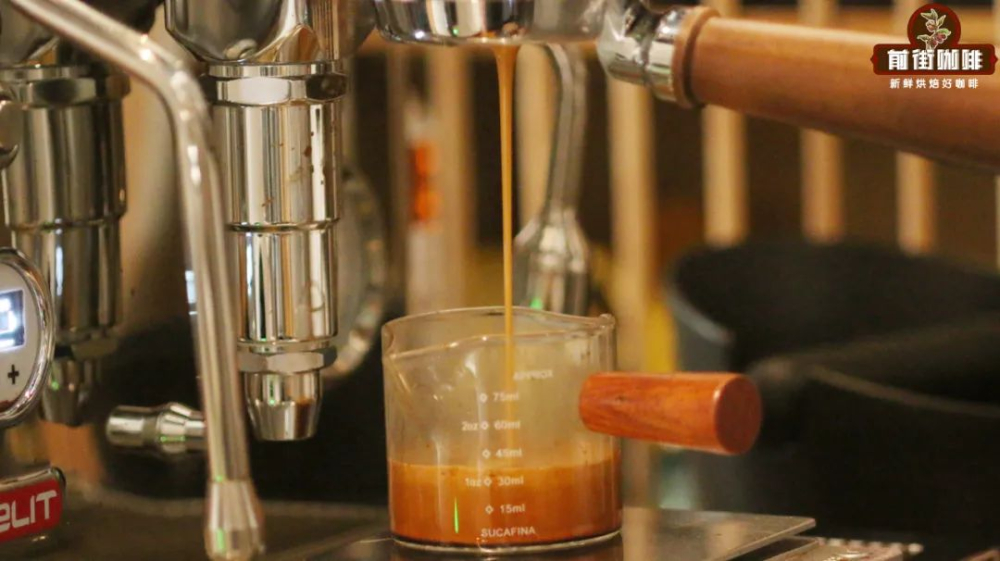
The standard extraction parameters for a double espresso are 19-20g of coffee grounds, yielding 35-40g of coffee liquid, taking 28-35 seconds. A single espresso typically uses 11-12g of coffee grounds, extracting 20g of coffee liquid, taking 18-23 seconds. Of course, the performance of each espresso machine and espresso grinder varies, so the above data is for reference only and should be adjusted flexibly in actual preparation.
Common espresso types can be further subdivided into: regular espresso (corresponding to the extraction parameters mentioned above), ristretto, and single origin espresso/SOE (espresso extracted from single-origin beans). The differences among the three are: ristretto is more intense than regular espresso (with a smaller extraction ratio), while single origin espresso uses coffee beans from a specific region or estate, whereas regular espresso uses a multi-origin blend.
Common members of the family include: Americano, latte, cappuccino, flat white, Dirty coffee, and mocha.
Americano (water + espresso) -Front Street Coffee (FrontStreet Coffee) in-store method: two shots of regular espresso, with hot water or an ice-water mixture added at a ratio of 1:6-1:8.
Latte (milk + espresso) -Front Street Coffee (FrontStreet Coffee) in-store method: two shots of regular espresso, with steamed milk with microfoam, cold milk, or cold milk with ice added at a ratio of 1:5-1:8.
Cappuccino (usually served hot only, thick dense milk foam + milk + espresso) -Front Street Coffee (FrontStreet Coffee) in-store cappuccino method: two shots of regular espresso, with steamed milk with thick milk foam added at a ratio of 1:5-1:8.
Flat White (usually served hot only, thin milk foam + milk + ristretto) -Front Street Coffee (FrontStreet Coffee) in-store method: two shots of ristretto, with steamed milk with thin microfoam added at a ratio of 1:5-1:6. The difference from a latte is that the coffee concentration is higher and the milk ratio is lower, making it richer and more intense on the palate.
Dirty coffee (served cold only, chilled cup + cold milk supporting two shots of espresso) Front Street Coffee (FrontStreet Coffee) in-store method: use a chilled cup, pour in 160ml of cold milk, then bring the espresso machine's spout close to the liquid surface, allowing the espresso to flow directly into the milk. Due to density differences, the espresso will float on top of the milk, creating a layered gradient effect. Unlike a latte, Dirty coffee is drunk without stirring—instead, you experience the layers, mouthfeel, and flavor evolution as the coffee and milk gradually blend together in your mouth.
Mocha (chocolate sauce + milk + espresso)-Front Street Coffee (FrontStreet Coffee) in-store method: two shots of regular espresso fully blended with chocolate sauce, then with steamed milk with microfoam, cold milk, or cold milk with ice added at a ratio of 1:5-1:8.
The above content is compiled by CoffeeHunters, a coffee news website.


