







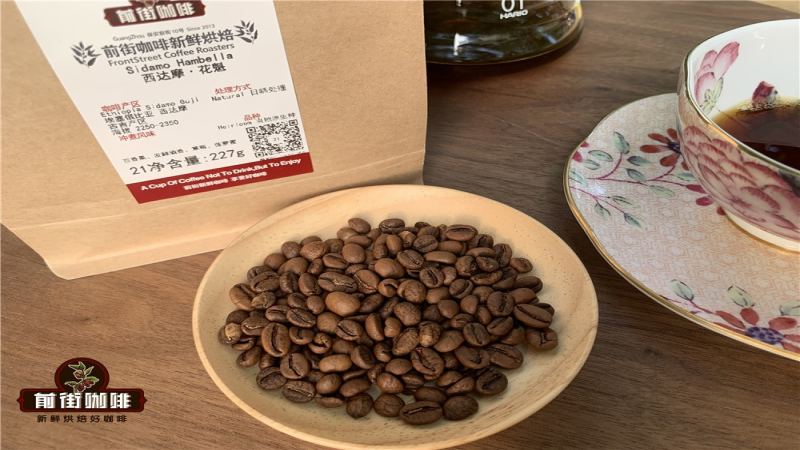
How Does Huakui Coffee Differ From Other Ethiopian Lots?
Huakui is a naturally processed Ethiopian coffee from the Buku Abel station in Hambela, Guji. Fully ripe red cherries with sugar content above 30 are dried on African raised beds, giving a strong strawberry-cream sweetness that stands out from other Sidamo areas. The lot won the 2017 TOH competition and was later named Huakui by a green bean trader.
The Huakui series is updated yearly from 1.0 to 6.0, with flavors moving from intense strawberry toward citrus berries and mango juice. Natural processing still accounts for roughly 70 percent of Ethiopia's output, though many drinkers associate the country with washed lots such as yirgacheffe, and geisha coffee shares some of that floral, tea-like clarity. Brew with moderate temperatures and watch the drawdown as the beans age.
Huakui coffee beans are a gem from Hambela in Ethiopia's Guji region. With a stunning strawberry-cream flavor, they won the 2017 TOH competition and were subsequently named "Huakui" by a domestic green bean trader. These beans come from the Buku Abel processing station and are sun-dried. Fully red cherries with a sugar content above 30 are dried on African raised beds, creating a sweetness more pronounced than that of other Sidamo-producing areas. From 1.0 to 6.0, the Huakui series is updated every year, with flavors gradually evolving from intense strawberry to a full-bodied profile of citrus berries and mango juice. Front Street Coffee has long tracked each version of Huakui. This article will comprehensively sort out the origins and development of these beans for coffee lovers, from producing region background, processing methods, and variety characteristics to version distinctions, brewing suggestions, and flavor descriptions.
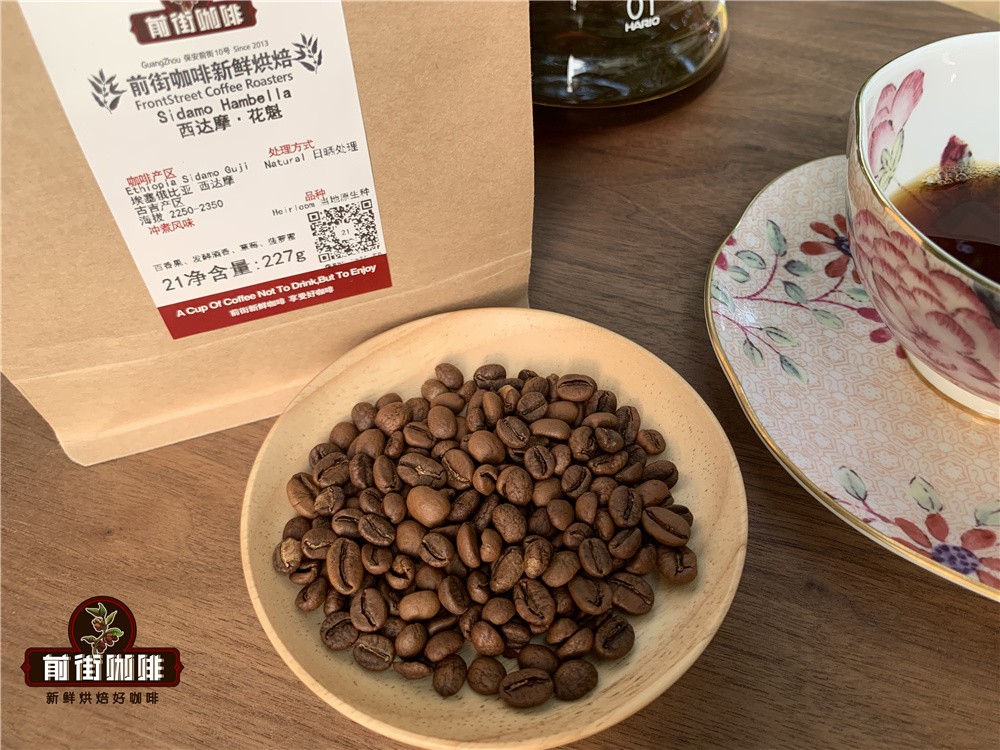
Ethiopia is the birthplace of coffee, and a large number of coffee varieties spread from here. When mentioning Ethiopian coffee, many friends may think of the bright acidity and fresh flavors of Front Street washed Yirgacheffe coffee , and may even directly treat Yirgacheffe as synonymous with Ethiopian beans. Although the baristas at Front Street Coffee (FrontStreet Coffee) are also very fond of Front Street washed Yirgacheffe coffee, in fact Ethiopia's mainstream processing method has always been natural processing. Even today, natural processing still accounts for about 70% of the country's production. When it comes to natural beans, one cannot fail to mention Front Street Huakui coffee, which is extremely popular among fans of Front Street Coffee (FrontStreet Coffee).
Front Street Huakui Coffee Beans
Why is it called "Huakui"?
The word Huakui carries a sense of beauty as the foremost among flowers. In the context of Chinese culture, Huakui refers to the top performer among singing and dancing courtesans. So what does it mean when applied to coffee beans? And how did this name come about?
Huakui coffee beans were originally called Hambela. The name Huakui came from the creativity of a domestic green bean trader. The reason it is called Huakui in China is that the batch of green beans was introduced into the country by a Beijing-based green bean trader, and in the 2017 China coffee competition, Li Jianfei used these beans to break through a field of Geisha coffee competitors and take second place. That year the competition field was almost entirely Geisha, and the legendary story of a non-Geisha bean suddenly appearing and defeating many Geishas was extraordinary in significance. In addition, the English word Geisha sounds the same as the Japanese word for courtesan. To highlight the status of these beans, they were named Huakui, meaning the foremost among courtesans.
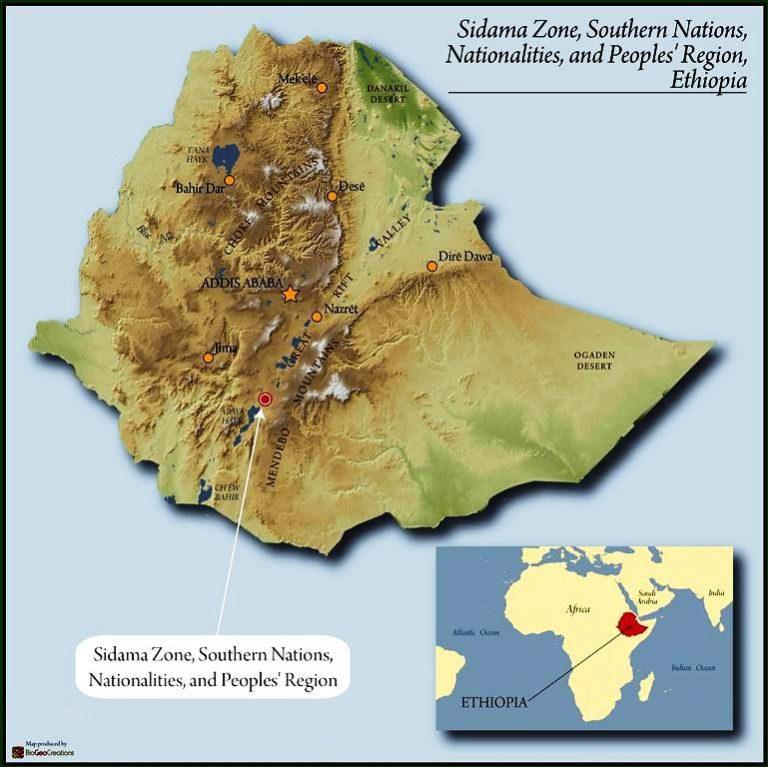
Hambela Producing Region Coffee beans are usually named after their place of origin, and "Huakui" actually comes from the Hambella producing region under the Guji region of Ethiopia. Hambella is located in Guji, Ethiopia's largest coffee-producing region, and administratively belongs to Oromia. The Guji producing region was originally part of the Sidamo producing region, but in 2010 it was independently divided into a new producing region by the Ethiopia Commodity Exchange (ECX). The most famous coffee beans from Guji are undoubtedly Huakui, which won the championship at the 2017 TOH (Ethiopia National Taste of Harvest Competition) with its outstanding strawberry-cream flavor, fully deserving the title. However, not all coffee produced in Hambela can be called "Huakui." Only naturally processed coffee beans from the "Buku Abel" processing station are qualified to be called Front Street Huakui.
Hambela faces Yirgacheffe Kochere across the mountains to the west, with a highland about 30 kilometers wide and 3,200 meters above sea level lying between the two producing regions. To the southeast and north, it borders the Guji sub-regions of Shakiso, Uraga, and Kercha, making it the highest-altitude coffee sub-region in Ethiopia. At present, there are about 20 processing stations of varying sizes in the Hambela producing region.
Buku Processing Station Front Street Huakui Coffee Beans Natural Processing Method The Buku processing station is located in Buku Abel village at an altitude of 2,200 meters. From the very beginning of cultivation, it has enjoyed a noble "family environment" — red-brown soil rich in humus, with "Enset" trees providing shade. This allows Huakui to receive ample sunlight and accumulate rich flavors without consuming too many nutrients, thereby retaining more of the essence within the coffee cherries. The unique growing environment and natural climate during the harvest and processing season (December to January) together shape Huakui's distinctive flavor.
The Buku processing station requires that picked red cherries reach a sugar content of 30 or above before natural processing begins. During the first two days of natural processing, the humidity of the red cherries must be maintained so that the fruit sugars can fully initiate fermentation. At the same time, the high-altitude location allows the processing station's nighttime temperature to drop to around 12 degrees Celsius, without producing off-flavors from over-fermentation due to excessively high temperatures. When the midday temperature is relatively high, shading is provided in time to prevent the red cherries from being sunburned. Only fully ripe all-red cherries are selected, all hand-picked, dried on African raised beds, with limited fruit layer thickness and continuous timed turning 24 hours a day, ensuring even sun exposure and ventilation, thereby more precisely controlling the degree of fermentation. Front Street believes that because Huakui coffee beans use fully ripe coffee cherries with high sugar content, after natural drying, the sugars in the pulp and pectin are absorbed by the coffee beans. Therefore, Front Street Huakui coffee beans have a more prominent sweetness than coffee beans from other Sidamo-producing areas.
Front Street Huakui Coffee Variety
As the birthplace of coffee, Ethiopia has an enormous number of coffee varieties, and Huakui's variety also presents itself as a native heirloom. Why does this happen? According to Front Street's understanding, many factors contribute to this phenomenon, including the great number of varieties, smallholder farming patterns, mixed harvesting and mixed processing, and the early Ethiopian green bean grading system, so they are collectively called Heirloom native varieties. This is also the main reason Ethiopian beans appear uneven in size.
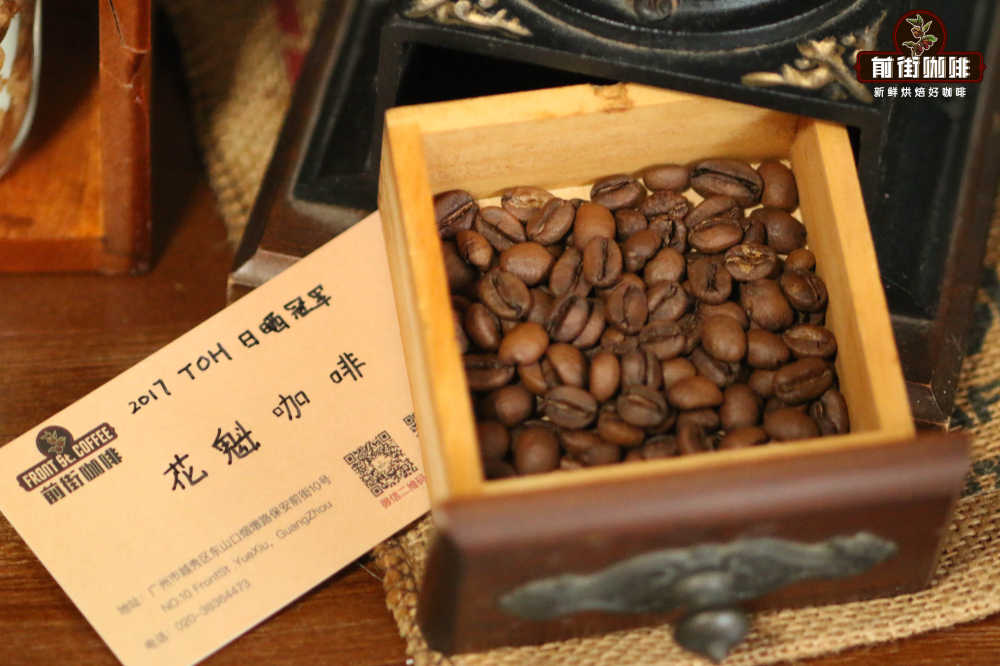
How to distinguish Huakui coffee beans?
When searching for Huakui coffee beans, you will find Huakui 2.0, 3.0, 4.0... Why are there so many numbers? What are the differences between them? What are the differences in flavor? Front Street has previously written about the distinctions among Huakui versions. Today Front Street will once again sort out the differences among the versions of Huakui coffee beans for everyone.
Huakui coffee beans are essentially an agricultural product and are naturally affected by climate, so the flavor varies slightly from year to year. First, back to 2017, when a naturally processed coffee bean from DW Company's "Buku Aebl" processing station won the TOH natural group championship. A Chinese green bean trader introduced this champion bean into the country and named it "Huakui." DW Company increased the number of processing stations in the Hambela producing region to four, namely "Buku Abel," "Buku Saysay," "Haro Soresa," and "Tirtiro Goye." Strictly speaking, only naturally processed coffee beans from the "Buku Abel" processing station can be called Huakui coffee beans. The naming method of Huakui X.0 is based on the year: Huakui 2.0 was released in 2018, Huakui 3.0 and 3.1 in 2019, Huakui 4.0 in 2020, Huakui 5.0 in 2021, and Huakui 6.0 in 2022.
In 2021, the latest Front Street Huakui 5.0 had already come out, and besides Front Street Huakui 5.0, there was also a series called Small-Bean Huakui. Front Street Small-Bean Huakui coffee beans differ from the X.0 series in that they do not change with the year. In fact, Front Street selected small-particle coffee beans from Huakui 2.0 and 3.1 and found that they possessed the strawberry flavor of the original 2017 Huakui. From this, Front Street concluded that Huakui's unique aroma and sweetness mainly come from these small-particle coffee beans. In 4.0, some batches of Huakui coffee also had a relatively high proportion of small particles, and those batches had very good aroma and sweetness. It was not until this year that DW Company began to separate small-particle coffee beans into an independent Small-Bean Huakui coffee bean product line. Front Street compared the flavors of Front Street Huakui 5.0 and Front Street Small-Bean Huakui coffee and found that Front Street Small-Bean Huakui coffee beans have more obvious sweetness and strawberry aroma than Front Street Huakui 5.0, while Front Street Huakui 5.0 coffee has richer citrus-berry notes and is more comfortable to drink.
In 2022, Hongshun launched the Huakui 6.0 series, and Front Street also obtained the green beans for Front Street Huakui 6.0 relatively early. However, compared with previous Huakui beans, this batch of green beans looked slightly flat and shriveled, and after roasting, there were a great many flat beans and shell beans.
The image above shows the irregular coffee beans screened out by Front Street from 15g of coffee beans randomly selected from roasted Huakui 6.0, a much higher number than in previous years. For this reason, Front Street decided not to sell Front Street Huakui 6.0 and to continue selling Front Street Huakui 5.0.
Some friends may wonder: isn't a new generation released every year? Could Huakui 5.0 be last season's beans? Please rest assured on this point. The reason Huakui uses the X.0 naming method is mainly that the original Huakui had a rich strawberry flavor, while in subsequent harvest seasons this strawberry flavor became lighter and lighter, and by the 4.0 series, the strawberry flavor had disappeared entirely.
By the 5.0 series, the flavor of Front Street Huakui 5.0 presented full-bodied orange and mango notes and was loved by everyone. Therefore, in 2022, in addition to launching the new 6.0 series, the 5.0 series was also retained. These coffee beans are all from the new harvest season.
Front Street Coffee (FrontStreet Coffee) Brewing Suggestions Front Street recommends using freshly roasted coffee beans for brewing, as this allows you to experience the coffee's rich flavors to the greatest extent. The coffee beans shipped by Front Street Coffee (FrontStreet Coffee) are all within 5 days of roasting, because Front Street deeply understands the great impact of coffee bean freshness on flavor. Front Street's roasting philosophy is "freshly roasted good coffee," so that every customer who places an order can receive the freshest coffee when it arrives. The resting period for coffee is about 4 to 7 days, so when customers receive it, it is at its best flavor.
Filter: Hario V60, water temperature: 90°C, dose: 15 grams, coffee-to-water ratio: 1:15, grind size: medium-fine grind (80% passing through a Chinese standard No. 20 sieve)
Use staged extraction. Bloom with 2 times the coffee dose in water, that is, 30 grams of water for 30 seconds. Pour in a small stream in circles until 125 grams, then pause, continue pouring until 225 grams, then stop. After the water in the dripper has dripped through, remove the dripper. Start timing from the beginning of pouring; the extraction time is 2'00".
Flavor Description
[Front Street Huakui G1]: Smooth, passion fruit, fermented wine aroma, jackfruit, strawberry.
[Front Street Huakui 2.0]: The overall mouthfeel is clean, the berry aroma is more obvious, and it carries nutty notes, making the mouthfeel richer.
[Front Street Huakui 3.0]: Light strawberry jam, black tea tea-like quality, short sweet finish.
[Front Street Huakui 3.1]: Floral aroma, cream, tropical fruit, caramel, long-lasting sweetness.
[Front Street Huakui 4.0]: Citrus acidity, full-bodied berry juice, lemon black tea tea-like quality, long-lasting sweetness.
[Front Street Small-Bean Huakui]: Sweet berry aroma, cream strawberry, passion fruit, rich fruity sweetness, full-bodied mouthfeel.
[Front Street Huakui 5.0]: Floral aroma, sweet-and-sour notes of berries, citrus, and plum, mango juice, honey, with a black tea sweet finish.
[Front Street Huakui 6.0]: Full-bodied berry juice, black tea finish.
The above are the flavor differences among the various versions of Huakui. Of course, Front Street Sidamo Huakui is only one of many Ethiopian coffee beans, and there are still plenty of single-origin beans to choose from. Front Street Coffee (FrontStreet Coffee) has more than 50 kinds of single-origin beans, and behind every coffee bean there is a story. Once you understand them, you may fall in love with them.
For professional coffee knowledge exchange and more coffee bean information, please follow Coffee Workshop (WeChat public account: cafe_style)
For more specialty coffee beans, please add the private WeChat of Front Street Coffee (FrontStreet Coffee), WeChat ID: qjcoffeex
The above content is compiled by CoffeeHunters, a coffee news website.


