







Where Is Assam Black Tea Produced and How Is It Graded?
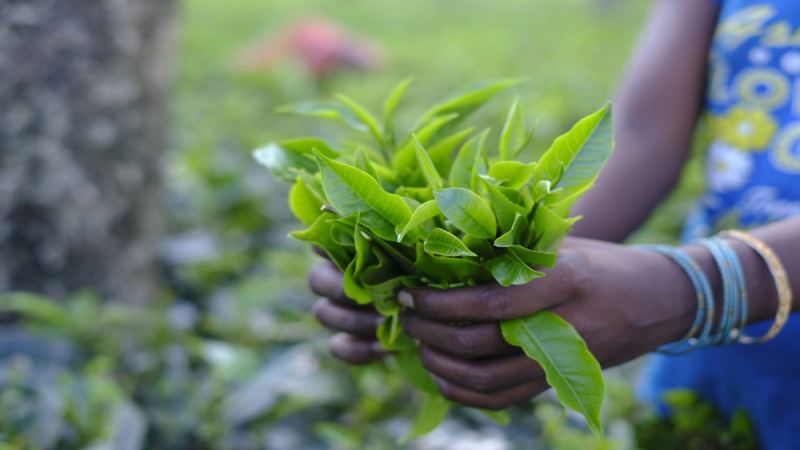
Assam black tea comes from Assam state in northeastern India, a renowned black tea region known for a strong, mellow cup. It is widely used for milk tea, especially Hong Kong-style and Indian pulled tea. Grading depends on leaf size and sorting, not on a single universal scale, so the grade matters less than origin and processing.
Folk Tea founders Subhasish Borah and Bidisha Das, both from Assam, built their company around collaborating with small tea farmers to offer natural loose-leaf tea. Their approach emphasizes local character over export expectations, and the teas hold up well in milk tea because of their body and malt-forward flavor.
Assam black tea originates from the Assam state in northeastern India and is one of the world's renowned black tea regions. It is famous for its strong and mellow taste, often used to make milk tea, especially Hong Kong-style and Indian pulled tea. So, what grade does Assam black tea actually belong to? This article, from the perspective of a local Assam tea person, describes how he collaborates with small tea farmers to promote natural loose-leaf tea and shares the unique aspects of Assam's tea culture. At the same time, we will also learn about Assam black tea's performance in milk tea production and Front Street Coffee's recommendations for such teas.
Subhasish Borah and Bidisha Das both come from Assam. Once, they had a disappointing cup of Assam black tea priced at $2.75 (about 200 rupees) in an upscale restaurant in Ahmedabad, India, and at that moment, the idea of founding Folk Tea became clear. What started as a chat about why Assam tea is so fascinating later developed into working with marginalized small tea farmers to provide natural loose-leaf "self-produced" tea.
Subhasish, 30, and Bidisha, 29, decided to "step out" from stable full-time jobs—they originally taught urban planning and international relations, respectively—and devote themselves entirely to the world of tea: growing tea, understanding the production process, self-teaching related sciences, and exploring the potential terroir of Assam. They first learn on their own, then share traditional Assam tea culture and customs with others. This thirst for knowledge gave rise to their slogan: "Go out, come in, a local tea movement is brewing."
Emphasizing Assam's local characteristics rather than making tea according to the expectations of export markets reflects respect for the land, customs, and handmade craftsmanship. "Folk Tea Journal" "briefly mentions and promotes understanding of tea from various places, who makes tea, leaves make tea, cultural temperament, and even the entire tea movement." In this interview, co-founder Subhasish Borah describes a holistic approach by putting into context how "folklore tea" promotes mutual understanding cup by cup, unique creative pursuits (such as pairing poetry with tea), and the impact of lockdown.
How do you cultivate awareness of Assam tea, culture, and traditions? How do you hope to sustain these conversations? Subhasish Borah: When we talk about Assam tea, it is a relatively new topic because tea is a social and cultural practice. Since the 1960s, Assam tea has been known for CTC (crush, tear, curl processed black tea) or commercial-grade milk tea (chai). Therefore, tea culture has not evolved around Assam society. Assam has a rich tangible and intangible cultural heritage, but tea does not occupy a large space. Tea as a culture has not penetrated into Assam's communities because it has always stayed on the estates. For a long time, the circulation of tea was restricted, and the only bridge between tea and people was the estate, and the estate did not keep this bridge open. Although tea is grown and processed throughout Assam, due to cultural differences, people's understanding of tea remains vague. Assam has produced traditional tea and green tea for decades, but people do not know what green tea or oolong tea is. Because of central media, Assamese people have learned about green tea and its benefits. In this country, information about tea must be shared, which is absurd, but I am still glad for this reverse relationship because it helps raise awareness of tea. We often engage in dialogue through promotional activities, discussing tea, people, and culture. We are producing a biweekly magazine to raise awareness of tea and the daily lives of tea farmers and workers. In addition, we hold exhibitions to showcase tea and its rich history across the country.
Ennis: Can you tell us how you honor gardeners and promote sustainable practices to ensure "not passive recipients, but dynamic actors continuously engaged in the tea value chain"? Subhasish: Currently, the growers we work with and their approach to tea are very natural and sustainable. There are growers, gardeners who keep the garden clean, and their families. Everything is a very close-knit group, and everyone has a specific role. This is not to say that a leading worker works in the tea industry while his wife and children are not involved. No. The entire process involves the whole family. Although the area is small, we work with growers who cultivate small gardens. We know everyone's name, and they are close relatives. This is not a large enterprise with many participants, unknown names, and uncontrolled control, because the agenda becomes mass production rather than quality production. At Folk Tea House, all players are responsible for all steps. We believe this is the key to our philosophy: bringing everyone together.
The above content is compiled by CoffeeHunters, a coffee news website.


