







How Does Aging Change Oolong and Black Tea Flavor?
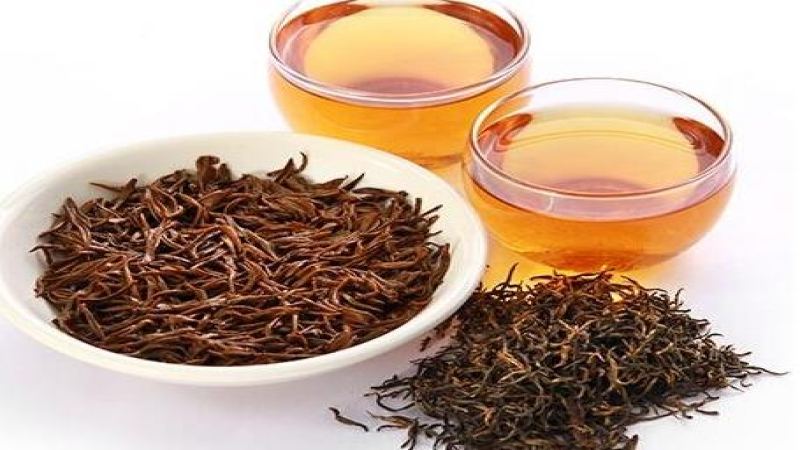
Tea keeps changing in storage, and black tea is no exception. Fresh black tea leaves are glossy and crisp, turning dull over years, while the liquor becomes smoother and more mellow. Aged black tea stored more than ten years is often treated in traditional Chinese medicine as a remedy for coughs and colds.
Oolong moves from roasted character toward an aged charm, and jasmine tea often keeps better than green tea because repeated drying and roasting during scenting remove moisture. Dry tea shifts from green to brown, and the liquor turns from yellow-green to brown or reddish, with the aroma becoming milder over time.
During storage, tea leaves quietly undergo changes, and even almost fully oxidized teas like black tea are no exception. This article compares aged Huangzhixiang Dancong oolong tea with aged Jinjunmei black tea, exploring the evolution paths of their aroma and taste. From the fresh briskness of black tea to its mellow smoothness, from the roasted character of oolong to its aged charm, and further to the aging characteristics of jasmine tea and white tea, the article systematically outlines the aging potential and flavor trajectories of different tea types. At the same time, it mentions Front Street brand's recommendations for aged teas, offering coffee enthusiasts a professional reference for understanding the world of tea.
Although tea leaves continue to transform slowly, some types are actually more stable in the first few years after production than green tea. Black tea is already close to fully oxidized during processing, leaving almost no room for further oxidation. However, beyond the unavoidable loss of aroma that affects all teas, some changes do indeed occur. Freshly made black tea leaves are glossy and crisp, gradually becoming dull over time. High-quality black tea has a fresh, layered, full, and sweet flavor with a lasting finish; lower-grade black tea has a strong taste but lacks body. Regardless of style, as the years pass, the liquor becomes smoother and more mellow. In addition, aged black tea stored for more than ten years is often regarded in traditional Chinese medicine as a popular remedy for coughs.
Jasmine tea can also maintain a pleasant quality over a relatively reliable period. Although it uses green tea as its base, it often keeps better than green tea because it undergoes repeated drying and roasting during processing. This is mainly because when fresh jasmine flowers are used in the traditional process to scent the tea, the base absorbs moisture, which must be removed through re-roasting.
Even for lower-grade jasmine tea, the infused leaves should appear green, though due to the need for re-roasting, the color is not as vivid as that of ordinary green tea. Similar to other lightly fermented teas, the dry tea gradually turns from green to brown over time. Likewise, the originally clean, fresh, floral yellow-green liquor gradually becomes milder, with the color shifting to brown or reddish. The pure and intense jasmine aroma will diminish, but it can usually still be retained for three to five years. The aroma also becomes more complex, though the floral components fade.
Chinese oolong teas are known for their distinctive character, and time allows them to mature with elegance. This category includes Wuyi rock tea, traditionally roasted Fujian Anxi oolong, and Guangdong Dancong oolong. As with all oolong teas, the processing aims to inhibit leaf oxidation, leaving the leaves in a partially fermented state. However, due to the handling of fresh leaves and subsequent roasting, dark oolong ultimately reaches a higher degree of oxidation.
Newly made dark oolong has a bright, lustrous brown appearance. Over time, these teas lose their luster, become dull, and almost seem covered with a layer of dust. Yet the plain appearance cannot conceal the depth and complexity of the flavor. Fresh oolong is mellow, full, and refreshing; after aging, the taste becomes richer, more complex, mellower, fuller, and sweeter. The floral notes and the heavy roasting character often accompanying them lose their smoky sharpness, and the floral characteristics gradually become gentler. In fact, many oolong drinkers find the strong roasting flavor of new tea somewhat hard to accept and instead prefer the softness brought by time and patience.
However, it is still necessary to avoid poorly brewed tea. Wuyi rock tea strips are loose and dry, making them particularly prone to absorbing excessive moisture from the air. Oolong needs to be re-roasted every year to maintain proper moisture levels. Among oolong merchants, a small roasting basket is even popular, which producers use to re-roast tea after the late-summer rainy season.
White teas such as Baihao Yinzhen or Bai Mudan have a light flavor and an appearance that easily reminds one of green tea and other lightly fermented teas. In fact, the mild, smooth, and sweet taste of fresh white tea is closer to these teas than to dark tea. However, well-aged high-quality white tea becomes sweeter, smoother, and more complex, at the cost of losing floral notes and some of its complex aroma. In addition, the nutritional changes brought by oxidation result in higher levels of flavonoid antioxidants in aged white tea. The traces of oxidation are clearly visible, as the downy tender buds and the green inner surfaces of the fresh leaves slowly turn brown.
In China, drinking aged white tea has long been popular. Traditional Chinese herbal theory holds that even fresh white tea has anti-inflammatory and heat-clearing effects. Aged white tea is believed to be more medicinal than new tea. Before aged white tea became popular in the market, rural herbalists often bought unwanted aged white tea from tea farmers for medicinal use. However, as the price of aged white tea has soared in recent years, this medicinal practice has become beyond their means.
The above content is compiled by CoffeeHunters, a coffee news website.


