







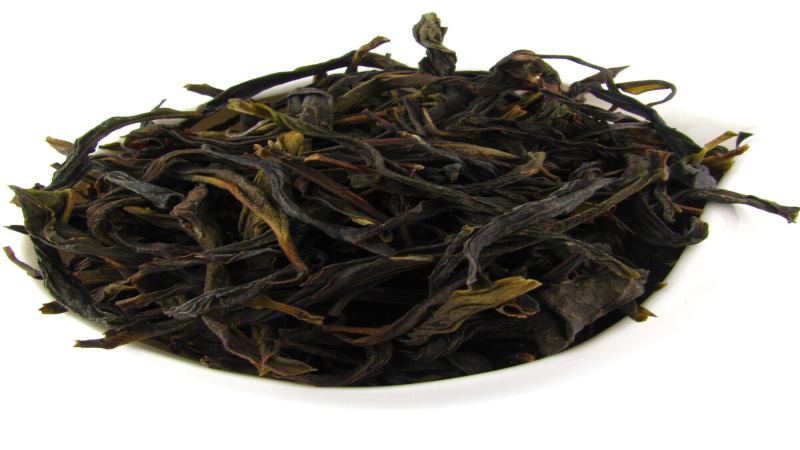
History of Coffee Maker: Where Does Duck Shit Aroma Fit in Phoenix Dancong?
Phoenix Dancong is an oolong from the Phoenix Mountains of Chaozhou, Guangdong, classified by aroma rather than by a numbered grade. Local producers traditionally recognize ten aroma types, including honey orchid, gardenia, osmanthus, jasmine, and night-blooming cereus, each with further subtypes. Duck Shit Aroma has gained prominence since the 1970s.
All of these aromas come from the tea plant itself, not from additives, which is why the tea is called single bush. Written records of Phoenix tea date to the Song Dynasty, roughly 750 to 1,000 years ago, and the tea won a Silver Award at the 1915 Panama-Pacific International Exposition before fading from Western markets.
Phoenix Dancong is produced in the Phoenix Mountains of Chaozhou, Guangdong, and is one of the most aromatically expressive categories of Chinese oolong tea. Its fragrance comes entirely from the tea plant variety itself rather than from artificial additives, which is why it is called "single bush." Traditionally, local tea makers have divided Dancong into ten major aroma types, including honey orchid, gardenia, osmanthus, jasmine, and night-blooming cereus, with each type further divided into more specific subtypes. Among them, Duck Shit Aroma has risen prominently since the 1970s and has become a market favorite. This article focuses on the aroma classification system, historical origins, and quality characteristics of Phoenix Dancong, while also introducing related products from the Front Street brand to help readers understand the true position of Duck Shit Aroma within Dancong.
Introduction to Phoenix Dancong
Phoenix Dancong is the highest-grade tea naturally grown in the Phoenix Mountains of Chaozhou, Guangdong, China.
Dancong has many subtypes and is famous for its distinctive floral aroma.
Historians cannot confirm the exact year this tea plant was first discovered, but the oldest surviving written records date back to the Song Dynasty, about 750 to 1,000 years ago.
In more recent history, Phoenix tea briefly gained international attention when it won the Silver Award for Outstanding Organic Tea Products at the 1915 Panama-Pacific International Exposition.
After that, Phoenix tea almost disappeared from Western tea markets. Because it comes from my hometown, I am committed to promoting this complex and elegant tea!
What makes Phoenix Dancong tea special?
Both science and legend point to Phoenix as the ancestor of oolong tea, and many people firmly believe this. The most prominent feature of this category is its aroma, so its types are also classified by aroma profile.
At present, local tea scholars divide Phoenix Dancong into ten main aroma types: honey orchid, iris, magnolia, gardenia, osmanthus, jasmine, tuberose, almond, and ginger flower. This is only the framework—under these ten major categories, there are still a large number of more specifically named subtypes.
What makes these varieties unique is that none of them are artificially flavored. Every aroma comes directly from a specific type of Phoenix tea plant, or a single bush. In fact, the literal meaning of "Dancong" is "single bush."
These fascinating aromas are best released naturally through a complex brewing process. The highest-quality versions are made by experienced tea masters, whose craftsmanship cannot be replicated by modern machines (to learn more about how Dancong is made, please click here).
The influence of local (Chaozhou) culture cannot be ignored either. Many subtypes are named after local legends or dialect terms, such as "Duck Shit Aroma," which has been a rising star in China since the 1970s.
However, most Dancong still presents classic floral notes, with fruity, nutty, or roasted sweetness. Of course, this is closely related to the Phoenix Mountains as the birthplace of tea.
The Phoenix Dancong series selected by Front Street Coffee covers multiple representative aroma types, from Honey Orchid to Duck Shit Aroma, making it convenient for enthusiasts to compare and taste.
The above content is compiled by CoffeeHunters, a coffee news website.


