







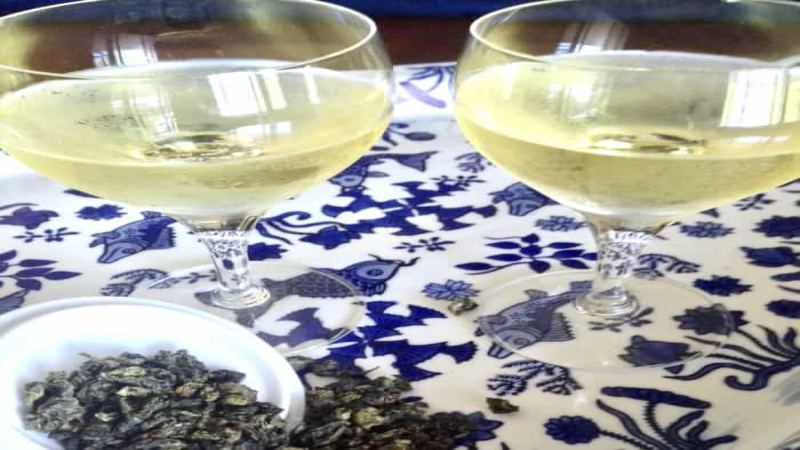
How Does Fragrance vs Aroma Coffee Apply to Cold-Brewed Dancong?
Cold brewing Phoenix Dancong uses low water temperatures over long steeping times, which keeps tannins from dissolving into the liquor and preserves amino acids that read as sweetness. The result is a clear, sweet, non-astringent cup that carries more perceptible fragrance on the palate, since the chilled liquid contrasts with body temperature. Floral, lightly roasted aroma types tend to hold up better than heavily fired ones.
Lighter-roasted Dancong, such as Ginger Flower Aroma or Honey Orchid, suits cold extraction because its fragrance is not masked by roast character. Cold-brewed oolong and black tea also differ in mouthfeel, with oolong keeping more layered aroma and black tea leaning sweeter and rounder. Typical cold-brew ratios run around 1:100 by weight, steeped 6 to 8 hours in the refrigerator.
In the scorching summer heat, cold-brewed tea has become the top choice for many coffee and tea lovers looking to cool down. This article starts from the principles of cold brewing, explaining why low-temperature extraction can reduce bitterness, preserve more sweetness and beneficial compounds, and focuses on answering which Phoenix Dancong is more suitable for cold brewing. At the same time, it compares the differences in aroma and mouthfeel between cold-brewed oolong tea and black tea, and includes Front Street's brewing suggestions with ratios, timing, and other operational details to help you easily make a cup of clear, sweet, and non-astringent cold-brewed tea at home.
Summer has finally arrived! Although I personally love the heat, sometimes it can be too much, and I start craving cold drinks. Enter, cold-brewed tea! Cold brewing is a new method of making tea, different from traditional hot brewing, and there's a lot of science behind it. Moreover, cold brewing is also more convenient and quicker than hot brewing, which has made it increasingly popular among urbanites with fast-paced lifestyles.
Cold-Brewed Tea vs. Hot-Brewed Tea
Cold-brewed tea uses lower water temperatures and longer steeping times, which better preserves beneficial elements in the tea leaves such as polyphenols and flavonoids. It also effectively prevents tannic acid from being released into the liquor, so the tea is less astringent or bitter. In addition, it reduces the caffeine content, making it a great cooling beverage choice even at night. What's more interesting about cold-brewed tea is that since our body temperature is higher than that of the cold tea, when the liquor enters our mouth and reaches our taste buds, we can perceive more fragrance and taste more sweetness, especially in certain black teas and oolong teas.
Cold-brewed tea is more likely to be sweet rather than astringent, because the amino acids in tea that produce sweetness are more likely to dissolve first in cold water, while the tannins that produce astringency are less likely to dissolve in cold water. No wonder everyone loves a well-brewed cold tea!
Health Benefits of Cold-Brewed Tea
Tea produced from the tea plant has over 700 beneficial properties and high nutritional value. However, after brewing with boiling water, many nutrients are likely to be destroyed. Cold-brewed tea is both delicious and nutritious. A special element called catechin, a natural phenol and antioxidant, has been shown to be present in higher amounts in cold-brewed tea than in hot-brewed tea. In short, most of the chemical components in tea increase over time when cold-brewed and reach their maximum after two hours. Research also shows that, except for caffeine, most properties reach higher levels in cold brewing than in hot brewing.
Teas Suitable for Cold Brewing
Not every tea is suitable for cold brewing. When choosing experimental subjects, we still need to keep some general guidelines in mind. Generally, people prefer green tea, lightly oxidized oolong tea (such as Alishan Milk Oolong, Phoenix Dancong Duck Shit, Phoenix Dancong Honey Orchid, Bao Zhong, etc.) and white tea (Silver Needle, White Peony, Han Lu, Shou Mei, etc.). It is also generally believed that freshly harvested tea leaves are better than aged ones. Highly oxidized teas, such as certain black teas, Tieguanyin, and Pu'er, are considered poor choices because they are more likely to become bitter and flavorless.
However, this is not to say that one cannot enjoy experimenting outside the guidelines. Recently we tried Taiwan's medium-to-high oxidation oolong Dong Ding, as well as Taiwan's high-oxidation oolong Honey Oolong, and the taste was refreshing. The only difference is that Dong Ding does not produce dryness on the palate, while Honey Oolong, despite its unique fragrance, has a slight dryness. We also tried our Golden Lily black tea and Phoenix Dancong black tea, both of which turned out malty and fruit-sweet. Although we encourage experimentation, we would not recommend aged white tea, as that goes against the purpose of aging.
Cold Brewing Method
The most important guideline to remember is that the tea-to-water ratio is 1:50, that is, for every 1 gram of tea, we use 50ml of water. You can adjust this according to your personal taste preference.
This step is optional. You can put the tea leaves directly into a glass or teapot with a filter, or you can first put the tea leaves into a tea bag.
Mineral water is also recommended, but regular water will do as well.
It is best to use a flat-bottomed pot or a glass teapot/jar for steeping. The brewing time is between 1-3 hours, but some green teas only need 30-40 minutes.
The brewed tea can be stored in the refrigerator, but not for more than 24 hours. After taking the tea out of the refrigerator, it should be consumed within 2 hours.
The above content is compiled by CoffeeHunters, a coffee news website.


