







What is the editor coffee definition of a well-brewed drip bag?
Drip bag coffee is a paper filter bag with hanging ear cards holding pre-ground coffee, not instant powder, so it never fully dissolves and leaves grounds behind. Water temperature and total water volume decide the flavor. A 1:15 coffee-to-water ratio and staged pouring reproduce hand-brewed results at home without a grinder or dripper.
Water dispenser hot water is not suitable for direct brewing because its temperature sits below the range needed for full extraction. Pouring in circles matters far less than in hand brewing; the key points are steady water and enough contact time. Bags range from floral and fruity acidity to rich and balanced, so pick by taste preference.
Drip bag coffee, with its convenient filter bag design, allows enthusiasts to easily enjoy black coffee without a grinder or dripper, but behind the seemingly casual operation, water temperature and water volume are the keys to determining flavor. This article starts from the basic principles of drip bag coffee, breaks down the specific steps of staged pouring in detail, explains why water dispenser hot water is not suitable for direct brewing, and provides a 1:15 coffee-to-water reference ratio. At the same time, for different taste preferences, it compiles multiple Front Street Coffee drip bag coffee purchasing suggestions ranging from floral, fruity acidity to rich and balanced, helping you stably reproduce a cup of hand-brewed-level coffee with full aroma and a clean mouthfeel at home.
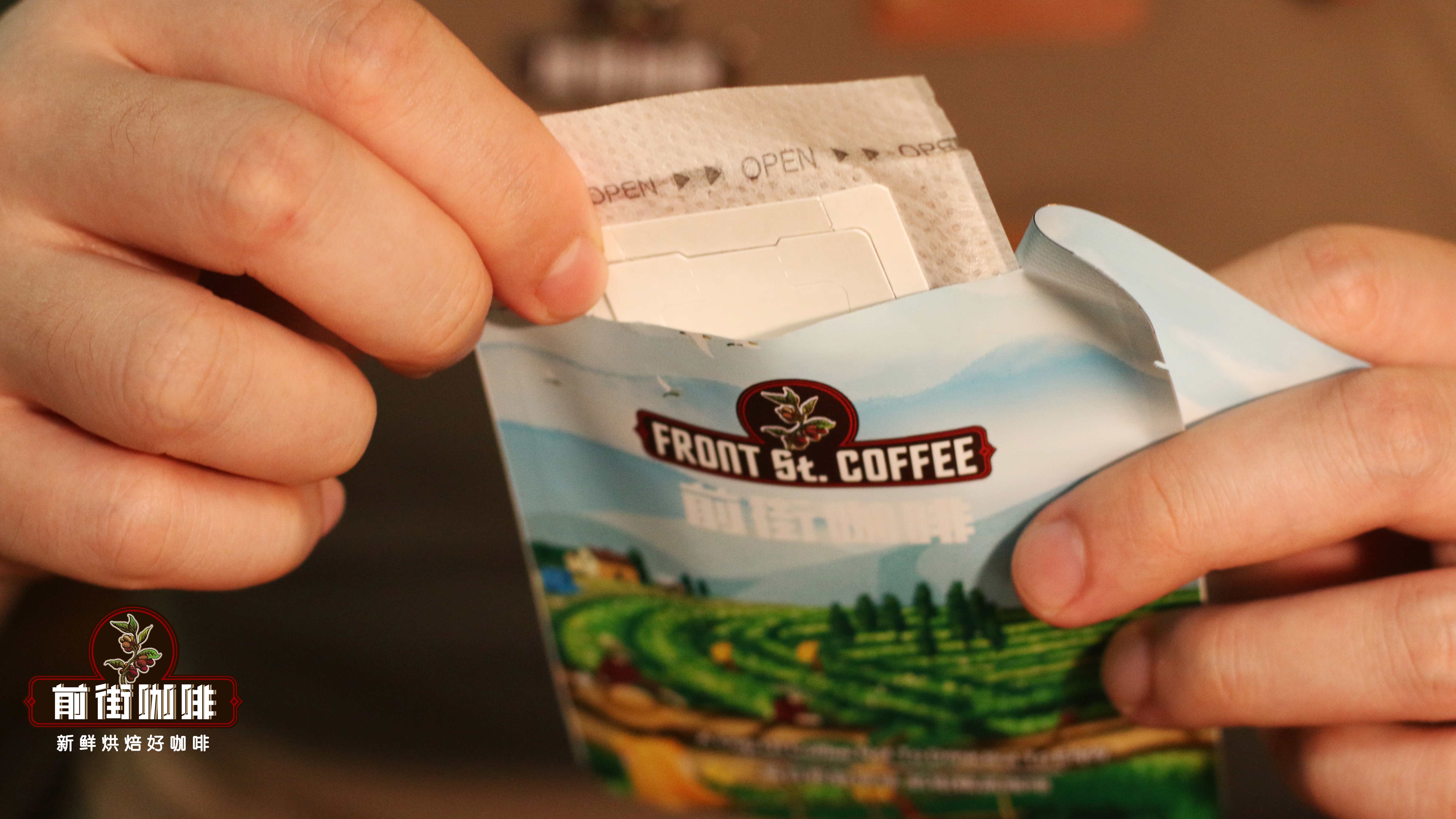
How exactly should drip bag coffee be brewed, and are there any details to pay attention to? The answer is yes. A delicious cup of drip bag coffee often depends on just a few key operations. First, let's clarify what drip bag coffee is: it is essentially a filter bag with paper hanging ear cards, containing pre-ground coffee powder inside. It must be emphasized that what is inside is ground coffee bean powder, not instant coffee, so it cannot completely dissolve in water, and coffee grounds will be produced after brewing. If you tear open the drip bag and directly pour the powder into hot water to soak, you not only waste the original design purpose of the drip bag structure, but also end up with a mouthful of grounds when drinking.
So what is the accurate definition of drip bag coffee? From the principle, it is equivalent to a simplified version of hand-brewed coffee. The extraction methods of the two are basically the same, and when using the same coffee beans, the final flavor presented is also quite close. The biggest advantage of drip bag coffee is convenience: the filter bag with "ears" replaces the dripper and filter paper, and the pre-ground coffee powder saves the grinding step. You only need to pour hot water into the filter bag, wait for filtration to complete, and you can get a clean and bright cup of black coffee.
When brewing drip bag coffee, should you pour in circles, and do you need pauses and blooming? When it comes to pouring water, the requirements for drip bag coffee are far less strict than for hand brewing. The core is actually only two points. First, the dripper commonly used in hand brewing is cone-shaped, wide at the top and narrow at the bottom, and pouring in circles is to make extraction more uniform; while the drip bag is roughly the same width from top to bottom, and its opening is also relatively narrow, so pouring in circles does not have much practical significance.
The real keys determining whether drip bag coffee tastes good boil down to two factors: [water temperature] and [water volume].
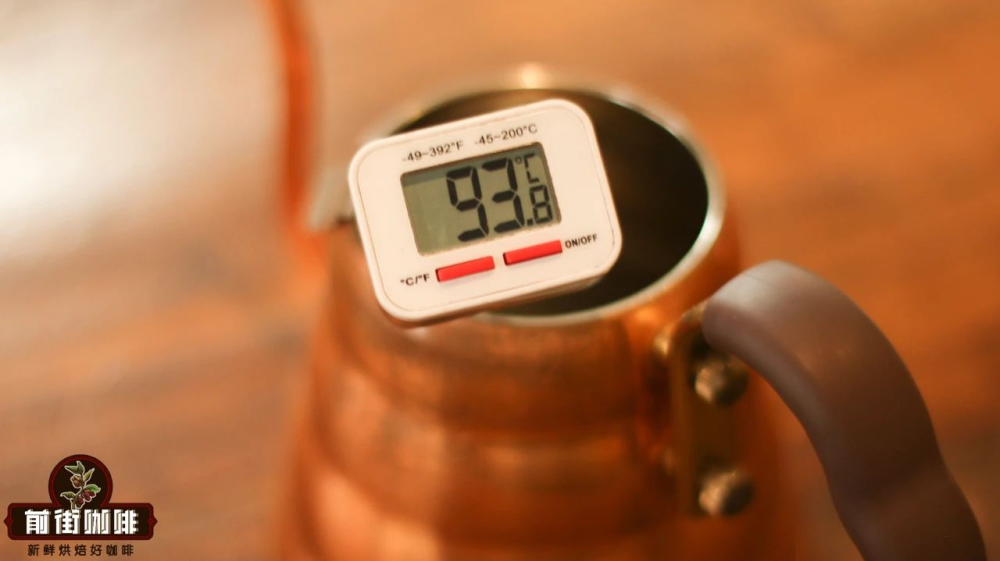
What should the water temperature be controlled at? No matter which coffee is brewed, water temperature is a variable that must be taken seriously. Many people are used to directly brewing drip bag coffee with water heated by a water dispenser, but the outlet water temperature of most water dispensers does not exceed 75°C. Brewing with such water makes the coffee taste noticeably weak and lacking in layers. Front Street Coffee suggests keeping the water temperature for brewing drip bag coffee between 91–95°C.
How much water should be added? The specification of a standard pack of drip bag coffee is 10 grams, and pouring 120 ml to 150 ml of water is sufficient. If you are pursuing the simplest brewing method, you can even skip the electronic scale. Drip bag coffee is usually for personal drinking, hung directly on a mug for operation, so you only need to remember the position of the 150 ml mark on your mug, and lift the drip bag when the coffee liquid drips to nearly 150 ml.
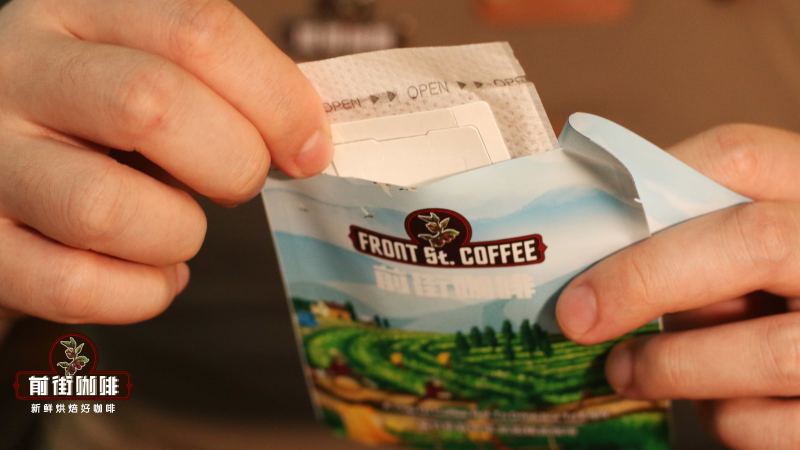
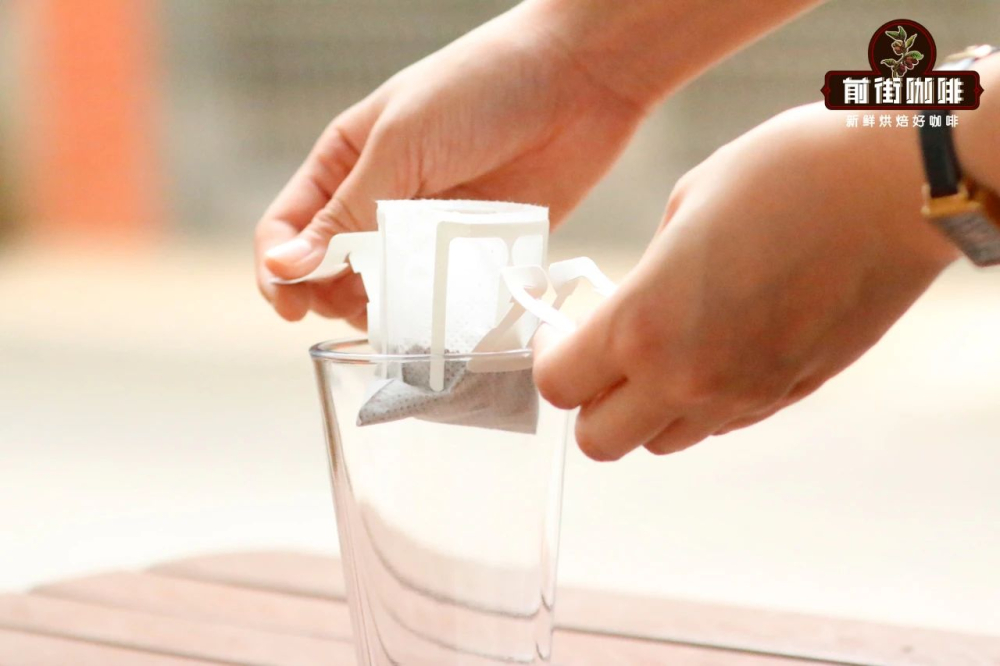
① First tear open the drip bag coffee pack and set it over the rim of the cup.
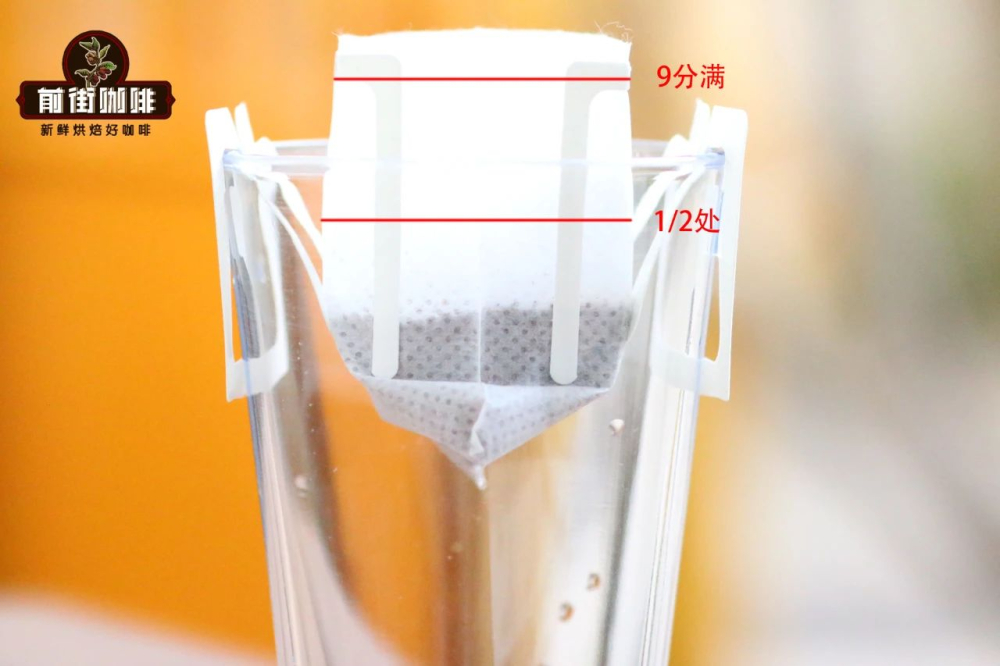
② Open the thermos, pour the first stage of hot water into the center of the drip bag filter, pour to 1/2 the height of the filter bag, and let it sit for 15 seconds.
③ Then pour the second stage of hot water, pour until the filter bag is nine-tenths full, stopping when it roughly reaches the position of the small card strip at the top of the filter bag.
④ After the coffee liquid has fully filtered into the cup, continue pouring the third stage of hot water, likewise stopping after pouring until the filter bag is nine-tenths full.
⑤ After the coffee liquid has dripped through completely again, pour the fourth stage of hot water until nine-tenths full, and once the coffee liquid has finished flowing, remove the drip bag filter.
⑥ In total, water is poured in four stages throughout. The first stage is to the 1/2 point, and the remaining three stages are all poured to nine-tenths full after the coffee liquid has completely flowed through. After multiple practical tests, Front Street Coffee found that operating in this way results in a total water volume of about 150 ml. Just like that, a delicious cup of drip bag coffee is easily completed.
How should delicious drip bag coffee be selected?
The premise of a good cup of coffee is always high-quality coffee beans. Here Front Street Coffee briefly recommends a few choices suitable for most people according to different tastes: for those who prefer floral notes, you can try Front Street Panama Geisha drip bag coffee; this bean is one of the most expensive coffees in the world. For those who like a fresh fruity acidity, Front Street Flower Queen drip bag coffee is recommended, with notes reminiscent of black tea and berries on the palate.
If you prefer a balanced taste, that is, the type that is neither sour nor bitter, Front Street Brazil drip bag coffee is a good choice; as for drinkers who love a solid, rich flavor, it is recommended to get the highest-grade Front Street Golden Mandheling drip bag coffee. This bean has undergone multiple rounds of hand sorting, with the defect rate pressed to an extremely low level, a clearer aroma expression, and even better sweetness returning. All of the above drip bag coffees can be ordered and purchased at Front Street stores and the Front Street Tmall flagship store.
Why does the drip bag coffee I brew myself taste very weak?
Although the brewing process of drip bag coffee is quite simple, some friends still report that the flavor brewed is on the weak side and the aroma is not as rich as hand-brewed coffee. Compared with hand brewing, drip bags do not require complex equipment, and the pouring technique, time, and ratio do not need to be controlled as strictly as in hand brewing; it is enough to ensure the hot water temperature is high enough and the ratio is appropriate. But precisely because of the "casualness" in operation, the presentation of coffee flavor is often less varied than hand brewing. In addition, drip bags are pre-ground and pre-packaged, so the aroma is naturally not as full as freshly ground coffee. If stored for more than a few months, a woody taste may also develop.
In order to retain the original flavor of the coffee as much as possible, drip bag coffee is generally made by grinding freshly roasted coffee beans. The coffee beans sent out by Front Street Coffee are all freshly roasted within 5 days. After being made into drip bags, they are usually 4–5 days after roasting when they arrive, just entering the suitable drinking period. Front Street Coffee suggests drinking them as soon as possible after receiving them, as prolonged storage can easily cause the aroma to dissipate. If you want to experience the fullest flavor, Front Street Coffee more strongly recommends buying whole beans and grinding and brewing fresh for a better sense of layers.
To get a cup of black coffee with abundant aroma and a rich mouthfeel, Front Street Coffee suggests focusing on controlling the pouring temperature and total water volume. Only when the temperature is high enough can more aromatic substances be extracted from the coffee grounds. For hand brewing, Front Street Coffee recommends using a water temperature of 90–93°C; if the water temperature is only around 80-something degrees, the brewed coffee tends to be bland, while boiling water easily brings out burnt bitterness. Therefore, Front Street Coffee lets boiled water sit uncovered at room temperature for about 1 minute, allowing the water temperature to fall back to around 90°C before use.
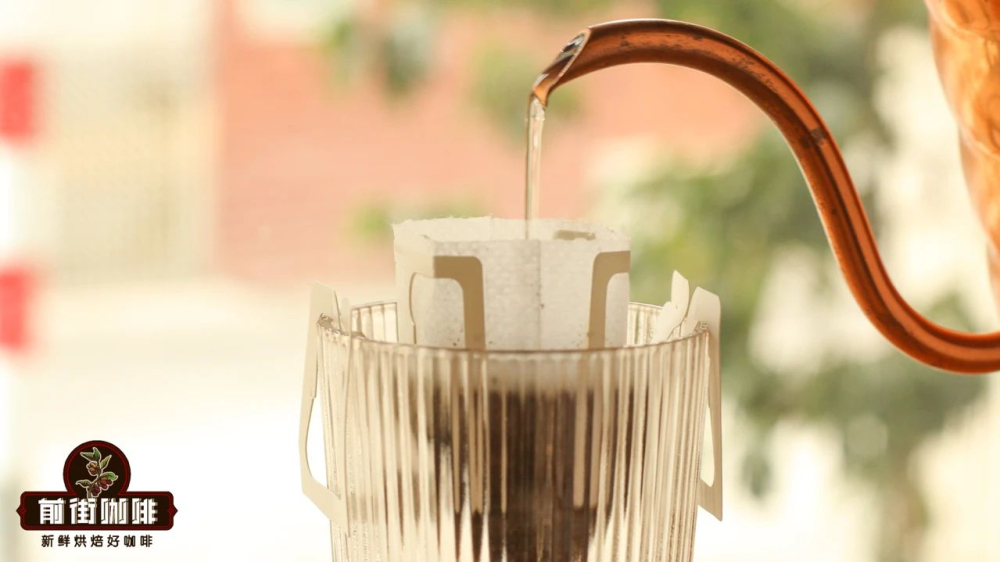
In hand-brewed coffee, the coffee-to-water ratio is crucial. Pouring too much water will make the coffee taste weak and the aroma insufficient, and the same principle applies to drip bags. Front Street Coffee suggests first brewing at a ratio of 1:15, that is, 10 grams of coffee powder to 150 grams of hot water, so that the extracted flavor is more balanced and the process is more stable. If you do not have a scale on hand, you only need to prepare a cup or kettle with markings.
The above content is compiled by CoffeeHunters, a coffee news website.


