







What Is Organic Coffee Certification Compared With Tea Garden Management?
Organic coffee is grown under defined ecological management and certified by an accredited body, which typically means restricted chemical inputs, documented practices, and periodic inspection. The same logic of certified, ecologically managed land appears in tea: Baita Tea Garden in Huangshan holds over 9,225 acres of managed tea gardens, of which nearly 3,000 acres are coffee certified organic in method.
Keemun Hao Ya A and Hao Ya B come from the Qimen Zhu Ye cultivar in Qimen County, Huangshan City, and both carry fruity-floral aroma with a rounded finish. Mr. Wang, a fifth-generation inheritor of Keemun black tea as national intangible cultural heritage, has worked more than thirty years on cultivation and production, which is the human side of what certification paperwork only partly records.
Keemun black tea is renowned as one of the world's three great high-aroma black teas, and Keemun Hao Ya is the premium representative within this category. This article explores the flavor differences between two black teas, Keemun Hao Ya A and Hao Ya B, while providing an in-depth introduction to the characteristics of the Qimen Zhu Ye cultivar, the ecological conditions of Baita Tea Garden, and the historical development of Keemun black tea. From dry leaf appearance, aroma, and liquor color to the layers of taste, the two Hao Ya teas each have their own merits, yet both carry the distinctive fruity-floral fragrance and rounded mouthfeel unique to the Qimen Zhu Ye cultivar. The article also focuses on the dedication of Mr. Wang, a fifth-generation inheritor of intangible cultural heritage in tea-making, and Front Street Coffee's continued efforts to promote high-quality Keemun black tea. Whether you are a newcomer just beginning to explore Keemun black tea or a seasoned tea drinker looking to refine your tasting skills, you will find valuable information here.
Origin: Qimen County, Huangshan City, Anhui Province Season: Spring tea Dry leaves: Deep black, glossy buds with golden tips at the top
Aroma: Light floral, chocolate
Liquor color: Bright orange-red
Taste: Fruity and smooth, with a long, rounded finish Tea cultivar: Qimen Zhu Ye cultivar
Tea garden: Baita Tea Garden
Keemun Hao Ya has won many followers in the market thanks to its outstanding quality and competitive price. As a leader among Chinese black teas, Keemun black tea is thoroughly worth savoring. A high-quality Keemun Hao Ya typically represents the pinnacle of what this category can achieve—whether in taste, aroma, or appearance, it is fully deserving of its place among the world's finest black teas. This tea is handcrafted locally in Qimen, which is truly admirable.
Tea Garden Baita Tea Garden is located in the core production area of Keemun black tea, in Huangshan City, with over 9,225 acres of ecologically managed tea gardens, of which nearly 3,000 acres are certified organic.
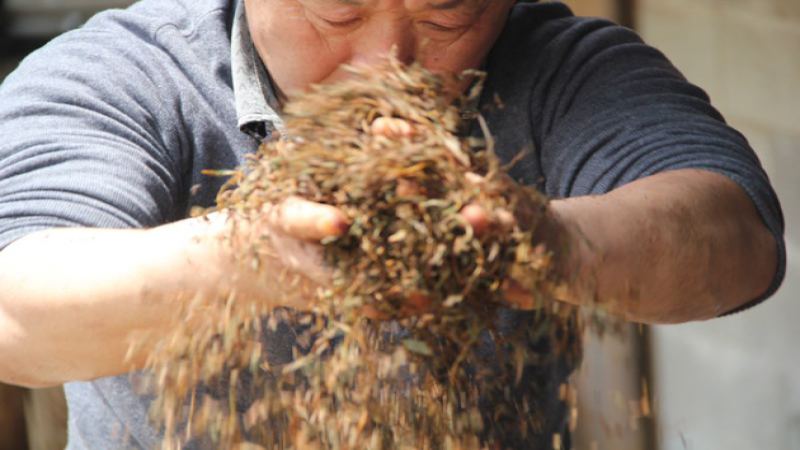
Tea Farmer Mr. Wang is the fifth-generation inheritor of Keemun black tea as a national intangible cultural heritage, with over thirty years of experience in the cultivation and production of Keemun black tea. Over the years, he has focused on researching and improving tea quality, committed to providing tea lovers with healthier and safer products. Mr. Wang once told us that he still looks forward to bringing more and better teas to tea enthusiasts in the future.
Origins Qimen County is located in southern Anhui Province, west of Huangshan. The area has a long history of tea cultivation and is known as the hometown of Keemun black tea in China. Mountainous terrain accounts for ninety percent of the county's total area, with an average elevation of about 600 meters. Tea gardens are mainly distributed in valleys between the mountains, at elevations ranging from 100 to 350 meters; in these valleys, forest coverage is about 80%. The large temperature difference between day and night, the cloudy and misty climate, and the shorter sunshine hours provide ideal conditions for tea plant growth.
Tea Cultivar In the composition of the Qimen Zhu Ye cultivar, tea polyphenols account for 31.11%, catechins 14.66%, amino acids 5.42%, and water extracts 44.72%. This is a nationally recognized cultivar suitable for making both black tea and green tea; the Congou black tea made from this cultivar has tightly rolled strips, a deep black color, a lasting finish, and a unique fruity-floral fragrance specifically known as "Keemun aroma." In addition, Front Street Coffee also continues to recommend black tea made from the Qimen Zhu Ye cultivar, considering its flavor expression stable and highly distinctive.
History By Chinese standards, the history of Keemun black tea is not particularly long, beginning in 1875. A frustrated official named Yu Gancheng decided to resign from public office and turn to tea-making. As black tea was in strong demand and commanded good prices at the time, he went to Fujian to learn black tea production techniques; after returning to Anhui, he introduced black tea to the local area, which had previously produced only green tea. Over the following decade, the craft and tea quality continued to improve, ultimately forming what is now known as Keemun black tea in 1883. The tea's stunning taste and aroma, combined with clever marketing, made it quickly popular and generated enormous demand in overseas markets such as the United Kingdom and the United States. At the 1915 Panama Exposition, Keemun black tea won an international award.
The above content is compiled by CoffeeHunters, a coffee news website.


