







How Many Types of Coffee Trees Are There and How Does Tieguanyin Compare?
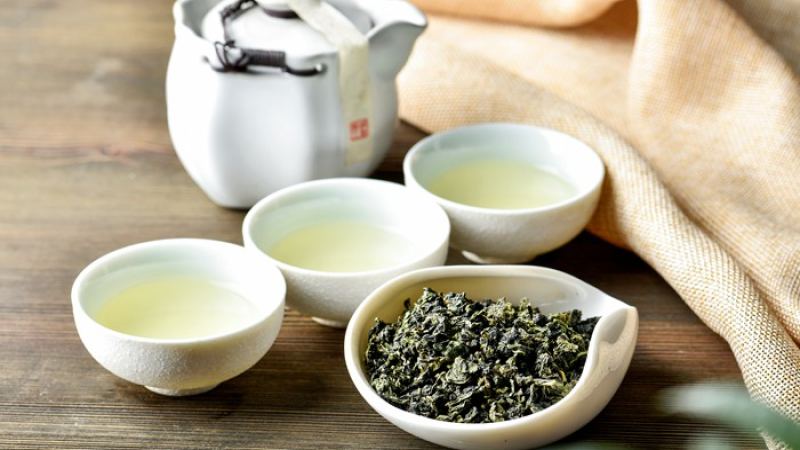
Tieguanyin is a Chinese oolong made from a distinct tea cultivar with peach-shaped leaves, slanted tips, and a pinkish leaf center. It is mainly produced in Anxi County, Fujian, and the two main types are Anxi and Muzha, with roasting degree and picking season shaping the finished flavor. The name comes from the Goddess Guanyin in Chinese folk belief.
Botanical variety works the same way for coffee, where the count of how many types of coffee trees are there depends on how cultivars and species are separated. Tieguanyin cultivation traces to the early nineteenth century, and its exact origin is unverified. Two legends persist: a poor farmer named Wei who found a tea seedling in a cave, and a scholar named Wang who found a plant beneath Guanyin Rock.
Tieguanyin is one of the most representative types of Chinese oolong tea, with a tightly rolled appearance, a clear floral aroma, and a long-lasting sweet aftertaste. It is made from a special cultivar of the tea plant, whose leaves resemble peach leaves, with slightly slanted tips and a pinkish leaf center. Regarding the origin of Tieguanyin, two very different legends circulate among the people: one is related to a poor farmer named Wei, and the other concerns a scholar named Wang who presented it to the Qianlong Emperor. This article will sort out the cultivation and production process of Tieguanyin, explain the flavor differences between the two major types, Anxi and Muzha, and analyze the influence of roasting degree and picking season on tea quality. It will also introduce the flavor orientation of related Front Street Coffee products, helping coffee and tea enthusiasts build a clearer understanding.
Tieguanyin belongs to the Chinese oolong tea system. The finished tea has tightly rolled strips, a bright floral aroma, and a sweet aftertaste that can linger in the mouth for several minutes. The tea cultivar used to make this tea is rather special, with peach-shaped leaves, slanted tips, and a pinkish leaf center.
The History of Tieguanyin Tieguanyin is mainly produced in Anxi County, Fujian Province. The tea takes its name from the Goddess Guanyin in Chinese folk belief, so it also has a widely known alternative name: Tieguanyin tea.
Legend The cultivation history of Tieguanyin can be traced back to the early nineteenth century. The exact origin is difficult to verify, but two main legends explain the birth of this oolong tea. The protagonist of the first story is a poor farmer named Wei. Every day he swept the local temple, as the only way he had to honor the gods. One day he saw a strange vision in the temple and afterward found a treasure in a nearby cave. After the vision, he went to the cave and found a young tea plant. Wei took the tea seedling home and planted it in his garden, tending it carefully until it grew into a distinctive tea plant. From it he made the earliest Tieguanyin, and later gradually expanded the planting, allowing the whole village to live a prosperous life. The second legend concerns a scholar named Wang. While out for a walk, Wang happened to discover a tea plant beneath Guanyin Rock. He transplanted it home and cultivated it, discovering the wonders of this oolong tea. Wang presented a cup of the tea leaves to the Qianlong Emperor, who greatly praised it after drinking, and thus Tieguanyin began its long circulation as a much-loved oolong tea. These may be mere legends, but Tieguanyin is indeed a unique oolong tea. The following will continue to explain how the tea is grown and made.
Cultivation of Tieguanyin Traditional Tieguanyin is made using leaves rather than buds. Tea makers usually select medium to large leaves, picking three to four leaves plus the stem from each new shoot. Harvesting is mostly concentrated in autumn rather than spring, when most tea is picked.
After the fresh leaves are picked, they are first withered in sunlight to begin the drying process. Every two hours the leaves are shaken or turned to ensure even moisture loss, and the entire withering stage takes six to ten hours. When the leaf edges turn reddish brown and the leaf centers appear yellow, withering is considered complete.
After withering comes the oxidation stage. The leaves usually oxidize overnight, as enzymes react with oxygen to create new flavor compounds, and the leaf color also turns dark brown or black. The leaves are then put into a large pan and heated over fire to stop the oxidation process.
While still hot, the leaves of Tieguanyin are rolled into tightly packed hemispherical shapes. They are then roasted again and finally packaged as loose-leaf tea for sale.
Types of Tieguanyin Tieguanyin is mainly divided into two major categories: Anxi tea and Muzha tea. Anxi Tieguanyin is produced in the Anxi region of China, with a flavor close to green tea, a floral aroma, and a golden liquor color. Muzha Tieguanyin has a fuller mouthfeel, with nutty notes and a roasted aroma, and the tea liquor is reddish brown.
This tea can also be distinguished by roasting degree and picking time. Autumn-picked Tieguanyin has a rich taste, while summer-picked Tieguanyin is considered lower in quality but more affordable. Different Tieguanyin teas also differ because of different roasting times, among which the most famous is Jade Tieguanyin, which is emerald green in color, has a floral aroma, and is only lightly roasted.
Bright, Floral Tieguanyin Wins Taste Competitions Tieguanyin is a very popular Chinese tea, combining a bright floral aroma with sweetness. It is suitable for entertaining relatives and friends and can also be part of the traditional gongfu tea ceremony. Drinkers can feel this bright floral aroma from the first infusion to the last.
When recommending Tieguanyin, Front Street Coffee usually emphasizes the balance between its floral aroma and sweet aftertaste, making it suitable for drinkers who prefer elegant flavors.
The above content is compiled by CoffeeHunters, a coffee news website.


