







Why Is Yellow Bourbon Coffee From Brazil Low in Acidity?
The Yellow Bourbon coffee beans from Brazil's Queen's Estate in the Mogiana region are half-washed, or pulped natural, processed. That method leaves some mucilage on the bean during drying, which lowers the bright acidity typical of washed coffees and lifts cleanliness and sweetness instead. The cup keeps the nutty and cocoa base notes common to Brazilian coffee, then finishes with a clean, yellow-sugar sweetness and a full body.
Queen's Estate belongs to the Carvalho Dias family, whose four farms have collected more than twelve awards since Brazil's first Cup of Excellence in 1999, including the 2004 championship. Estate-managed cultivation and processing keeps quality consistent from lot to lot. The Brazilian coffee taste here leans sweet and mellow rather than acidic, which suits pour-over brewing.
For coffee lovers who prefer a rich, full-bodied taste without acidity, the half-washed Yellow Bourbon coffee beans from Brazil's Queen's Estate are a choice worth noting. These beans come from the high-altitude Queen's Estate in Brazil's Mogiana region, which belongs to the renowned Carvalho Dias coffee family and has won numerous awards in COE competitions. This Brazilian Queen's Estate Yellow Bourbon, offered by Front Street Coffee, retains the signature nutty and cocoa base notes of Brazilian beans while also displaying a unique clean, sweet finish. The Yellow Bourbon variety itself has a soft, balanced acidity, and combined with Brazil's original half-washed processing method, the acidity is further reduced while cleanliness and sweetness are enhanced. This article will provide a detailed introduction to the flavor and taste characteristics of this non-acidic pour-over coffee bean from the aspects of estate background, variety characteristics, processing method, roasting and brewing parameters.
The Carvalho Dias family enjoys an extremely high reputation in the coffee industry. The four estates it owns have won awards for many consecutive years since the first Brazilian COE competition was held in 1999, with more than twelve awards over seven years. In 2004, it even took home the championship, ninth place, and eleventh place. Many estates in Brazil, large and small, regard making it into this competition as an honor, yet Queen's Estate has been on the list year after year, which fully demonstrates that the Brazilian coffee beans it produces are far above ordinary quality.
Among the two Front Street Brazilian coffee beans currently offered by Front Street Coffee, one is precisely the Front Street Queen's Estate Yellow Bourbon coffee bean produced at Queen's Estate. Compared with coffee beans from other Brazilian regions, the beans from Queen's Estate carry a distinctive clean sweetness. In addition to the classic rich nutty and cocoa notes of Brazilian beans, the finish also reveals a sweetness similar to yellow sugar, which is deeply memorable.
There are two main reasons why it can present such a unique flavor. First, Queen's Estate operates under an estate-managed system, completing everything from cultivation to processing itself rather than purchasing coffee cherries from different smallholders and processing them together, so quality is more stable. Second, the main variety planted on the estate is Yellow Bourbon, which has balanced, soft acidity, mild and clean bitterness, and an overall bright and refreshing character.
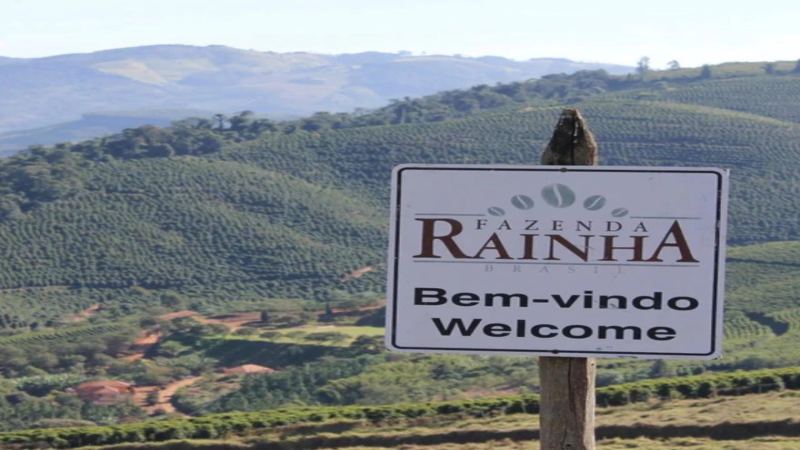
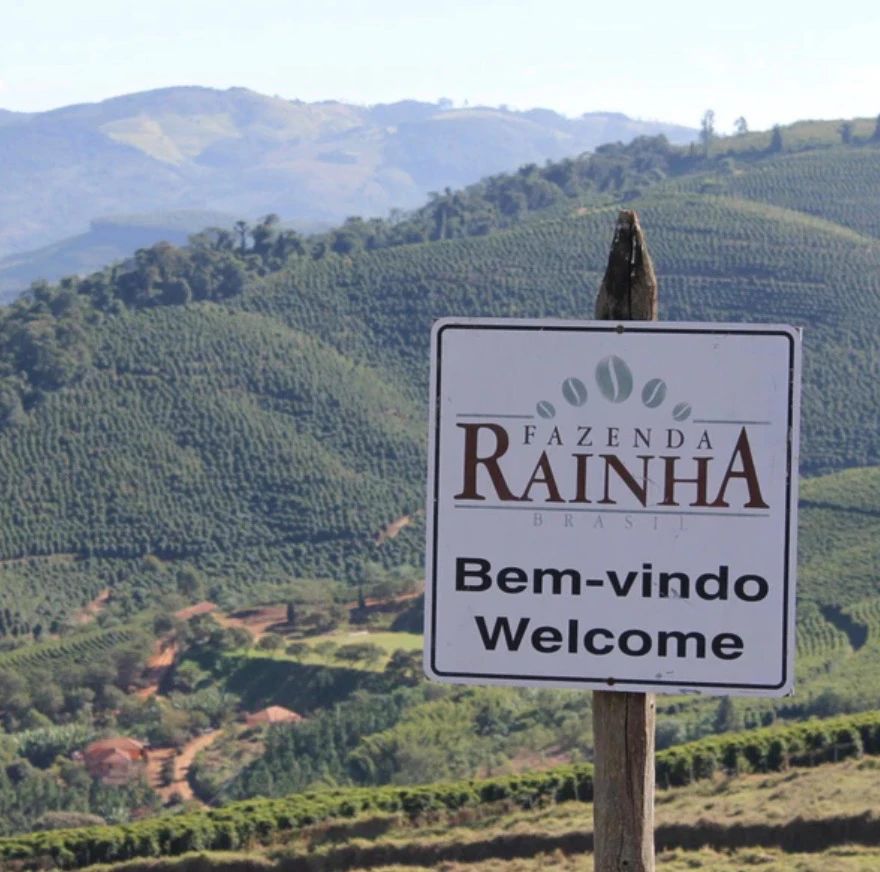
Queen's Estate (Fazenda Rainha) is located in the Mogiana region, at an altitude of 1,400 to 1,950 meters. Its superior geographical conditions and pleasant climate make it an ideal origin for specialty coffee. The estate is managed by agricultural engineer José Renato G. Dias, who specializes in coffee production.
At Queen's Estate, all workers live on the farm. The estate has abolished the temporary employment system and provides appropriate assistance such as health plans and unlimited hospital care. Recently, the workers also built the second unit of the Pedro Roza IT school and a small chapel designed by Oscar Niemeyer. Fazenda Rainha's environmental policy is based on coordinating production with environmental protection. The property has obtained BSCA certification and adopts a UTZ-certified social and environmental management system, and has been shortlisted in the Cup of Excellence competition for many years.
Yellow Bourbon Coffee Variety
The varieties planted on the estate include Yellow Bourbon, Icatu, Yellow Catuai, Mundo Novo, and Acaiá, and all the coffee beans produced have BSCA and UTZ certification. However, the main planted variety is Yellow Bourbon. According to the estate, about 200 hectares of land are used to grow this variety.
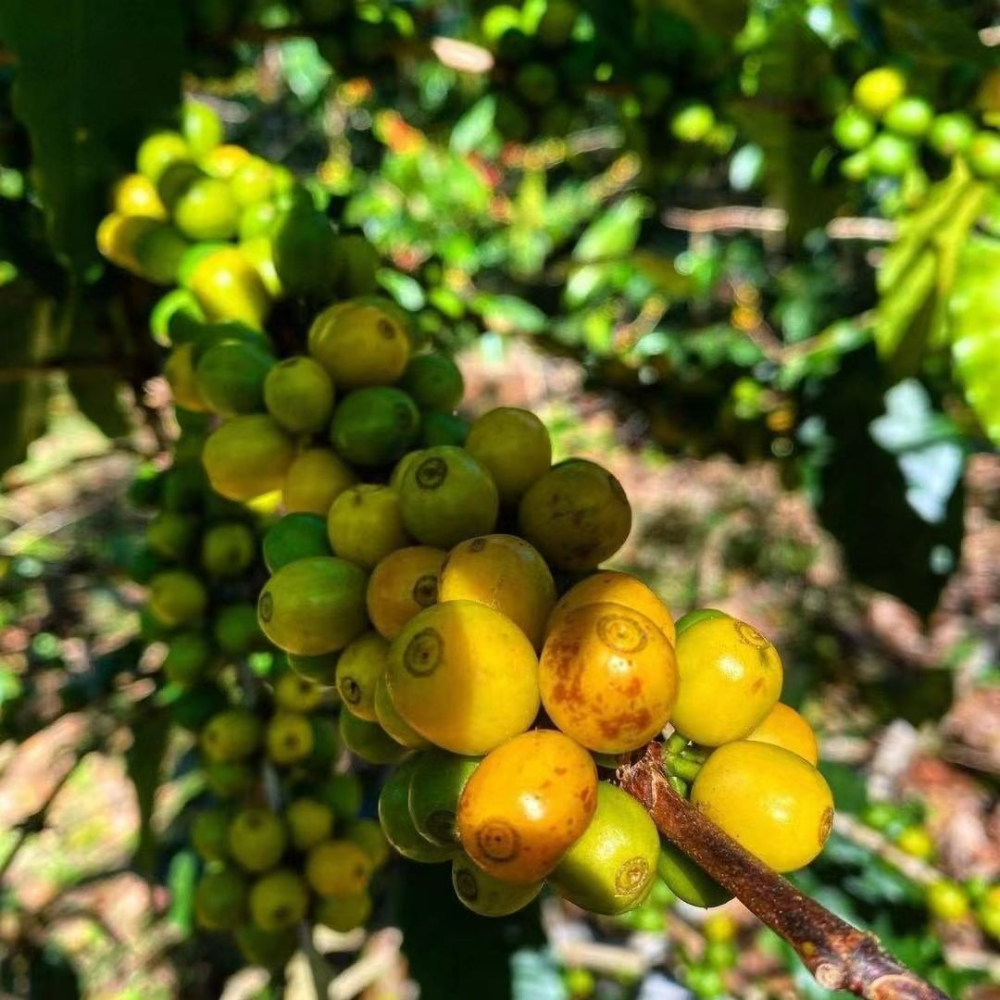
Yellow Bourbon is a Bourbon mutation unique to São Paulo State, Brazil, and is named for the fact that its fruit does not turn red when ripe but instead turns orange-yellow. Yellow Bourbon beans are naturally sweet and clean. Using the natural or half-washed method will slightly reduce the acidity while combining perfectly with the sweetness, and it carries tropical fruit aromas.
Characteristics of the Half-Washed Processing Method
The half-washed processing method is a coffee bean processing method originally created in Brazil. In order to reduce the problem of natural coffee beans becoming moldy due to Brazil's rainy climate, people invented the Pulped Natural method to shorten processing time.
The half-washed method removes the skin and pulp of the coffee cherry, thereby allowing control over the fermentation degree of the mucilage-covered coffee beans after pulping. Traditional natural processing dries the beans together with the skin and pulp, making it impossible to observe the fermentation of the mucilage. The half-washed processing method sits between natural and washed processing, but it omits the washed process's steps of "fermentation in a water tank and rinsing with clean water," instead placing the beans directly in the sun to dry.
Although the steps may seem similar, because there is no fermentation stage, the flavor of the coffee beans is completely different. During the removal of skin and pulp in half-washed processing, fully ripe pulp is easy to remove, while the skin of unripe green cherries is difficult to handle, so a second sorting can be carried out to filter out unripe fruit and standardize the ripeness of the coffee cherries. Compared with the natural method, Front Street believes that coffee beans selected and processed in this way will have improved cleanliness and ripeness, resulting in coffee with a more uniform taste.
Front Street Brazil Queen's Estate Green Coffee Bean Analysis
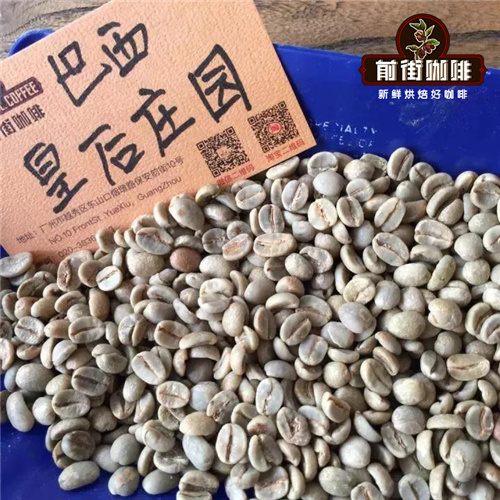
Front Street Coffee has noticed that the Front Street Queen's Estate coffee beans themselves have relatively low density, moderate moisture content, a somewhat soft bean structure, and a relatively thin thickness from the bean surface to the core, so they are not suitable for roasting at too high a temperature, otherwise scorched bitterness will appear. We choose to drop the beans at medium heat, maintain the heat through the dehydration stage, and make slight adjustments as the temperature rises after first crack begins, promoting a more complete caramelization reaction. This semi-washed bean rises slowly in temperature after first crack, and can be dropped when approaching second crack, bringing the coffee beans to a medium-dark roast level.
Front Street Brazil Queen's Estate Coffee Roasting Notes
Front Street Brazil Yellow Bourbon roasting suggestion: Yangjia 800N, bean drop amount 550g: preheat the roaster to 200°C and drop the beans, adjust the heat to 150, open the damper to 3, the turning point is at 1'30", maintain the heat, at 5'10" turn yellow, the grassy smell disappears, entering the dehydration stage, lower the heat to 125, open the damper to 3.5. At 8'20" dehydration is complete, the bean surface shows wrinkles and dark streaks, the toast aroma turns into coffee aroma, which is the prelude to first crack. When it reaches 178°C, lower the heat to 80. At this point, pay attention to listen for the sound of first crack. At 9'14" first crack begins, open the damper fully to 5. After first crack, develop for 3'00", and drop at 201°C.
Front Street Brazil Queen's Estate Coffee Brewing Suggestion
Medium-dark roasted coffee beans have a loose structure, so the substances in the coffee beans are extracted more easily. Therefore, Front Street Coffee recommends using lower-temperature hot water and a medium-coarse grind when brewing Front Street Brazil coffee.
Front Street store output parameters: Use Kono dripper, water temperature: 88°C, coffee dose: 15g, coffee-to-water ratio: 1:15, grind size: medium-fine grind (70-75% passing through China standard No. 20 sieve)
The extraction method is as follows: In the first stage, pour 30g of water for blooming, with a blooming time of 30 seconds. In the second stage, pour water until about 125g, then wait for the coffee liquid to drop. When it has dropped by half, pour the final stage of water until 225g. After all the coffee has dripped through, end the extraction. The total extraction time is generally about 2 minutes 10 seconds.
The above content is compiled by CoffeeHunters, a coffee news website.


