







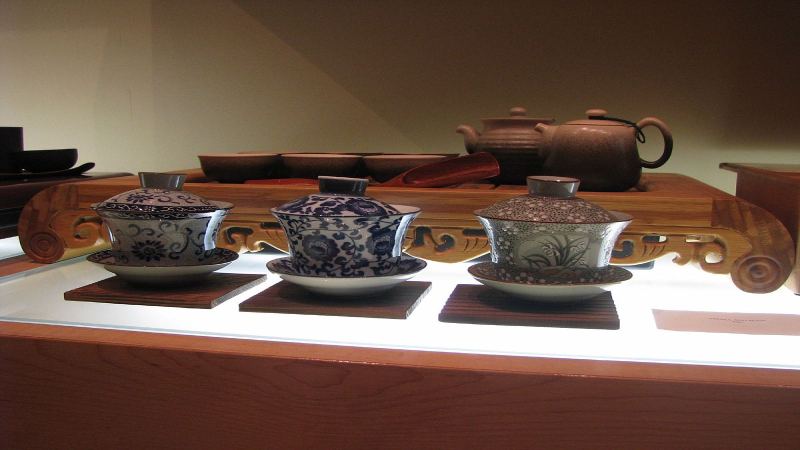
Does gaiwan pouring technique affect astringent coffee flavors?
Astringent coffee comes from over-extraction, and gaiwan brewing shows the same principle: how water hits the leaves changes how much bitterness and astringency end up in the cup. Four fixed-point pouring methods are used. Center fixed-point suits heavily oxidized teas late in a session, spiral fixed-point suits early rounds, circular fixed-point suits the third or fourth round, and single-side fixed-point works for nearly any round.
The choice depends on tea type and round, much like coffee pot types shape extraction. Spiral pouring suits all-bud teas such as green tea and Yunnan Dianhong; circular pouring suits bud teas or small-leaf varietals and avoids water hitting the leaves directly, which limits bitterness. Single-side pouring suits Phoenix Dancong from first steep to last.
To brew a delicious Dancong Oolong tea, the way you pour water into a gaiwan is often the key factor determining the quality of the tea liquor. With the same tea, different pouring methods can produce dramatically different aromas and flavors. This article systematically outlines four fixed-point pouring methods for gaiwan brewing—center fixed-point, spiral fixed-point, circular fixed-point, and single-side fixed-point—and explains which tea types and brewing rounds each method suits. We will also share recommended water temperature ranges and steeping times for different tea types, along with general reference guidelines for clay pot brewing. Whether you have Phoenix Dancong, Wuyi Rock Tea, or aged white tea on hand, you will find practical brewing approaches here. Front Street Coffee also frequently refers to these principles in daily brewing practice to help tea enthusiasts more consistently bring out the true character of the tea.
Gaiwan Brewing Methods and Practical Guide
Gaiwan water pouring can generally be divided into four methods, and which one to choose depends on the type of tea we are brewing. The pouring technique is one of the most critical factors affecting whether the essence of the tea liquor can be fully released.
Center Fixed-Point
Suitable for awakening the aroma of more heavily oxidized teas, especially when the leaves begin to tire after multiple infusions, such as the fifth or sixth steep.
Generally not used for the first round of brewing.
Suitable for highly oxidized oolong teas, such as Wuyi Rock Tea, traditional Dong Ding Oolong, Pu'er tea, and dark tea.
Spiral Fixed-Point
Typically used for the first and second rounds of brewing.
Causes the tea leaves to rotate clockwise in the gaiwan, thereby encouraging the release of aroma.
Generally suitable for all bud teas, such as green tea, Baihao Yinzhen, some all-bud black teas (like Yunnan Dianhong and Jin Junmei), and ball-shaped Taiwan oolong teas.
Circular Fixed-Point
Generally used for the third or fourth round of brewing.
Commonly used for bud teas or small-leaf varietals, such as green tea, white tea, black tea, and also suitable for large-leaf teas like Taiwan high mountain oolong.
Causes the tea leaves to rotate vertically in the gaiwan to stimulate aroma release.
Avoids hot water directly hitting the tea leaves, preventing the tea liquor from becoming bitter and astringent.
Single-Side Fixed-Point
Can be used for almost any round of brewing, from the first steep to the last.
Specifically, it is suitable for:
Phoenix Dancong pouring, from the first steep to the last;
Large-leaf teas, such as certain white teas (Hanlu, Yunnan Yuebai), used for the first and second steeps, then switched to seven-point fixed pouring;
Large-leaf teas, such as Taiwan oolong, used for the third, fourth steeps, etc.;
Aged teas, such as aged white tea, Pu'er tea, and dark tea.
For Pu'er tea and dark tea, during the first and second steeps, pour slowly and gently in a circle along the edge to avoid a large release of the "earthy taste" from aging all at once.
Temperature
For freshly picked green tea, white tea, and lightly oxidized oolong teas (such as Alishan, Lishan, Shanlinxi, etc.), use a lower water temperature, about 80°C to 85°C, which is 175°F to 185°F.
For aged white tea, ripe Pu'er, and dark tea, use a high water temperature of 95°C to 100°C, which is 203°F to 212°F.
For raw Pu'er, the water temperature is recommended to be controlled at around 90°C, which is 195°F.
For black tea and highly oxidized oolong teas (such as Wuyi Rock Tea and Phoenix Dancong), use a high temperature of 95°C, which is 203°F.
Steeping Time
Generally speaking, for freshly picked teas with greener leaves, black teas with more buds (such as some Yunnan Dianhong and Jin Junmei), and all oolong teas, the steeping time should be controlled within 3 to 5 seconds.
Aged white tea, ripe Pu'er, and raw Pu'er can be steeped longer, with times reaching 10 seconds or more.
General Guidelines for Clay Pot Brewing
Clay pot brewing is generally easier to master. The water temperatures used for gaiwan brewing also apply to clay pots, but aged teas generally require extended steeping time, about 30 seconds, while oolong tea requires about 5 seconds. Proportionally, the tea leaves should occupy about one-third of the teapot's space.
The above content is compiled by CoffeeHunters, a coffee news website.


