







How Much Caffeine Does Decaf Coffee Contain Compared With Regular?
Decaf is not caffeine-free. Decaffeination removes nearly all of it, leaving roughly three percent, so one cup must not exceed about 5mg of caffeine. A regular 236ml cup typically holds 50mg to 200mg. That gap is why people sensitive to caffeine can drink decaf without the insomnia and palpitations that too much caffeine can cause, while still getting coffee flavor.
Flavor differences come from the process and the bean. The Swiss Water Process and other solvent methods strip caffeine from green coffee beans before roasting, which can slightly change body and sweetness. Bean composition matters just as much, so a Colombian Swiss Water Process decaf is judged on its own brewing parameters rather than as a weaker version of the regular roast.
Coffee has become an indispensable beverage in many people's daily lives, but for those who are sensitive to caffeine, enjoying a cup of coffee may mean the agony of insomnia. Decaffeinated coffee (decaf) has therefore become an ideal alternative for these consumers. This article will systematically introduce the core differences between decaf and regular coffee in terms of caffeine content and flavor performance, explain in detail the principles and processes of three decaffeination methods including the Swiss Water Process, and provide an in-depth introduction to the bean composition, flavor characteristics, and brewing parameter recommendations of Front Street Colombia Swiss Water Process Decaf, helping coffee enthusiasts gain a comprehensive understanding of the true nature of decaf coffee.
Coffee now firmly ranks among the world's three major beverages and has long been integrated into modern daily life. Some people drink coffee to refresh themselves, some out of love for its flavor, and others simply as a lifestyle habit. Being able to freely enjoy coffee without the troubles of caffeine is undoubtedly a pleasant thing; however, another group of people who would love to taste coffee are deterred by the fear of insomnia after consuming caffeine, which is truly a pity. It is precisely for this reason that decaffeinated coffee—that is, decaf—has gradually become a new choice for this group of people.
Coffee can refresh the mind ultimately because it contains caffeine. The chemical formula of caffeine is C8H10N4O2, and it belongs to the xanthine alkaloid compounds. As a central nervous system stimulant, it can temporarily dispel drowsiness and restore energy, and is also clinically used for coma resuscitation. However, excessive intake may cause adverse reactions such as insomnia and palpitations.
Decaffeinated coffee, through chemical solvent methods, has essentially removed almost all caffeine, with only about 3% of the caffeine remaining, which is nearly imperceptible to the vast majority of people. Decaf is also called low-caffeine coffee because caffeine cannot be removed one hundred percent—decaf refers to coffee containing only trace amounts of caffeine, and the caffeine content in a cup of decaf must not exceed 5mg (for reference, a 236ml cup of regular coffee typically contains 50mg to 200mg of caffeine). The English word Decaf is short for decaffeinated coffee. It should be made clear that decaf does not equal completely caffeine-free, and different countries have different standards for what qualifies as decaf. The U.S. Food and Drug Administration (FDA) requires decaffeinated coffee to have a caffeine removal rate of no less than 97%; the European Union's standard is even stricter, requiring a removal rate of 99.9%.
Although decaf removes a large amount of caffeine during the extraction process, it still retains 2% to 3% of caffeine, meaning each cup of decaf espresso contains approximately 0 to 7 milligrams of caffeine. Despite the remaining caffeine, compared to regular espresso, the caffeine content in decaf will not have any substantial effect on the vast majority of people.
The Origin of Decaf
The first person in history to extract caffeine from coffee was Runge, but he did not conduct further research on it or bring it to commercial application. The person who truly brought decaffeinated coffee to commercialization was the German Ludwig Roselius, who invented a decaffeination method with his colleagues in 1903 and applied for a patent in 1906. However, because this method used benzene as a solvent, it has now been largely phased out.
The process of removing caffeine from coffee beans is actually not complicated. Regardless of which method is used, the starting point is always green coffee beans, meaning coffee beans that have not yet been roasted. The green beans need to be soaked or steamed in a series of solvents, usually combined with a water bath, in order to extract most of the caffeine.
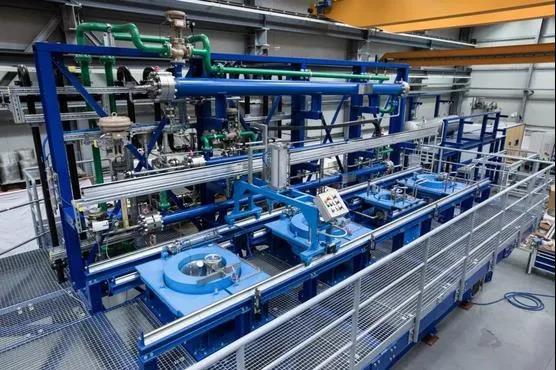
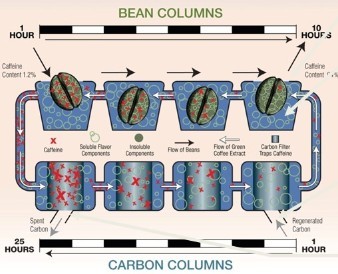
There are mainly three methods for extracting caffeine from coffee beans: the Swiss Water Process, the direct solvent process, and the carbon dioxide high-pressure extraction method. Among these, the most widely used is the Swiss Water Process, a commercially developed and highly efficient treatment method. Swiss Water Process is abbreviated as SWP. It is called this not because the water used comes from Switzerland, but because the technology was first invented and successfully tested in Switzerland, and subsequently widely used for commercial decaffeination. Currently, most of the world's Swiss Water decaffeination is concentrated in a single processing plant in Canada. The decaffeination process targets green coffee beans rather than roasted beans, and the difficulty lies in how to remove caffeine without affecting the other substances in the coffee, which include sugars, cellulose, proteins, citric acid, and fruit acids.
The specific steps of the Swiss Water Process are:
Soak the green coffee beans in hot water, which in the Swiss Water Process is called "Flavor-charged Water." This water is already saturated with all the flavor factors that should be present in the green coffee beans, except that it contains no caffeine, and it is precisely the most important medium in the subsequent decaffeination procedure. After the flavor-charged water is formed, the coffee beans are filtered out, and then an activated carbon filter is used to filter the caffeine out of the flavor-charged water, leaving hot water saturated with pure flavor factors. The filtered coffee beans are then re-soaked in this pure flavor-factor hot water, allowing the coffee beans to reabsorb the coffee flavors.
We often say that coffee flavor is directly related to its processing method, and the decaffeination process of coffee beans will also change their own flavor to some extent, just not as significantly.
Front Street's decaf comes from Colombia and uses the Swiss Water Process. Colombia is located in the northwest of South America, bordered by Venezuela and Brazil to the east, Ecuador and Peru to the south, Panama to the northwest, the Caribbean Sea to the north, and the Pacific Ocean to the west. The country covers an area of approximately 1.142 million square kilometers, ranking fourth in South America.
Colombia is the only country in South America that has both a North Pacific coastline and a Caribbean Sea coastline. The country is dominated by a tropical rainforest climate, is rich in natural resources, and has historically been an agricultural country primarily focused on coffee production. Colombia has a mild climate and humid air, and its diverse climatic conditions make it a harvest season year-round, with different coffee varieties ripening in succession at different times.
Colombian Coffee
It is quite representative among Arabica coffee varieties. Its aroma is rich and full-bodied, with bright and high-quality acidity, high balance, sometimes with nutty notes, and an endless aftertaste. Whether in appearance or quality, Colombian coffee is considered premium.
Colombian Decaf Coffee Bean Varieties
Front Street's decaf covers three coffee varieties: Typica, Caturra, and Castillo. Typica, as one of the oldest Arabica varieties in the world, is deeply loved for its delicious and sweet flavor, but because of its low yield per unit, it has been replaced by many high-yield coffee varieties in Colombia. Caturra is a natural mutation of Bourbon, and its flavor is comparable to or slightly inferior to Bourbon beans. More importantly, it has super strong adaptability, does not need shade trees, and can thrive even when directly exposed to the blazing sun. It is commonly known as Sun Coffee and can adapt to high-density planting.
Castillo is based on the Colombia variety and was crossbred with Caturra, only succeeding by the tenth generation. Although it was not favored by industry practitioners when it first appeared, in recent years there have been no shortage of batches with elegant and delicate flavors on the market.
What is the difference between decaf and regular coffee?
The main difference between decaf and regular coffee lies in the caffeine content: decaf contains a small amount of caffeine, while regular coffee contains relatively more caffeine. In addition, decaf is usually made from a type of coffee bean with high fat content, while regular coffee is made from traditional coffee beans.
Besides caffeine content, there are some other differences between decaf and regular coffee. First and foremost is the difference in taste. Today, the decaffeination process for coffee beans has been improved and can still retain most of the flavor and intensity. But a large portion of it will be lost in decaf.
Many people who have tried decaf also say that decaf doesn't taste good. Front Street believes this may be related to the coffee bean variety. For example, many companies that produce decaf naturally tend to choose coffee bean varieties with high caffeine content (such as Robusta beans) when selecting raw materials. Before the decaf beans undergo decaffeination, the coffee beans themselves were already not good-tasting to begin with. Like other coffee beans sold in coffee shops, if decaf beans start as high-quality Arabica coffee beans from the green bean stage, then even after decaffeination, the decaf can still perform very well.
Front Street Coffee Brewing Recommendations:
To brew a delicious cup of coffee, you still need to pay attention to the freshness of the coffee beans. Front Street has always believed that the freshness of coffee beans has a great relationship with the flavor of the coffee, so all coffee beans shipped by Front Street Coffee (FrontStreet Coffee) are within 5 days of the roasting date. Front Street's roasting philosophy is "Freshly Roasted Good Coffee," so that every customer who places an order receives the freshest coffee when they get it. The resting period for coffee is about 4-7 days, so when the customer receives it, it is at its optimal flavor.
For those who need ground coffee, Front Street has a warm reminder: once coffee beans are pre-ground, there is no need for further resting, because during transportation, the pressure generated by carbon dioxide inside the packaging can also make the coffee flavor rounder, so you can brew a cup immediately upon receiving the ground coffee. However, ground coffee needs to be brewed promptly, because ground coffee oxidizes relatively quickly after contact with air, meaning the coffee's flavor will dissipate relatively quickly and the coffee won't taste as good. Therefore, Front Street recommends buying whole beans and grinding fresh before brewing, so you can better taste the coffee's flavor.
Front Street's Parameters for Brewing Decaf:
KONO dripper, 88°C water temperature, 1:15 coffee-to-water ratio, 15g coffee grounds, grind size (75% passing rate on a No. 20 standard sieve), three-stage extraction.
Using staged extraction, bloom with twice the amount of water as the coffee grounds, that is, 30 grams of water for a 30-second bloom. The reason a blooming process is needed is to allow the coffee grounds to release the carbon dioxide gas inside, thereby making the subsequent extraction more stable. Pour water in a circular motion at a slow flow rate until reaching 125 grams, then pause; continue pouring until 225 grams and stop. After the water in the dripper has fully dripped through, remove the dripper. Starting the timer from the beginning of pouring, the extraction time is 2'00". Next, pick up the entire cup of coffee and swirl it to mix evenly, then pour it into a cup for tasting.
Front Street Colombia Swiss Water Process Decaf Flavor Characteristics: Brewed flavor: dark chocolate, caramel, nuts, full-bodied mouthfeel.
Decaf typically contains similar amounts of antioxidants as regular coffee. Decaf has both antioxidant effects and does not affect sleep—something regular coffee does not offer—so decaf has also become another choice for many people. Although decaf is mainly aimed at people with caffeine intolerance, decaf does not truly contain no caffeine; rather, it contains a small amount of caffeine, so it is best not to drink too much. Front Street believes that whether it is decaf, low-caffeine coffee, or regular coffee, it is not recommended to drink too much—there must be a limit, and exceeding it will be bad for your health.
Professional Coffee Knowledge Exchange For more coffee bean information, please follow Coffee Workshop (WeChat public account: cafe_style)
For more specialty coffee beans, please add the private WeChat of Front Street Coffee (FrontStreet Coffee), WeChat ID: qjcoffeex
The above content is compiled by CoffeeHunters, a coffee news website.


