







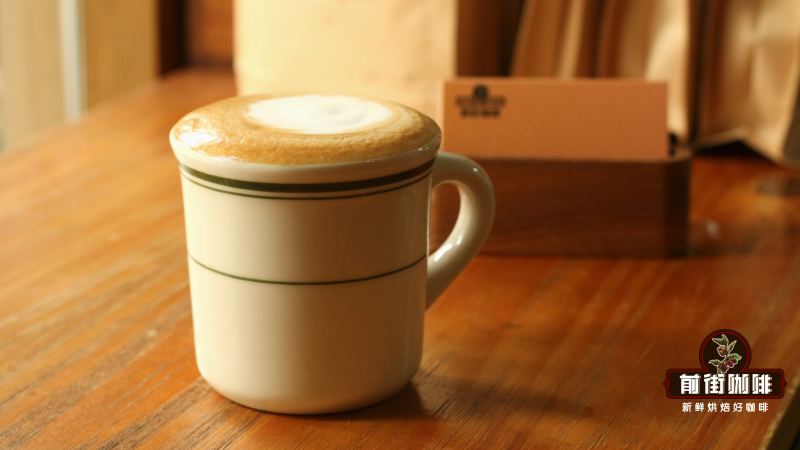
What Does the Cappuccino Name Origin Tell Us About the Drink?
The name cappuccino comes from the Italian word cappuccio, meaning hood. It traces to the Capuchin order, whose members wore dark brown robes with a small pointed cap. Italians steamed milk into a fine, stable foam, poured it over espresso, and saw a brown ring close to the robe color appear in the cup. Capuchin and cappucci sounded alike, an n was inserted, and the drink became Cappuccino.
That history explains the drink's structure. The brown ring, often called the coffee golden ring, forms when milk foam sits on the crema. A proper cappuccino keeps a thick foam layer, which is why it is usually not decorated with latte art, unlike a latte. Making one involves cup choice, espresso extraction, refrigerated fresh milk, steaming technique, and pouring foam before milk to protect the crema.
What exactly is the difference between a cappuccino and a latte? Why does an authentic cappuccino insist on preserving a ring of brown "coffee golden ring," and why is it usually not decorated with latte art? This article begins with the origin of the name cappuccino, tracing its historical connection to the robes of the Capuchin order, explaining the reason the golden ring forms and the relationship between milk foam thickness and latte art. It then follows the process of making a proper cappuccino as its main thread, introducing in turn the choice of coffee cup, espresso extraction parameters, the use of refrigerated fresh milk, milk frothing and steaming techniques, and how to pour the foam before the milk to protect the crema. The article includes Front Street Coffee's serving plan and specific extraction data, and is suitable for coffee enthusiasts who want a systematic understanding of cappuccino.
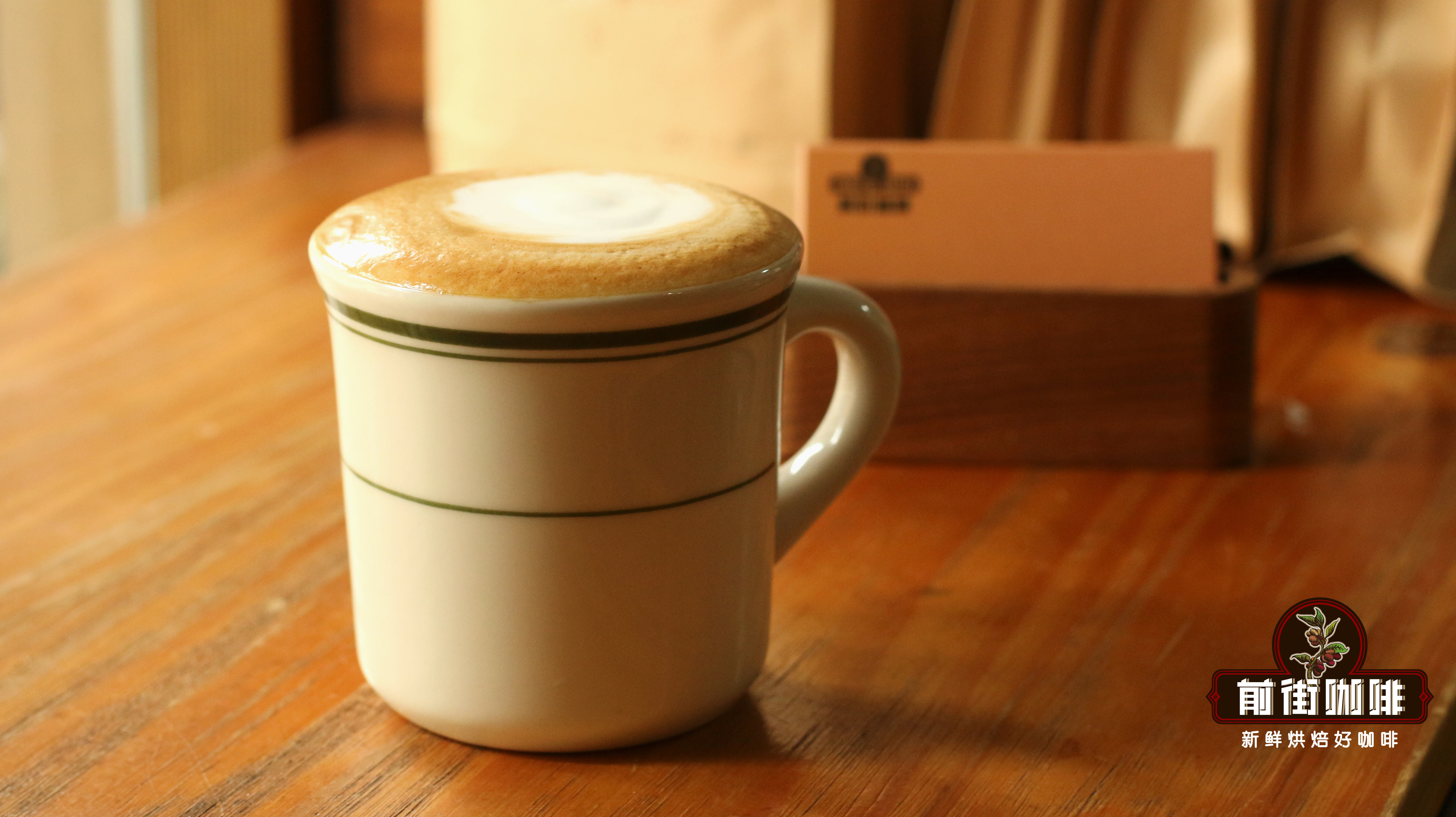
Today, latte art remains extremely popular, and many baristas want to show off their latte art when serving a drink, whether it's a latte, a flat white, or a cappuccino. As a result, many people who are just getting into coffee all have the same question: what exactly is the difference between a cappuccino and a latte?
The Origin of Cappuccino
Cappuccino is the Chinese transliteration of "Cappuccino." The word comes from the Italian "Cappuccio," meaning hood. As the name of a coffee, it is related to a local order called the Capuchin.
When this order went to Italy to preach, its members wore dark brown robes and had cloth folded into a small pointed cap on their heads. Inspired by this, Italians steamed milk into a fine, stable foam and poured it into espresso. A ring of brown close to the color of the robes then appeared in the cup, and they used a spoon to shape the surface foam into the form of a pointed cap. Because Capuchin and Cappucci sound similar, Italians, while preserving the original pronunciation rhythm, inserted an n into Cappuccio and ultimately called this milk coffee Cappuccino.
Why is it said that cappuccino must have a "coffee golden ring"?
After the cappuccino came into being, more and more Italians began to accept milk coffee. However, shaping the milk foam into a small pointed cap was rather time-consuming, and gradually people stopped making that pointed cap shape on cappuccino. But tradition was not completely abandoned. Cappuccino still retains a ring of brown coffee while letting the dense milk foam rise above the rim of the cup in a "hat" state, in memory of the missionaries of that time.
Thus arose the requirement that cappuccino must have a "coffee golden ring." As is well known, once coffee and milk are mixed together, the brown coffee turns light brown; to preserve the "coffee golden ring," you must ensure that the milk does not break up the crema. Therefore, when frothing the milk, it needs to be denser and thicker, so that the milk foam acts as a protective layer between the milk and the crema.
Why is cappuccino not decorated with latte art?
The milk foam used for making latte art is about 1 cm thick. Foam of this thickness has relatively strong fluidity and can blend evenly with espresso, thereby allowing patterns to be poured. But making a cappuccino requires avoiding breaking up the crema and preserving the "coffee golden ring," which means the espresso cannot be evenly mixed with the milk.
In addition, so that the milk foam does not collapse when it rises above the cup rim and can remain stable at the rim through sufficient surface tension, the foam needs to be steamed to a thickness of 1.5 cm. Foam of this thickness has relatively weak fluidity, so naturally it cannot be used to make latte art patterns.
How should a proper cappuccino be made?
/ Choosing the Coffee Cup
Front Street uses a 180 ml tulip coffee cup when making cappuccino. Compared with a round-bottomed cup, a tall cup with a narrow bottom and wide top better highlights the cappuccino's "hat" shape.
/ Espresso Extraction
FrontStreet Coffee uses a sunflower warm sun coffee bean blend made from sherry barrel-aged beans and natural Yirgacheffe to produce espresso. To make a single espresso for cappuccino, the extraction plan is 20 g of coffee powder extracting 35 g of coffee liquid, split into two portions, with an extraction time of 27 seconds. (You can also directly make a single espresso; Front Street's extraction parameters are 12 g of coffee powder extracting 30 g of coffee liquid, with an extraction time of 23 seconds.)
/ Using Refrigerated Fresh Milk
Fresh milk can more completely preserve the protein and milk fat in milk. Protein is key to forming milk foam, while milk fat further stabilizes the foam and slows its collapse, while also adding a rich mouthfeel to the coffee.
/ Frothing the Milk
Choose a small milk pitcher and pour in 150 ml of refrigerated fresh milk. Before inserting the steam wand into the pitcher, release steam first to expel condensed water from the steam holes. Place the steam wand 1 cm below the surface of the milk and turn on the steam switch. Once turned on, the contact between the steam and the milk surface will make a screeching sound. This step is called aeration and is the step that forms the milk foam.
The longer the aeration time, the thicker the milk foam. The milk foam for making cappuccino is 1.5 cm thick, so when frothing the milk, listen for 6-7 screeching sounds and then stop aeration, and adjust the milk pitcher to a 45-degree angle to create a vortex that pulls away large bubbles (at this point it no longer makes the screeching sound). Once the milk is heated to about 55°C, the milk frothing is complete.
/ Swirl the Milk Pitcher Before Pouring to Prevent Separation of Foam and Milk
Once the milk stops being frothed, the foam will begin to separate from the milk. We need to find a pivot point on the table and, by rotating the wrist, shake the milk pitcher clockwise at a steady speed to keep the milk and foam blended before pouring.
/ Pouring the Milk Foam into the Espresso
As Front Street also mentioned above, when pouring milk, you must not break up the crema of the espresso. If you pour milk directly, the crema will definitely be broken up. So what we need to pour first is the milk foam, forming a protective layer between the milk and the crema before pouring the milk. But milk is heavier than milk foam, so what is poured first will definitely be milk... How can we make the milk foam pour first?
(Highlight) Point the spout of the milk pitcher at the center of the espresso surface, then tilt the pitcher slightly to nearly pouring position but do not pour yet. Pause!!! Let the milk foam gather at the spout of the pitcher, then slowly pour into the center. For this step of pouring the milk foam, there is no need to mix in a circular motion, nor to shake the wrist; just maintain a steady posture and pour the milk foam into the center.

The above content is compiled by CoffeeHunters, a coffee news website.


