







Golden Mandheling and Where Coffee Bitterness Comes From
Bitterness in coffee tracks roast development. During roasting, first crack marks the point where beans release built-up heat; dropping them right at first crack leaves pronounced acidity, continuing past it brings sweetness with acidity, and waiting until the crackling stops produces bitterness that deepens the later the beans are dropped.
Darker roasts wear away the original acidic compounds, so nutty, caramel and chocolate notes sit inside the bitterness alongside a full body. To keep a dark roast from turning harsh, the guide uses Golden Mandheling with 86–88°C water, a coarser grind, a Kono dripper, a 1:15 ratio and a two-minute extraction, with a full bloom and a slow pour.
Bitterness is often seen as a negative label for specialty coffee, but bitterness is not always a defect. From Front Street's perspective, this article systematically analyzes the sources of coffee bitterness—from "first crack" during roasting to the transformation between acidity and bitterness—explaining how dark-roasted beans present complex aromas such as nutty, caramel, and chocolate notes along with a rich, full-bodied mouthfeel within their bitterness. At the same time, the article offers practical brewing advice for avoiding overly bitter coffee: using Golden Mandheling as an example, adopt a water temperature of 86–88°C, a coarser grind, a Kono dripper, a 1:15 coffee-to-water ratio, and a two-minute extraction, while emphasizing details such as sufficient blooming and a slower pouring pace, helping you retain the charm of dark roasting while steering clear of harsh, bitter off-flavors.
For more specialty coffee knowledge, please follow the WeChat public account: FrontStreet Coffee
In the specialty coffee community, "bitter" has become an almost universally avoided label. Everyone knows that a good cup of coffee should have sweetness and balance, perhaps a touch of acidity, and absolutely no need for added sugar to make it palatable. That being said, why does coffee taste bitter? Is bitterness destined to mean something bad? Today, Front Street will take you on a journey to find out.
Where does coffee's bitterness actually come from?
Coffee's acidity and bitterness depend largely on the degree of roast. During roasting, there is a key milestone called "first crack": when the coffee beans have absorbed heat to the point where they can no longer accumulate energy, they release that heat in the form of cracking sounds, and roasters use this to judge the beans' current roasting progress.
If the beans are dropped just as first crack begins, the coffee will show pronounced acidity; if roasting continues after first crack, waiting until the cracking sounds become密集 before discharging, the flavor presents sweetness within acidity; if the beans are still not dropped and you wait until the sounds stop completely, the coffee discharged afterward begins to show bitterness, and the later the discharge, the heavier the bitterness.
The darker the roast, the more the beans' original acidic compounds are gradually worn away, and what ultimately remains are mostly bitter-leaning flavors like nuts and dark chocolate. Therefore, compared with light-roasted beans, dark-roasted beans are indeed somewhat lacking in flavor complexity. But the bitter coffee brought by dark roasting still has its own unique appeal—something that is hard to experience when drinking light-roasted beans.
What makes dark-roasted bitter coffee unique
Dark-roasted coffee can also give off alluring aromas, only unlike the floral and fruity acidity of light roasts, it presents more complex aromas such as nuts, caramel, toasted bread, and chocolate. Many seasoned coffee lovers are captivated by precisely this nutty, bitter aroma. If you also prefer this style, Front Street recommends Queen's Estate, Front Street Huilan, Front Street Bird of Paradise, and Front Street Diamond Mountain—once ground, they all release the rich aromas described above, becoming more intoxicating the more you smell them.
Dark-roasted coffee also has a thick, substantial mouthfeel that light roasts find hard to match. Many friends who love Front Street Blue Mountain No. 1 and Front Street Mandheling coffee do so largely because dark roasting delivers a fuller body, allowing you to savor the flavors while also appreciating the full, smooth sense of volume the coffee has in the mouth.
That's right—even dark-roasted bitter coffee retains a unique sweetness, which is what we often call "sweetness within bitterness." A properly extracted cup of dark-roasted bitter coffee, though dominated by bitterness on the palate, may reveal caramel or malt-sugar-like sweetness upon careful tasting; after swallowing, sweetness follows bitterness, and the sweet fragrance lingers in the mouth—a quality that light-roasted coffee finds hard to replicate.
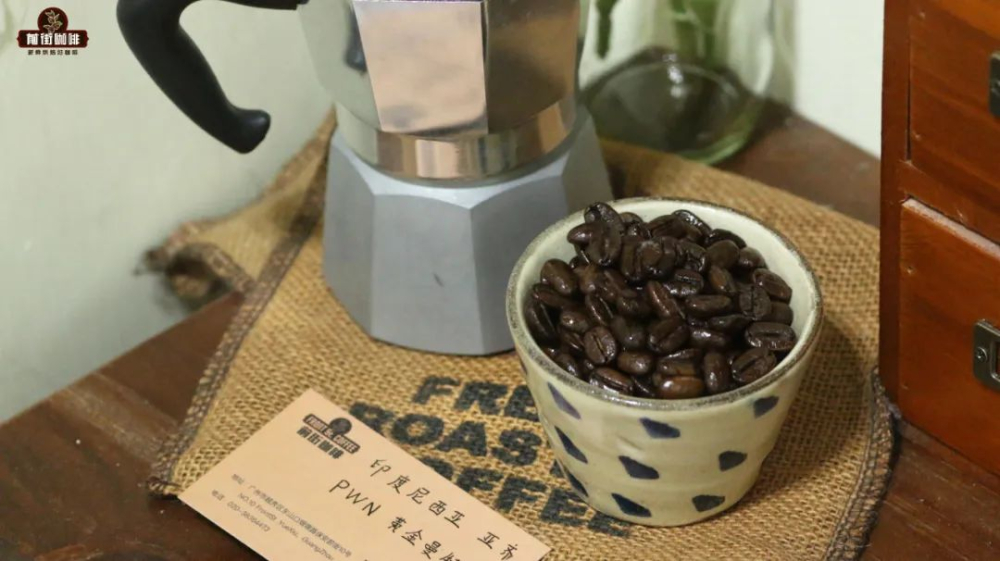
Take Front Street Golden Mandheling as an example: after brewing, it smells of caramelized aromas such as maple syrup, dark chocolate, spices, and woody notes, while on the palate it has a powerful, full-bodied richness; after swallowing, sweetness and bitterness intertwine, leaving a long, memorable finish.

Of course, the charm of the dark-roasted coffees above depends on brewing them well. If you don't want to brew a bitterness you'll never forget, Front Street suggests using conservative parameters during brewing.
Front Street uses Golden Mandheling as an example: water temperature 86–88°C, grind size of 70% passing a No. 20 sieve (EK43S setting 11), using a Kono dripper, coffee-to-water ratio 1:15, extraction time of about two minutes.
Compared with brewing light-roasted beans, using a lower water temperature and a coarser grind for dark-roasted beans makes the bitterness gentler and avoids extracting off-flavors; as for the dripper, choosing slower-flow devices like Kono and Kalita makes it easier to brew a thick mouthfeel and mild flavors.
When brewing dark-roasted beans, be sure to bloom sufficiently. This can be judged from two points: first, confirm that all the coffee grounds are saturated and that a small amount of coffee liquid has already been released at the bottom; second, the coffee bed expands and then stabilizes, no longer releasing gas outward.
The pouring method also needs adjustment. It is recommended to slow the pace as much as possible and make the stream correspondingly thinner, avoiding excessive washing of the coffee bed that would extract more bitter and off-flavors; pour in small circles, and the coffee wall that forms will be slightly thicker than with light-roasted coffee.
Having read this far, if you too have become interested in dark-roasted bitter coffee, why not give it a try right away~
The above content is compiled by CoffeeHunters, a coffee news website.


