







How did Brazil lead global coffee exports for over a century?
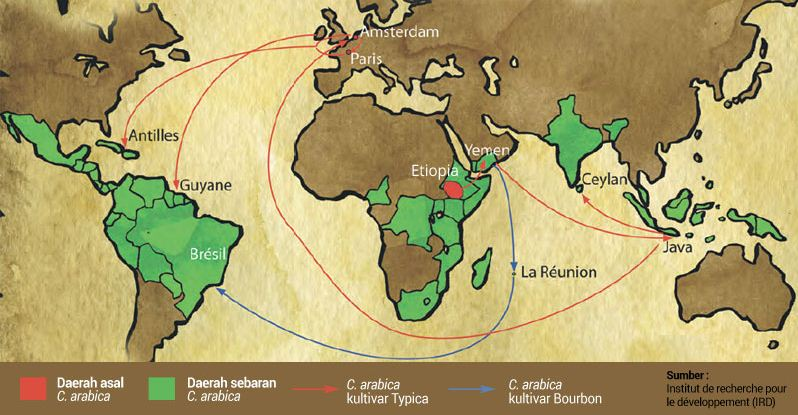
Brazil has held the top position in global coffee exports for more than a hundred years. Coffee arrived in the 18th century, when a Portuguese captain named Francisco de Melo Palheta brought seeds back from Cayenne in French Guiana, and the trees adapted quickly to local soil and climate as planting spread toward São Paulo.
By 1845 Brazilian output already accounted for about 45 percent of world production, and coffee became São Paulo state's main economic pillar. Figures from the Brazilian Coffee Association show more than 14 states grow coffee, with the seven largest together contributing close to 90 percent of national production.
As a country that has held the top spot in global coffee exports for over a century, Brazil's influence on the specialty coffee industry is self-evident. On the bean list of almost every specialty coffee shop, you can find at least one single-origin Brazilian bean or an espresso blend based on it. In this article, Front Street will take you back through the history of Brazilian coffee from its introduction in the 18th century to its current position of accounting for nearly half of world production, sort out the terroir differences between the two representative producing regions of Minas Gerais and São Paulo, explain in detail the process flow of the pulped natural method and Brazil's unique grading system, and use Queen's Farm as an example to share brewing ideas and flavor performance for medium-dark roasted Brazilian beans.
Brazilian Coffee Thanks to its massive production capacity, Brazil has consistently held the top spot in global coffee exports for more than a hundred years. On the menus of the vast majority of specialty coffee shops, there is at least one single-origin bean from a Brazilian producing region, or an espresso blend based on Brazilian beans, which is enough to show this country's weight in the coffee world. Today Front Street will talk with everyone about matters related to Brazilian coffee.
Brazilian Coffee Story
The earliest record of coffee planting in Brazil dates back to the 18th century. At that time Brazil was still a Portuguese colony, and a Portuguese captain named Francisco de Melo Palheta developed a romance with the wife of the governor of Cayenne, the capital of French Guiana, and through this opportunity brought coffee seeds back to Brazil from there. The coffee trees quickly adapted to Brazil's soil and climate conditions, and the planting area spread from the north all the way to the southeast in São Paulo state, gradually forming large-scale production. By 1845, the output of Brazilian coffee had already accounted for 45% of the global total, and coffee also became the most important economic pillar of São Paulo state.
Distribution of Brazilian Coffee Bean Producing Regions
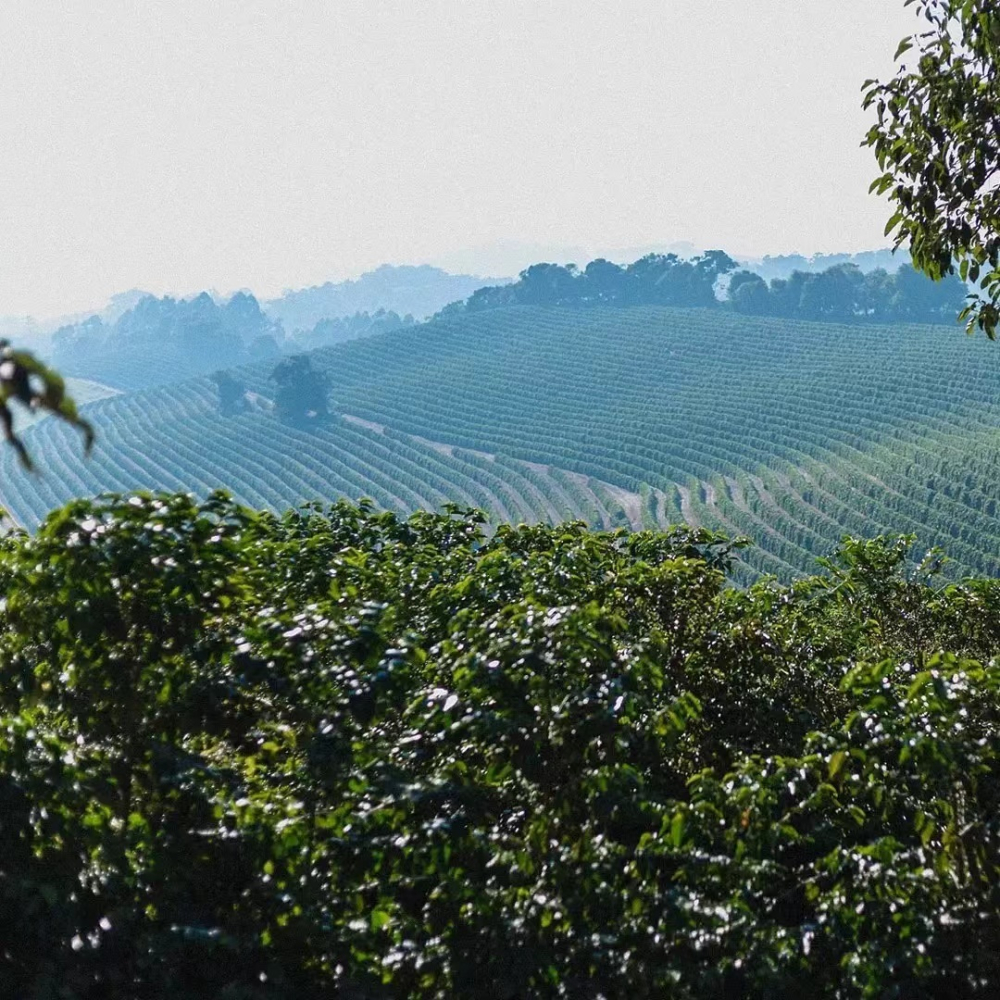
According to statistics from the Brazilian Coffee Association, more than 14 states across the country engage in coffee cultivation, among which the 7 states with the largest output together contribute nearly 90% of the national total production. From the producing region distribution map, it can be seen that the west is mainly dominated by planting Robusta varieties, while the higher-quality Arabica is concentrated in the southeastern region. Here Front Street focuses on introducing two representative producing regions: Minas Gerais (MINAS GERAIS), Brazil's largest producing state, and São Paulo (SÃO PAULO), the first state in Brazil to plant coffee.
The annual coffee output of Minas Gerais accounts for about half of the country's total, and it has four large producing regions under its jurisdiction: Cerrado, Sul de Minas, Chapada de Minas, and Matas de Minas. The Cerrado producing region, which shares its name with the Cerrado savanna, in the context of coffee specifically refers to the Cerrado area in the western part of Minas Gerais. The terrain here is flat and the harvest period is concentrated, making it very suitable for large-scale management and harvesting operations. Many exporters have built coffee farms here, generally covering an area of more than 10 hectares. The other three producing areas, because of their greater topographical undulation and steep hills, are mainly dominated by smallholder manual production models.
São Paulo state has Brazil's relatively well-known coffee producing region, Mogiana, and this place name comes from the Mogiana Railroad Company—that is, the company that built the "coffee railway" in 1883. The emergence of the railway improved transportation conditions and promoted further expansion of coffee production here. The Mogiana producing region has an altitude between 900 and 1,100 meters, with an annual average temperature of about 20°C, and terrain similar to hills, giving the coffee good sweetness and balance. Limited by the terrain, estates mostly adopt manual harvesting methods. The Queen's Farm coffee on Front Street's bean list comes exactly from the Mogiana producing region.
Queen's Farm (Fazenda Rainha) is one of Brazil's few top-tier specialty estates, and it once won an award in the first Brazil COE competition, showing its strength clearly. Over the years, this estate has repeatedly achieved excellent results in various competitions, all thanks to the high-quality coffee it produces. Front Street Brazil Queen's Farm Coffee uses the Yellow Bourbon variety. Yellow Bourbon is a Bourbon variety variant planted in Brazil, and affected by a recessive gene, its fruit appears yellow. Yellow Bourbon coffee beans naturally have sweetness, cleanliness, and good balance, and carry tropical fruit aromas.
Processing of Brazilian Coffee Green Beans
Brazil is located in the tropics, and the harvest season happens to coincide with the dry season, so coffee cherries can be directly dehydrated and dried with the help of sunlight. However, the traditional natural process is quite extensive: after picking, the cherries are directly spread on the mud ground to dry, and the resulting coffee is prone to picking up an earthy taste. To improve coffee quality, Brazil invented the semi-washed method (pulped natural method) after 1990, also known as pulped natural (Pulped Natural).
Processing flow: after harvesting, the coffee cherries first have leaves, stones, and other debris removed, then are poured into a water tank where flotation is used to pick out insufficiently ripe fruits. Then a machine removes the skin, pulp, and part of the mucilage layer, after which they are washed for one hour. Because the soaking and fermentation time is very short, the pectin cannot be completely rinsed away. The parchment beans with part of the pectin still attached are spread on the drying yard to dry.
The pulped natural method not only saves water resources but also saves a lot of labor costs, and the drying time is shorter than the traditional natural method, so it has been widely used in Brazil. Front Street's Brazil Cerrado everyday drinking beans use the pulped natural process, and multiple stages of screening greatly improve the cleanliness of the coffee beans. Another Front Street coffee bean, Queen's Farm, uses refined small-batch natural processing—large-batch production may lead to excessive fermentation due to untimely turning, producing undesirable fermented flavors. The entire drying process of Queen's Farm's green beans is completed on African raised beds, thereby avoiding earthy and fermented flavors, and its sweetness is also superior to the traditional pulped natural method.
Processed Brazilian coffee green beans are graded according to three different standards: defects, size, and cupping, which is also Brazil's relatively complex grading system that differs from other coffee-producing countries. The grade information of the green coffee beans is marked on the jute bag in the form of "country + defect grade + cup taste + specification size + cup flavor grade + origin."
For example, the Brazilian Cerrado green coffee beans purchased by Front Street have "Brazil NY.2 SC – 17/18 FC Cerrado" written on the bag, meaning they come from the Cerrado region of Brazil, with a specification size of 17–18 screen, SC stands for Strictly Soft, that is, the taste is very smooth, FC stands for Fine Cup, that is, high-quality cup flavor, and the defect rate grade is NY.2. Because NY.1 requires not even one defective bean, such a selected batch cannot be supplied stably, so Brazil sets NY.2 as the highest grade in defect classification.
Flavor Characteristics of Brazilian Coffee
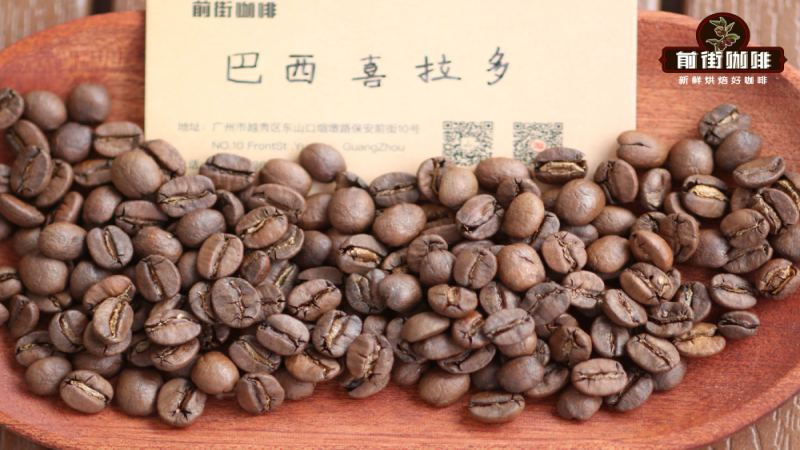
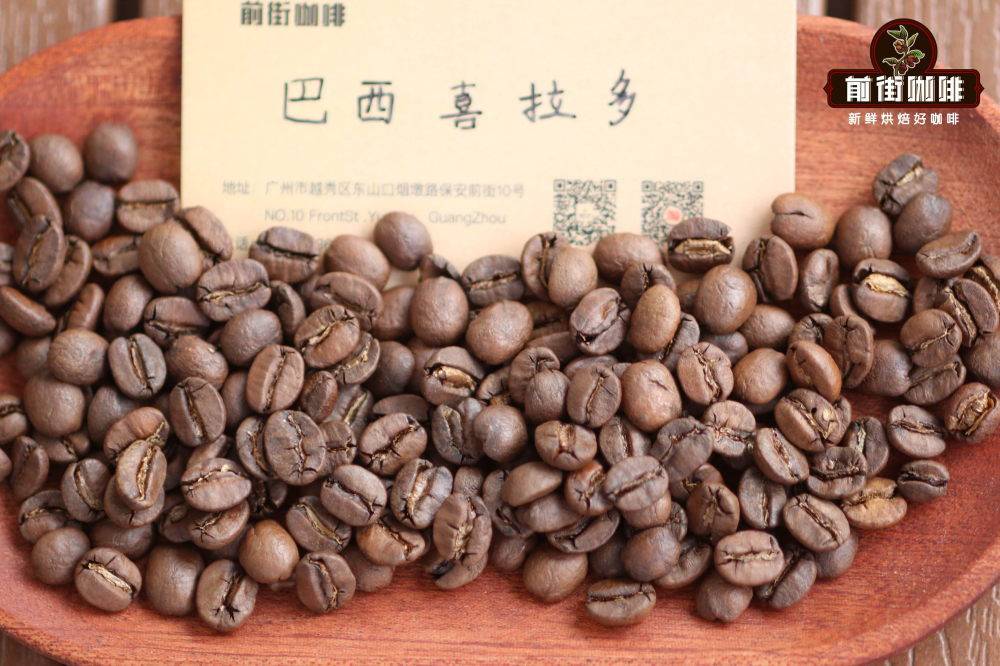
Classic Brazilian coffee has basic flavors such as nuts, cocoa, chocolate, and toast, so Front Street's two Brazilian coffee beans both use medium-dark roasting to highlight their full-bodied, low-acidity characteristics.
Some friends bought coffee beans and brewed them at home, only to find that the flavor was different from what they tasted in the shop. Front Street attaches a brewing QR code to the label of each bag of coffee beans; scan it to view, and everyone can refer to the brewing parameters above for adjustment. Below, taking Brazil Queen's Farm coffee as an example, we will talk about the brewing ideas of Front Street Coffee (FrontStreet Coffee)'s baristas.
Front Street's Queen's Farm coffee uses a medium-dark roast level. After medium roasting, the internal structure of the coffee beans changes greatly and becomes porous, and after being ground into powder it becomes more water-absorbent. If the brewing parameters are not adjusted well, the coffee is prone to over-extraction and bitterness. If you want the coffee to have enough aroma without over-extracting, you need to reduce the extraction rate. Front Street will use a relatively low water temperature and a relatively coarse grind to reduce the release of bitter large molecules in the coffee.
Front Street Coffee (FrontStreet Coffee)'s baristas consistently use the KONO dripper to extract coffee beans that express body. The only exhaust part of the KONO dripper is that one-quarter of the ribs. When the water level passes over the rib area, the amount of water in the dripper continuously rises, increasing pressure through the weight of the water. Because the outlet is relatively small, it can prolong the contact time between coffee particles and water, and as the water flow is poured in, it more effectively brings out soluble substances, thereby improving the coffee's full-bodied and rich mouthfeel.
Pour-over parameters: 87–88°C water temperature, medium grind (70% passing rate on China standard No. 20 sieve), coffee powder: 15 grams, powder-to-water ratio 1:15, three-stage pouring
Use twice the amount of water relative to the coffee powder to wet the coffee bed, forming a dome and blooming for 30 seconds, then pour in a small stream in a circular motion from the inside outward until 125 grams, then pause. Wait until the coffee bed drops to half the height of the dripper, continue using the same fine stream to pour the third stage up to 225 grams, until all the coffee liquid has filtered through, then remove the dripper. The time is about 2 minutes. Finally, swirl the coffee liquid in the server to mix it evenly and enjoy~
The pour-over Brazil Queen's Farm coffee is full-bodied and rich overall, with a clean mouthfeel, and the flavor changes with temperature, with varied layers. It has aromas of nuts, caramel, and chocolate, the sweetness of sugarcane is very pleasant, and the balance is also very high.
For professional coffee knowledge exchange and more coffee bean information, please follow Coffee Workshop (WeChat public account cafe_style)
For more specialty coffee beans, please add the private WeChat Front Street Coffee (FrontStreet Coffee), WeChat ID: qjcoffeex
The above content is compiled by CoffeeHunters, a coffee news website.


