







What makes mandheling coffee suited to a particular drinker?
Mandheling is a coffee name that comes from a wartime language mix-up, not a growing region or a variety. A Japanese soldier in occupied Indonesia asked a café owner for the coffee's name, and the owner answered where he was from: Mandheling. The beans were later shipped to Japan in large volume and the name stuck.
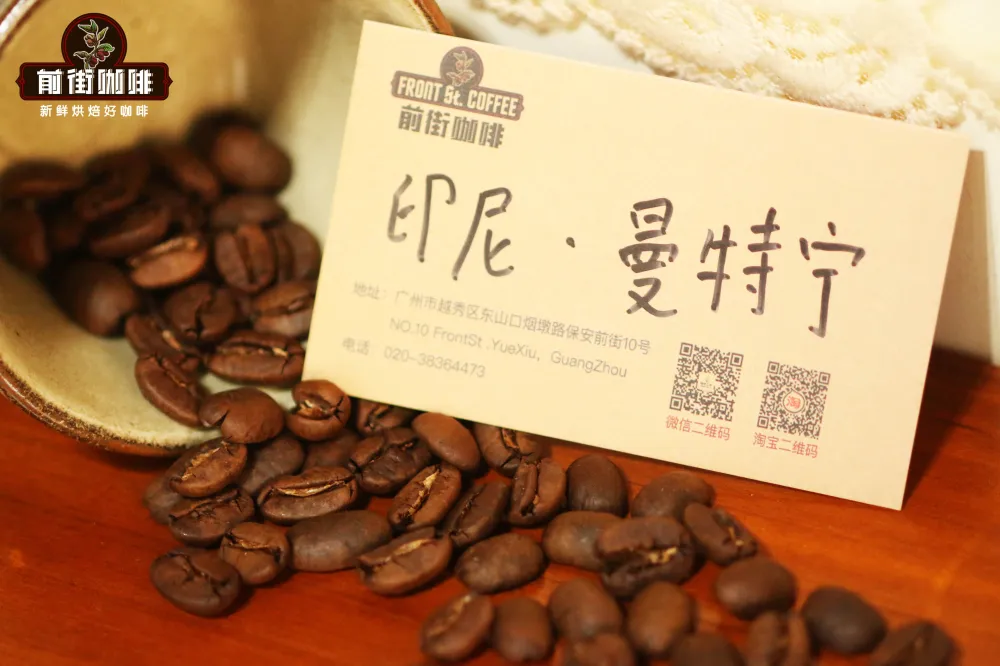
The cup is full-bodied with low acidity, often carrying herbal and medicinal notes, which suits drinkers who want a coffee that is not sour. Front Street sells three versions, including Golden Mandheling Coffee, alongside Tiger Mandheling and Lintong Mandheling, and the beans trace back to the Typica variety and Sumatra's wet-hulling process.
Mandheling is one of the most highly recognizable coffees in the world, winning over countless enthusiasts with its full-bodied, low-acid taste. But Mandheling is neither a region name nor a variety name — it originated from a linguistic misunderstanding during a war. This article will start with the origin of the name, trace the connection between Mandheling and the Typica variety, explain the uniqueness of Sumatra's wet-hulling process, and introduce one by one the three Mandheling coffees sold by Front Street Coffee — Golden Mandheling, Tiger Mandheling, and Lintong Mandheling — along with brewing parameters and flavor descriptions, helping readers fully understand who this "old man's flavor" is actually suited for.
At FrontStreet Coffee stores, when a customer orders and says they want a coffee that isn't sour, we usually recommend Front Street Mandheling. The reason is that Front Street Mandheling's body is notably prominent, second only to Blue Mountain, though the hint of herbal and medicinal notes it carries makes some people never come back after one try, while others fall in love at first sip. Front Street Golden Mandheling in particular — we joke internally that this bean is the taste of an old man.
Most Ethiopian coffees are named directly after their producing regions — for example, Front Street Yirgacheffe comes from the Yirgacheffe region. But Mandheling is different: it is neither a region name nor a coffee variety name. So what exactly is it? After consulting the materials, Front Street learned that Mandheling is actually a mistransliteration of the Indonesian Mandheling ethnic group. How could an ethnic group become associated with coffee? Behind this is a story born of misunderstanding. During World War II, when Japan occupied Indonesia, a Japanese soldier drank an exceptionally delicious cup of coffee at a local café and asked the owner for the name of the coffee. Because of the language barrier, the owner thought he was asking "Where are you from?" and answered: "Mandheling."
After the war ended, the Japanese soldier remembered that cup of "Mandheling" he had drunk in Indonesia and commissioned an Indonesian coffee merchant to ship fifteen tons of Mandheling coffee beans to Japan. The beans became hugely popular in the Japanese coffee market, and the name Mandheling spread from there. That local Indonesian merchant went on to found today's PWN company, which even registered Golden Mandheling as a trademark — meaning only Golden Mandheling produced by PWN is truly authentic Front Street Golden Mandheling.
The variety behind Front Street Mandheling — Typica
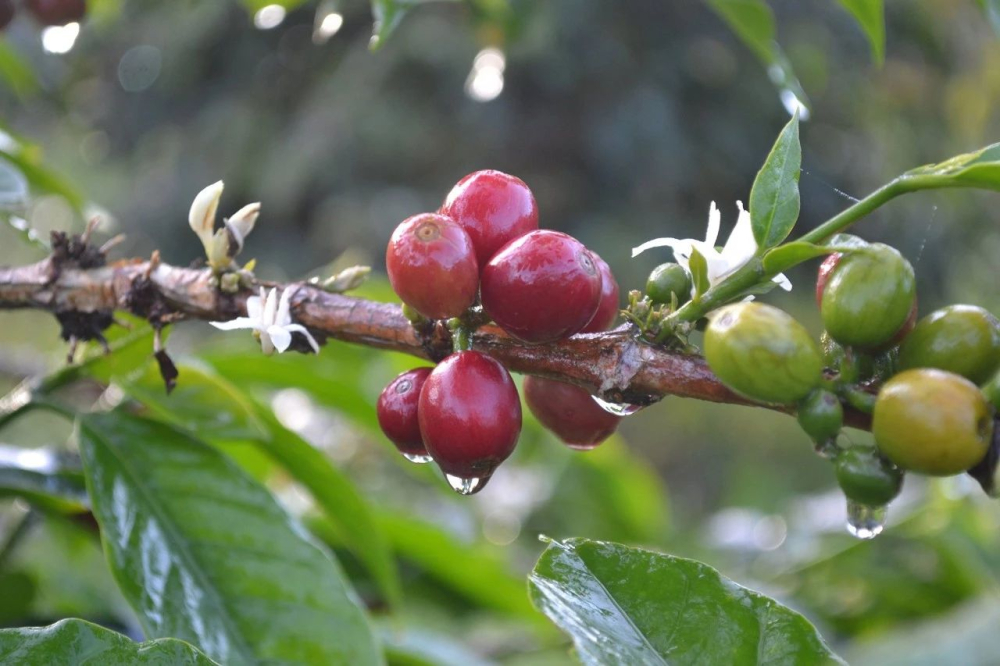
Front Street Golden Mandheling belongs to the Typica variety, an ancient coffee with elegant flavor. But Typica is constitutionally weak, has poor disease resistance, is susceptible to leaf rust, and yields low output, making its economic returns less than ideal. Typica has its own uniquely clear, clean flavor, with a balanced overall profile and high cleanliness in the cup; its drawbacks are insufficient yield, specific altitude requirements, susceptibility to leaf rust, and weak resistance to pests and diseases. The Typica tree has distinctive characteristics and may be one of the easiest varieties to identify. The plant is conical in shape, and the main vertical trunk can reach up to 5 meters. This height means that, compared with other varieties, Typica has longer internodes between branches and along the same branch. One of Typica's characteristics is the bronze color of its top leaves; the beans are relatively large, pointed-oval or slender-tipped in shape, and some people also call it "red-top coffee."
As early as 1658, the Dutch transplanted descendants of the "European Typica mother plant" to Sri Lanka, but the cultivation failed. Later, in 1699, the Dutch transplanted Malabar coffee trees from eastern India to Java; this trial succeeded, and Typica became established and reproduced steadily in Java. In 1718, the Dutch transplanted the successfully trialed Typica from Java to Sumatra and Sulawesi. After more than a century of propagation, just as Indonesian Typica was at its peak, a leaf rust epidemic at the end of the 19th century swept through the vast majority of Indonesia's Typica, and higher-disease-resistant Robusta varieties had to be introduced afterward.
Front Street Mandheling coffee bean processing method:
The distinctive full-bodied flavor of Front Street Mandheling is inseparable from its processing method. Most Front Street Mandheling uses Sumatra's unique wet-hulling method. The local weather is rainy with frequent typhoons, making it impossible to meet the good weather conditions required for natural sun-drying; combined with limited local economic conditions, farmers cannot afford the higher-cost washed method either, so the highly localized wet-hulling method emerged.
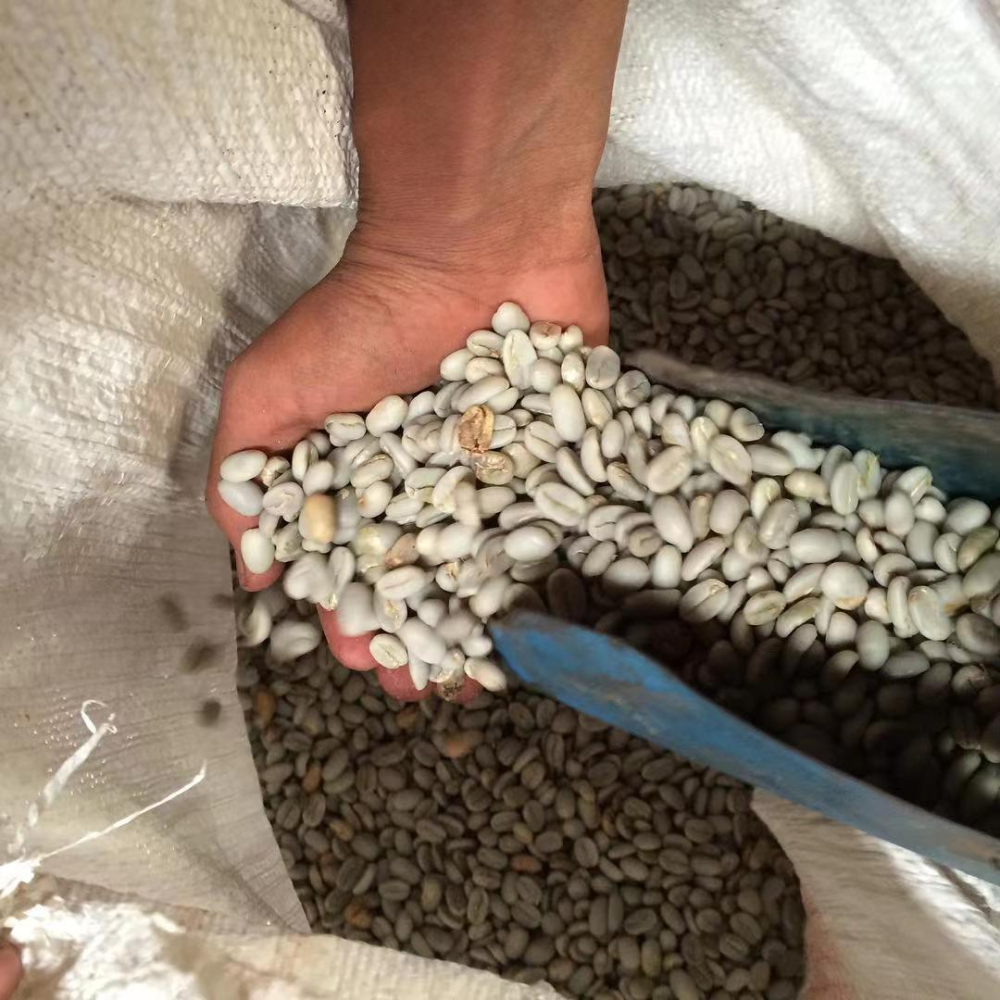
In the first stage, the skin and pulp are removed with a wooden pulper, then the beans are fermented for 3 hours and spread out to dry, bringing the moisture content down to a semi-dry, semi-wet 30% to 50%.
In the second stage, the mucilage and parchment layer are removed, and drying continues for the later stage. The drying process takes 2 to 4 days, reducing the moisture content to 12% to 13%.
The wet-hulling method creates the special flavor of Front Street Mandheling. FrontStreet Coffee believes there is a bound relationship between Mandheling and the wet-hulling method, but today's coffee market no longer settles for unchanging tradition — even if wet-hulling is Mandheling's hallmark, other processing methods are also being tried. One Mandheling recently introduced by FrontStreet Coffee uses the natural sun-dried method. This sun-dried Mandheling differs greatly in flavor from the Mandheling we know well, leaning toward fruity notes, sweeter on the palate, with soft fruit acidity.
Front Street believes that naturally processed coffee beans amplify their own flavors, with a thick body, intense flavor, and a sweet aroma; washed coffee has more pronounced acidity, better cleanliness, a medium mouthfeel, and the most consistent green bean quality; honey-processed coffee beans have better flavor, with balanced acidity and sweetness, and because of the sun-drying, the coffee beans' own aroma is also amplified, with a rich, mellow taste.
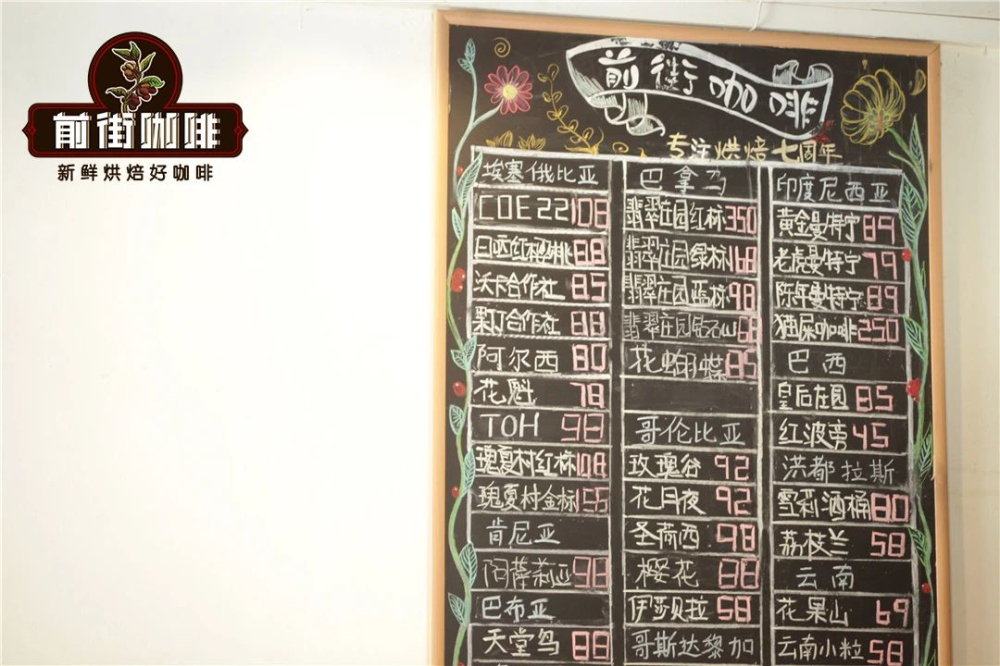
Front Street is a devoted fan of Mandheling coffee. Before Blue Mountain became famous, Mandheling was always called the most full-bodied coffee, and Front Street agrees. Mandheling's body ranks among the top in specialty coffee; its heavy mouthfeel and low acidity are its hallmarks, while the dark chocolate and caramel-like smoothness and sweetness provide a very long-lasting finish in the back end, with complex layers of flavor. That is why Front Street's roasters choose a deep roast to present the "Mandheling flavor." This is also why, when customers come to Front Street asking for a recommendation of a coffee with high sweetness, the baristas always introduce Front Street Golden Mandheling. Currently, FrontStreet Coffee offers 3 kinds of Front Street Mandheling; let's look below at how each one differs.
FrontStreet Coffee currently offers three kinds of Mandheling: Front Street Golden Mandheling, Front Street Tiger Mandheling, and Front Street Lintong Mandheling.
Front Street Golden Mandheling The variety of Front Street Golden Mandheling coffee beans from Front Street's new crop season is Ateng, the common local Sumatran term for Catimor coffee in Indonesia. The name Ateng comes from the Aceh Tenggah region. Golden Mandheling coffee beans are sized 18 mesh and above, with fewer than 3 defective beans (in a 300g green bean sample), belonging to the highest grade G1; the color is darker green, and the shape is neat flat beans.
After strict screening, FrontStreet Coffee found that Front Street Golden Mandheling not only lacks the earthy, miscellaneous flavors typical of ordinary Mandheling, but also drinks cleaner and more translucent, with stronger sweetness and aroma. The Front Street Golden Mandheling that FrontStreet Coffee carries comes from PWN. Golden Mandheling is actually produced by Pwani Coffee Company, which purchases Mandheling locally in Indonesia and then releases it under this name, having registered the name Golden Mandheling; only Mandheling produced by PWN is truly authentic Front Street Golden Mandheling.
Front Street Tiger Mandheling
Tiger Mandheling is sized 17 mesh and above, with a defect rate below 4%. Because Tiger Mandheling's main varieties are Caturra and Typica — Caturra brings citrus and lemon acidity on the palate, while Typica has a long-lasting sweet finish — Tiger Mandheling has a relatively even mouthfeel and high cleanliness. Tiger Mandheling grows in Indonesia, mainly in the three islands of Sumatra, Java, and Sulawesi. Tiger Mandheling is produced at Tiger Estate, so it is also called "Mandheling Tiger" or "Sumatran Tiger Mandheling." Northern Sumatra has relatively high elevations, and Aceh Province, where Lake Tawar is located, along with North Sumatra, where Lake Toba sits, are the main Arabica coffee producing regions.
Front Street Lintong Mandheling
A specialty Mandheling produced in the Lintong region, with relatively large beans and a relatively hard bean texture. Indonesian coffee varies greatly in quality, but what we commonly call Mandheling refers to coffee beans of Typica or its variants grown in the mountainous areas around Lake Toba. Coffee gourmets around the world have commented: "Sumatra Mandheling coffee has the best texture in the world." Front Street Mandheling coffee beans are characterized by: relatively large beans and a relatively hard bean texture; because there are many defects, strict selection is required during processing.
FrontStreet Coffee brewing suggestions Regarding coffee brewing, Front Street thinks it is necessary to remind everyone that if the coffee beans are pre-ground, they need to be brewed promptly, because ground coffee releases its aroma quickly after contact with air, and the final brewed coffee flavor will also be compromised. So Front Street recommends grinding fresh and brewing immediately, so you can better taste the coffee at its best.
In FrontStreet Coffee's daily brewing, medium-dark roasted Mandheling generally uses a KONO dripper. The KONO dripper makes the coffee rounder and fuller in mouthfeel, with a more direct flavor expression, suitable for brewing medium-dark roasted Front Street Mandheling. However, the KONO dripper's venting effect is relatively poor, because its ribs are straight and only a quarter of the dripper's depth, and apart from this upper quarter, the filter paper clings tightly to the wall, forming a sealed state.
Suggested brewing temperature: 88-89°C; blooming time: 25 seconds; coffee-to-water ratio 1:15; grind size: medium-fine (75% passing a Chinese standard No. 20 sieve).
Use staged extraction: bloom with 2 times the coffee powder weight in water, that is, 30 grams of water for 30 seconds; pour in a small stream in circles until 125 grams, then pause; continue pouring until 225 grams and stop. After the water in the dripper has dripped through, remove the dripper. Start timing from the beginning of pouring; extraction time is 2'00". Then pick up the entire cup of coffee and swirl it to mix evenly, then pour it into a cup to taste.
Front Street Mandheling flavor descriptions [Front Street Lintong Mandheling] Herbal, chocolate, caramel, relatively balanced overall;
[Front Street Golden Mandheling] Nuts, spices, herbs, licorice, chocolate, caramel, clean and soft flavor; [Front Street Tiger Mandheling] Nuts, cream, dark chocolate, caramel, traditional Chinese medicine, noticeably sweet, with a relatively clean and clear flavor.
For professional coffee knowledge exchange and more coffee bean information, please follow Coffee Workshop (WeChat public account cafe_style)
For more specialty coffee beans, please add the private WeChat of FrontStreet Coffee, WeChat ID: qjcoffeex
The above content is compiled by CoffeeHunters, a coffee news website.


