








What is an Italy latte and how does it relate to ristretto espresso?
Ristretto is an Italian-style extra-strong coffee, a shorter, more concentrated extraction than a standard espresso shot. A normale espresso is roughly 1 ounce (30 ml), and ristretto pulls less water through the same dose, so the result is denser and more intense. Two mainstream methods are used to make it, both built on the same pressure-based espresso machine principle.
Reaching that concentrated flavor calls for medium-dark roasted, fresh beans; too light a roast fails to form golden crema and tastes thin, while stale beans lack aroma. Because the espresso machine works by pressure, a blend extracts more effectively. Options like Front Street Classic Blend and Dark Cocoa Blend suit this style, and the same dense base underlies drinks such as an Italy latte.
Ristretto (Italian-style extra-strong coffee) is still relatively unfamiliar to many people. It is closely related to the everyday Espresso, yet it presents a more concentrated and intense flavor profile. This article will introduce the meaning and characteristics of Ristretto, explain how it differs from regular espresso in terms of extraction, and present two mainstream methods for making Italian-style extra-strong coffee. At the same time, the article will share ideas for choosing coffee beans suitable for making Ristretto, including two recommended products — Front Street Classic Blend and Front Street Dark Cocoa Blend — to help you better master the essence of this rich small-cup coffee.

When it comes to Espresso, everyone is surely familiar with it — it is the base of the Americanos, lattes, and other coffees we drink every day. But when Ristretto is mentioned, most people may have no idea what it is. Today's article will talk about this coffee, Ristretto.
What exactly is Ristretto? In Chinese, Ristretto is also called 芮斯崔朵咖啡, Italian-style extra-strong coffee, or refined espresso.
As is well known, a shot of espresso is about 1 ounce (30 ml) in volume, and its intensity means consumers outside Italy rarely drink it straight. In ordinary terms, it is "harsh, bitter, like drinking Chinese herbal medicine." Italian-style extra-strong coffee is even more intense and harsher than espresso.
How can you make a cup of Ristretto?
If you want to achieve a concentrated coffee flavor, be sure to use medium-dark roasted and fresh coffee beans. The reason is that if the roast level is too light, golden crema cannot form during espresso extraction, and the flavor will also seem thin; if the coffee beans are not fresh enough, they will lack aroma and taste bland. In addition, to work with the pressure-based operating principle of an espresso machine, using a blend can make the extraction much more effective.
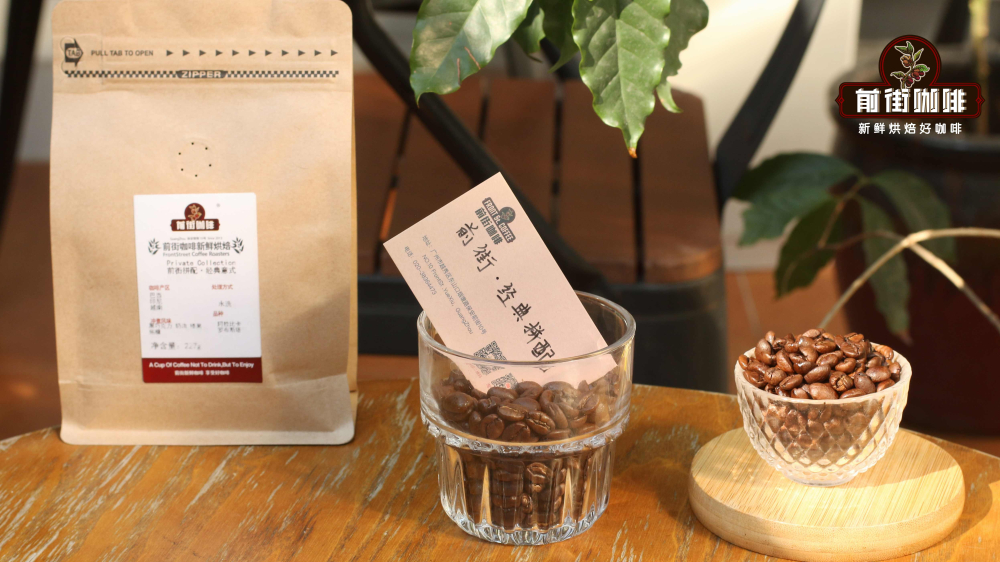
If you prefer a rich mouthfeel and abundant crema, it is recommended to buy the rich and aromatic espresso moka pot coffee beans — Front Street Classic Blend coffee beans.
Roast level: Medium-dark roast
Processing methods: Semi-washed, wet-hulled, washed
Flavor: Dark chocolate, hazelnut, butter, caramel, almond
If you are looking for high cost-effectiveness and a balanced taste, you can choose the espresso moka pot coffee beans recommended by many baristas — Front Street Dark Cocoa Blend coffee beans.
Roast level: Medium-dark roast
Processing methods: Washed, semi-sun-dried
Flavor: Mixed nuts, chocolate, brown sugar, tea-like
Ristretto means "restricted" in Italian. Italian-style extra-strong coffee can be understood as a "restricted" version of espresso — extraction is stopped after only the first half of the espresso shot, carrying the sense of an "artificially set limit."
At present, there are two mainstream methods for making Italian-style extra-strong coffee, both of which require adjustments based on the original espresso extraction recipe. Therefore, we first establish an espresso extraction recipe. Since the espresso extraction parameters of each coffee shop are not the same, here we take the espresso parameters of Front Street Coffee as an example, using the espresso beans that are rich and aromatic espresso moka pot coffee beans — Front Street Classic Blend coffee beans.
[Front Street's espresso extraction parameters are 20 g of coffee grounds extracting 40 g of coffee liquid, taking 27 seconds.]
Extra-strong coffee method ①: Shorten the extraction time, take only the front section, and do not change the grind size or dose. Use 20 g of coffee grounds to extract 27 g of coffee liquid, taking 20 seconds.
Extra-strong coffee method ②: Adjust the grind size. Grind the coffee finer, and use 20 g of coffee grounds to extract 27 g of coffee liquid within 27 seconds.
For these two methods, Front Street, which usually makes Italian-style extra-strong coffee less often, prefers to use method ①. This method can reduce the time spent adjusting the grinder and the consumption of materials, while also ensuring consistency in the final product.
What are the characteristics of Italian-style extra-strong coffee?
From its appearance, extra-strong coffee has less liquid volume than espresso, and the color of the crema on the surface is also darker than that of espresso. Because extra-strong coffee takes only the front and middle sections of the espresso shot, its concentration is higher than that of espresso, its taste is more intense, and its caffeine content is actually lower. In terms of flavor, it shows richer berry acidity, vinous notes, and caramel aromas.
Like espresso, Ristretto is also rarely drunk directly; it is more often used as the base for a Flat White. This is because the stronger coffee flavor of Italian-style extra-strong coffee, when combined with milk, can better highlight the coffee's aroma and charm while enhancing the overall mouthfeel.
The above content is compiled by CoffeeHunters, a coffee news website.


