








How does Bourbon relate to other arabica varieties?
Bourbon is a mutation of Typica, and both are ancient lines within the Arabica family. The Bourbon group is not just the familiar Red Bourbon; it also includes Yellow Bourbon, Orange Bourbon, and the rare Pink Bourbon. The fruit starts green, turns slightly yellow, then pale orange, and finally ripens to red or deep red, which is why the common type is called Red Bourbon.
Bourbon grows above 1,200 meters and tastes noticeably better than fruit from below 1,000 meters. It grows more vigorously than Typica and resists leaf rust better, yet both need shade trees to develop flavor, unless conditions allow sun exposure: an average annual temperature of 18–24°C, a northeast or east-facing site, and about six hours of sun daily. This type of arabica coffee also includes the low-yielding Orange Bourbon.
Bourbon coffee is a mutation of Typica, and both belong to the ancient varieties within the Arabica family. The Bourbon family is not limited to the common Red Bourbon; it also includes Yellow Bourbon, Orange Bourbon, and the rare Pink Bourbon. This article will guide you through the origins, fruit characteristics, growing conditions, and flavor profiles of these varieties one by one, and explain where Yellow Bourbon's yellow color comes from and why Pink Bourbon is so rare. The article also specifically mentions the Brazil Queen coffee on Front Street Coffee's bean list, which is a representative of the Yellow Bourbon variety.
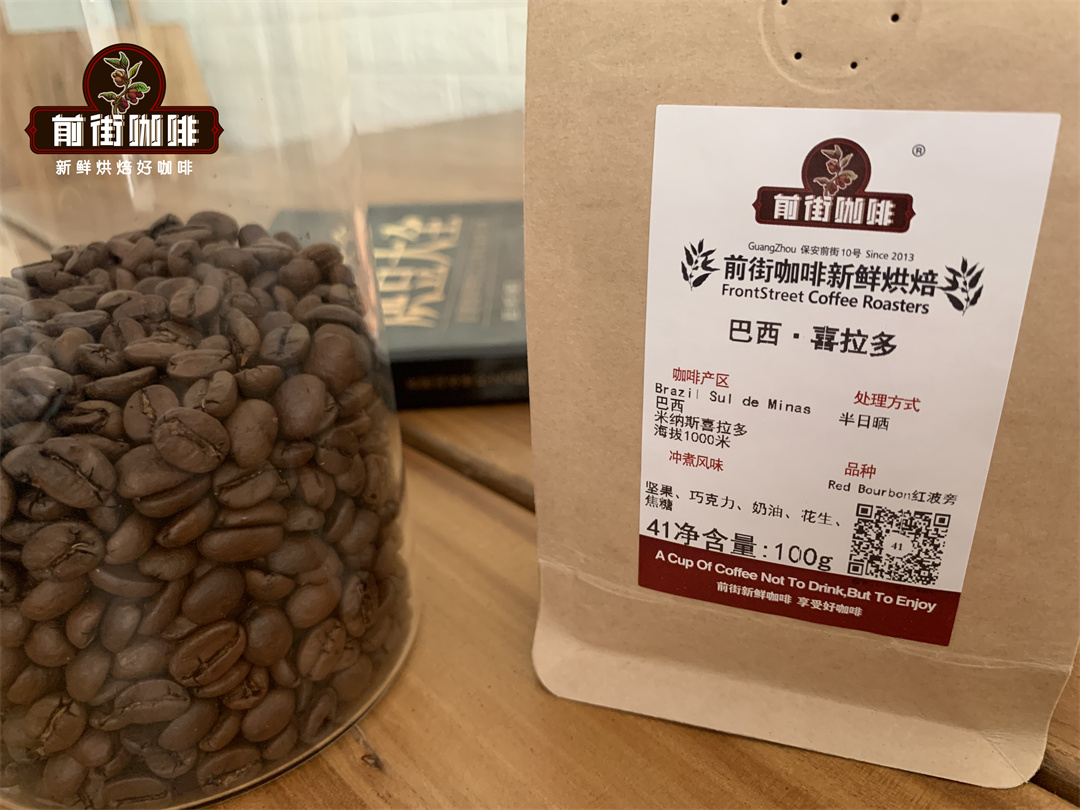
Bourbon belongs to a mutated branch of the Typica variety, and both are ancient lines that evolved from Arabica. What is commonly called Bourbon has fruit that gradually turns from green to a ripe bright red, namely Red Bourbon. Its fruit shape is relatively short and round, so it is also called round-body Bourbon. Its pulp and seeds are dense, with prominent sweetness and bright acidity. However, the Bourbon family does not only have red fruit; it also includes Yellow Bourbon, as well as the extremely low-yielding Orange Bourbon and the rare Pink Bourbon.
Red Bourbon
Bourbon is already called Bourbon, so why specifically add the word "Red"?
The reason is that after the Bourbon coffee tree bears fruit, the fruit color goes through a process from green to slightly yellow, then gradually to pale orange, and only finally ripens to red or even deep red. To distinguish it from other Bourbon types such as Pink Bourbon and Yellow Bourbon, it is specifically called Red Bourbon. Bourbon is suitable for planting above 1,200 meters above sea level, and its flavor is noticeably better than that produced below 1,000 meters.
Bourbon and Typica both belong to the ancient high-quality varieties, but Bourbon grows more vigorously and has better resistance to leaf rust than Typica, while its flavor is by no means inferior. The biggest thing they have in common is that both require shade trees to block sunlight in order to grow well and develop flavor. However, if the following conditions are met, sun-exposed cultivation can also be used:
1. The average annual temperature can be 18–24°C
2. The planting site faces northeast or east
3. There are only six hours of sunlight per day
Yellow Bourbon
Yellow Bourbon is a Bourbon variant unique to São Paulo State, Brazil. Because the fruit does not turn red when ripe but instead appears orange-yellow, it is named Yellow Bourbon. If planted in high-altitude areas, Yellow Bourbon can display an excellent flavor. It once swept the top three awards for two consecutive years in Brazil's Cup of Excellence competition, becoming popular in the specialty coffee world. Its flavor usually has nutty and chocolate notes, with balanced and soft acidity, a weak and clean bitterness, and an overall bright and refreshing character.
The fruit of Yellow Bourbon does not turn cherry red at maturity but yellow, a phenomenon discovered in 1930. Later, research by the Campinas Agronomic Institute (IAC) found that plants with the dominant XcXc gene pair produce red berries; plants with the recessive xcxc gene pair produce yellow berries; and in very rare cases, plants with a combination of one dominant gene and one recessive gene (Xcxc) produce orange berries. It can be seen that the "yellow" of Yellow Bourbon comes from color inheritance selection. Yellow Bourbon planted in high-altitude areas accumulates a large amount of fructose, presenting a sweet and juicy flavor. It once swept Brazil's Cup of Excellence competition for two consecutive years, almost taking all the top three awards, and became popular in the specialty coffee world.
The Brazil Queen coffee on FrontStreet Coffee's bean list belongs to the Yellow Bourbon variety, and its flavor profile shows nuts and creamy peanut, with balanced acidity and a fermented fruit aroma.
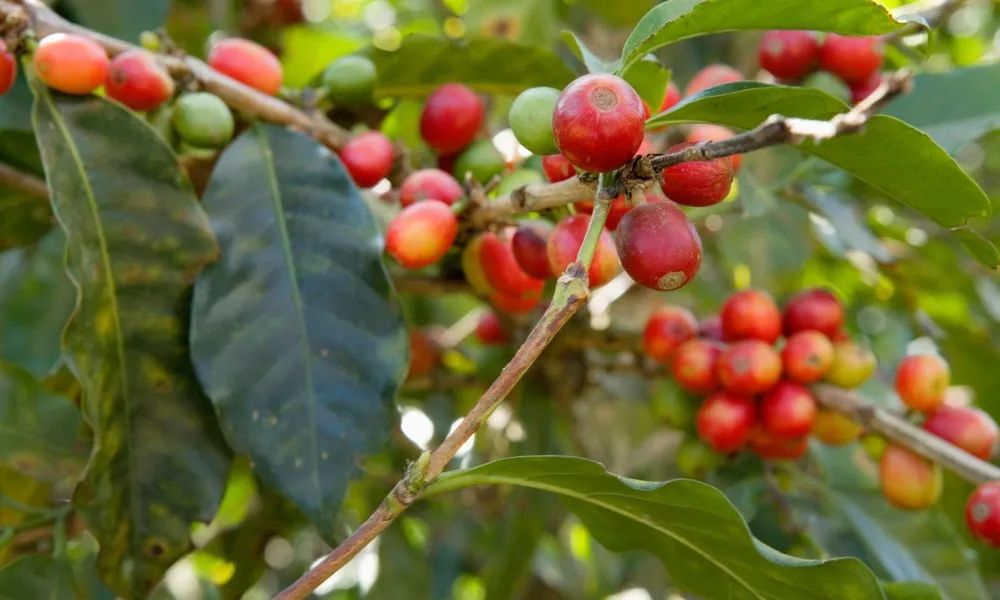
Pink Bourbon
After reading the introductions to Red Bourbon and Yellow Bourbon, it is easy to infer that Pink Bourbon is named for its ripe fruit appearing pink. It was developed by cross-breeding Red Bourbon and Yellow Bourbon and is a very rare variety.
Why is it so rare?
The main reason is that the yellow gene of Yellow Bourbon and the red gene of Red Bourbon are both recessive and easily interfere with each other, making it difficult for Pink Bourbon to reproduce stably. In addition, Pink Bourbon looks extremely similar to unripe Red Bourbon and is hard to identify, often being mixed together, so its yield is scarce. Pink Bourbon actually has quite good disease resistance, and its flavor is also very special, with lily floral aromas and a distinct lychee sweetness that is striking.
The above content is compiled by CoffeeHunters, a coffee news website.


