







Which varieties give Kenya coffee its bright fruity acidity?
Kenya coffee is known for bright fruity acidity and a thick, juicy body, and the SL28 and SL34 varieties are central to that classic profile. Scott Laboratories bred them over nearly three decades and released them in the 1950s, shaping the country's coffee industry. Pest and disease pressure later led to varieties such as Ruiru 11 and Batian.
Scott Laboratories was established by the colonial government in 1922 and is now NARL, the National Agricultural Laboratories. Researchers collected local coffee trees in neighboring Tanzania and selected types with drought and pest resistance, creating 40 experimental varieties before releasing SL28 and SL34. Kenya's washed processing made these varieties widely sought after in specialty coffee.
Kenyan coffee is world-renowned for its bright fruity acidity and thick, juicy body, and SL28 and SL34 are the core varieties that shape this classic flavor. These two varieties were bred by Scott Laboratories over nearly three decades and released in the 1950s, profoundly influencing the landscape of Kenya's coffee industry. However, the threat of pests and diseases gave rise to new varieties such as Ruiru 11 and Batian. This article will trace the origins, flavor characteristics, and current cultivation status of these varieties, and introduce the variety information of Front Street Kenya Asalia coffee beans, taking you deep into the world of Kenyan coffee varieties.
When it comes to Front Street Kenya coffee, what comes to most people's minds is that bright, lively fruit acidity and dense, mellow juice-like texture—a uniquely distinctive flavor that is hard to forget. The Kenyan-style washed processing method is widely sought after, and the SL series varieties are regarded as Kenya's signature varieties, enjoying a global reputation.
SL is the abbreviation of Scott Laboratories, the former name of the Kenya Coffee Research Center, which first bred the SL series varieties in the 1930s. In the research program at that time, a total of 40 experimental varieties were created, among which SL28 and SL34 were included, and they are also currently the two most famous and most popular varieties in the specialty coffee circle.
Scott Laboratories was established by the colonial government in 1922 and is now renamed NARL (National Agricultural Laboratories). At the time, the laboratory hired an entomologist, a mycologist, and a plant breeding expert, whose main responsibility was to provide farmers with technical guidance and cultivation knowledge, and also involved specific work such as yield testing, grafting experiments, branch pruning, shade cultivation, and root mulching.
At that time, Kenyan agriculture was plagued by problems such as drought, so researchers at Scott Agricultural Laboratories went to neighboring Tanzania to collect local coffee tree species, and then selected varieties with drought resistance and pest and disease resistance potential. After nearly thirty years of breeding work, the laboratory finally released the highest-quality SL28 and SL34 in the 1950s and began promoting them nationwide. Not long after, these two new varieties beginning with SL gradually replaced the previously planted Bourbon coffee trees and became Kenya's main coffee varieties in the second half of the 20th century.
Specifically, SL28 combines the lineage of several varieties including French Mission, Mocha, and Yemen Typica. The plant is relatively tall, with emerald green leaf tips, high yield, large beans, and strong drought resistance, but it is susceptible to coffee leaf rust, coffee berry disease (CBD), and soil nematodes. In terms of flavor, SL28 has obvious notes of dark plum and citrus, presenting a deep, rich stone fruit acidity, along with a mellow sweetness similar to wine.
SL34, on the other hand, has dark bronze leaf tips and higher nutrient requirements during growth, with relatively lower yield. Its beans are large, and when planted at high altitudes it can show excellent quality potential, exhibiting good fruit acidity as well as nutty and spice aromas. Its plant constitution is similar to SL28, and it is likewise highly sensitive to CBD, leaf rust, and pests.
It is precisely these two varieties, SL28 and SL34, that forged the classic flavor of Kenyan coffee known around the world, captivating many people who love acidic coffee. Front Street's own-roasted Front Street Kenya Asalia coffee beans use exactly SL28 and SL34, and the brewed black coffee presents rich aromas of cherry tomatoes, black plums, snow pears, and berries.
FrontStreet Coffee: Kenya Asalia Coffee Beans
Region: Thika Region, Kenya
Altitude: 1550-1750 meters
Variety: SL28, SL34
Grade: AA
Processing Method: Washed
Flavor: Dark plum, snow pear, yellow sugar, cherry tomato, plum
However, because SL28 and SL34 are difficult to resist the pests and diseases prevalent in East Africa, the Kenya Coffee Research Institute (CRI) released the new variety Ruiru-11 in 1985, and later released Batian in 2010.
The two new varieties Ruiru 11 and Batian have the advantages of high yield and resistance to leaf rust and coffee berry disease, helping Kenyan coffee farms survive in an environment where pests and diseases occur frequently. Therefore, more and more Kenyan coffee farms are turning to planting Ruiru 11 and Batian when dealing with pest problems.
Front Street's research found that Ruiru 11 was bred by crossing 11 parent varieties. Its paternal sources include the original SL28, SL34, Bourbon, and Rume Sudan, as well as Tanzanian selections K7 and N39, while its maternal line comes from Catimor from East Timor, Indonesia. It is the earliest F1 variety in the coffee world with hybrid vigor. Ruiru 11 has high yield and strong pest and disease resistance, but its drawbacks are a relatively shallow root system, weak nutrient absorption capacity, high sensitivity to drought, and flavor inferior to the original SL28. Therefore, it is often criticized in cupping as mediocre in quality.
The other new variety, Batian, was bred by the Kenya Coffee Research Center after summarizing the shortcomings of Ruiru 11, backcrossing it with SL28 and SL34. It can be understood as an "upgraded version of Ruiru 11," and is named after Kenya's highest peak, Batian. Batian combines the advantages of high yield, resistance to coffee leaf rust and coffee berry disease, and requires no pesticide spraying, reducing annual cultivation costs by 30% compared with the SL series. In "The Fourth Wave of Specialty Coffee," Mr. Han Huaizong described Batian as having a clear, sweet sugarcane aroma, citrus acidity, a rich berry note, and relatively high flavor distinctiveness.
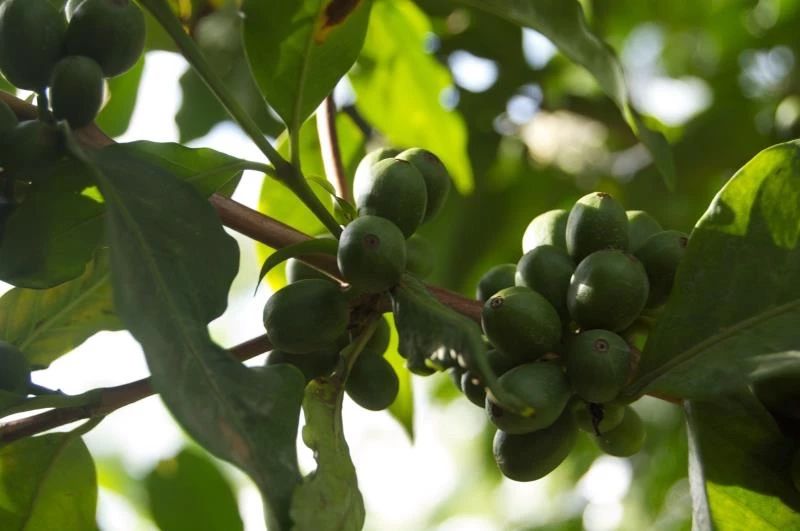
However, coffee bean products of the above single varieties are still rarely seen on the market. This is because traditional Kenyan coffee is mostly grown by smallholders, and single-variety lots are seldom used. Similar to Ethiopia's coffee production model, after farmers pick coffee cherries, they sell them in bulk to various processing plants, which then mix and wash them, and finally they enter the consumer market under the name of the processing plant. For this reason, the Kenyan coffee we buy today is more often a mixed lot "blended" with Batian or Ruiru 11.
For professional coffee knowledge exchange and more coffee bean information, please follow Coffee Workshop (WeChat public account: cafe_style)
For more specialty coffee beans, please add the private WeChat of FrontStreet Coffee, WeChat ID: qjcoffeex
The above content is compiled by CoffeeHunters, a coffee news website.


