







How do Brazil's main coffee varieties differ in flavor?
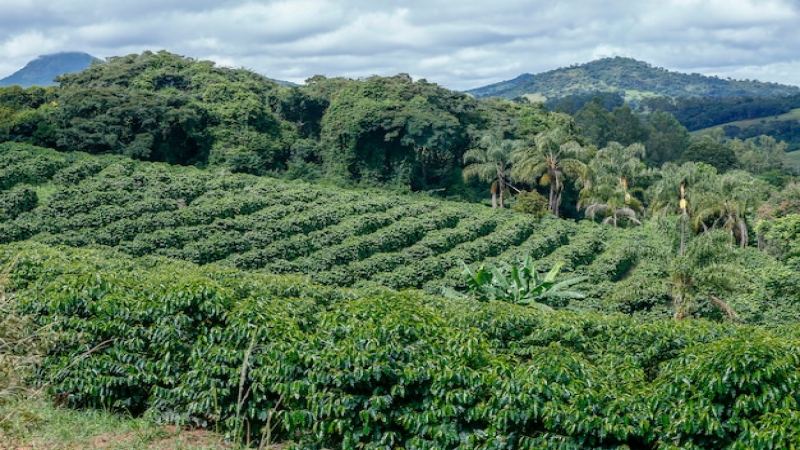
Brazil is the largest producer of Arabica coffee, and its three main varieties are Red Bourbon, Yellow Bourbon, and Mundo Novo. Growing regions concentrate in Minas Gerais, São Paulo, Bahia, and Espírito Santo, which together account for 90 percent of exports. Lower altitudes and flat terrain give Brazilian coffee low acidity, prominent nutty notes, chocolatey sweetness, and a full body.
Warm northern climate and level ground suit Arabica coffee and allow machine harvesting, which supports the country's large volumes and its role in ICE Arabica stocks and futures pricing. In Minas Gerais, the Cerrado and South Minas areas sit higher and often produce specialty lots, while names like Mogiana come from São Paulo. Each variety shows its own cup profile.
Brazil, as the world's largest producer of Arabica coffee, occupies a pivotal position from commercial beans to specialty beans, and its futures prices are an important reference for ICE Arabica pricing. Brazil's coffee-producing regions are concentrated in four areas—Minas Gerais, São Paulo, Bahia, and Espírito Santo—which account for 90% of the country's exports. Due to lower altitudes, flat terrain, and a lack of microclimates, Brazilian coffee has developed a unique style characterized by low acidity, prominent nutty notes, and a combination of chocolatey sweetness and a full-bodied mouthfeel. This article systematically reviews the three main varieties grown in Brazil—Red Bourbon, Yellow Bourbon, and Mundo Novo—and, combining Front Street Coffee's cupping and product examples, analyzes each variety's flavor performance, development history, and brewing suggestions, helping coffee enthusiasts gain a comprehensive understanding of the charm of Brazilian coffee.
Professional coffee knowledge exchange. For more coffee bean information, please follow Coffee Workshop (WeChat public account: cafe_style).
For more specialty coffee beans, please add the private WeChat of Front Street Coffee (FrontStreet Coffee), WeChat ID: qjcoffeex.
As the world's largest producer of Arabica coffee, from commercial coffee to specialty coffee, Brazilian coffee can be said to support the entire industry chain. Brazilian coffee is a major factor in ICE Arabica inventories and in determining Arabica futures prices.
Brazilian Arabica coffee beans have such high yields, which also benefits from Brazil's warm climate in the north and its flat terrain. First, the climate is suitable for the growth of Arabica coffee beans. Second, because the terrain is flat, machine harvesting can be used, increasing overall harvest volume.
Brazil's main coffee-producing regions
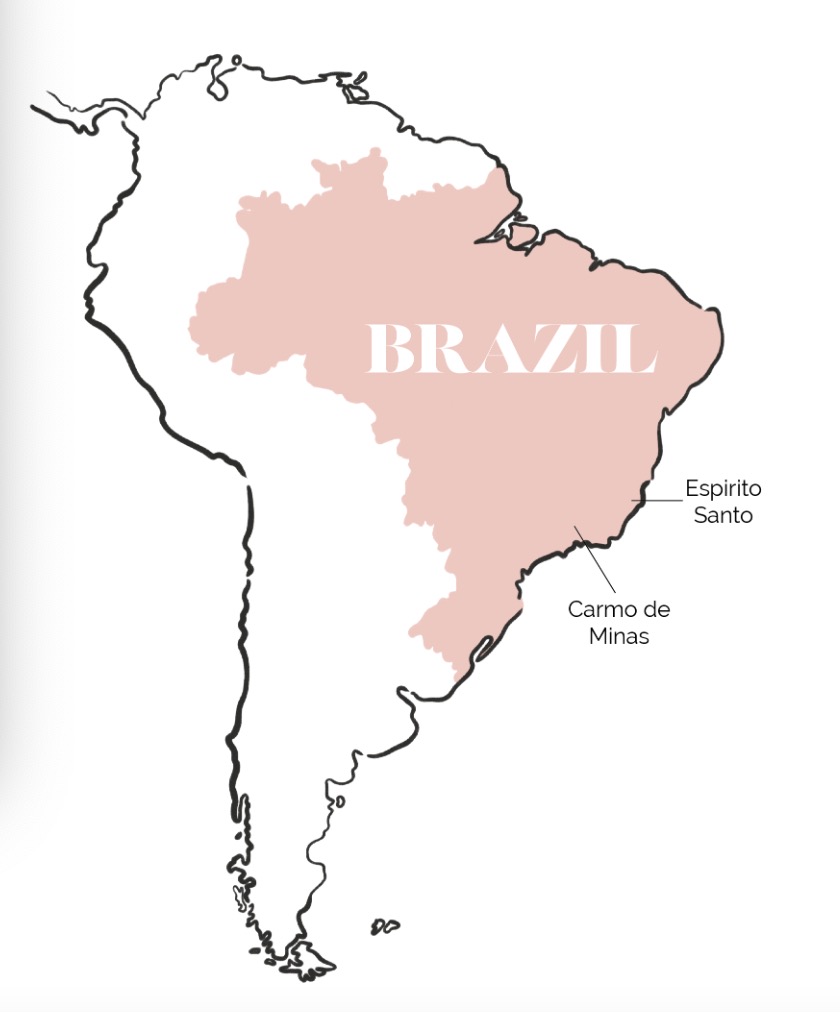
Brazil's main coffee bean-producing regions include: Minas Gerais, São Paulo, Bahia, and Espírito Santo. These four places account for 90% of the country's exports. The Mogiana we commonly see comes from São Paulo. In Minas Gerais, Cerrado and South Minas, because these three producing regions in Minas Province are at higher altitudes, mostly produce specialty Brazilian coffee beans.
Flavor characteristics of Brazilian coffee beans
Brazil's altitudes are relatively low, its landforms are flat and monotonous, and it lacks microclimates. It also habitually uses the sun-drying method to grow coffee trees, thus producing Brazil's unique soft-bean flavor. Through cupping Brazilian coffee beans from different producing regions, Front Street believes that Brazilian coffee beans have low acidity, moderate nutty notes, chocolatey sweetness, and a full-bodied mouthfeel.
Brazil's main coffee varieties
In these producing regions, three varieties are mainly grown: Red Bourbon, Yellow Bourbon, and Mundo Novo.
"Red Bourbon Variety Red Bourbon"
Bourbon originated as a natural mutation of the Typica coffee variety and is also a variety with a long history, and both varieties belong to the Arabica species. Ordinary Bourbon coffee mainly consists of green fruit, which turns bright red when mature—this is what we have heard of as "Red Bourbon."
Through cupping by Front Street Coffee (FrontStreet Coffee), Red Bourbon coffee varieties grown at high altitudes have better aroma and bright acidity, with obvious sweetness, and taste similar to red wine.
Front Street Coffee (FrontStreet Coffee) believes that the most basic element of whether a coffee bean is specialty is whether you can taste the unique flavor of a producing region. The terroir, climate, altitude, and other natural factors of each producing region can allow coffee to express different yet representative flavors of the producing region. Therefore, Front Street Coffee (FrontStreet Coffee) has listed 7 Front Street everyday beans from producing regions, hoping everyone can confirm the flavor performance of coffee from popular producing regions through the highest cost-effectiveness.
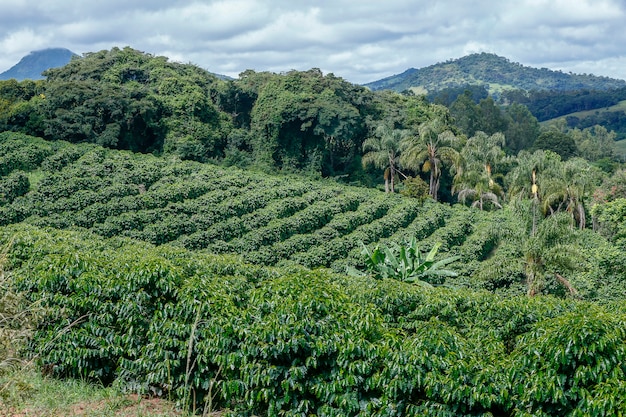
Among them, for the Brazil producing region, Front Street Coffee (FrontStreet Coffee) selected a Front Street Brazil Red Bourbon coffee bean from the Cerrado region of Minas Gerais, Brazil, grown at an altitude of 1100m and using the semi-washed processing method. Under suitable parameters for drip extraction, this Front Street Brazil Cerrado coffee bean shows obvious sweetness, with a light lemon aroma, contains rich nutty flavor, and has an obvious dark chocolate note in the finish. The overall experience is relatively round and very characteristic of the Brazil producing region.
"Yellow Bourbon Variety Yellow Bourbon"
Yellow Bourbon is a Bourbon variant unique to São Paulo State, Brazil, mainly because the fruit does not turn red when ripe but instead appears orange-yellow, hence the name "Yellow Bourbon." If Yellow Bourbon is grown at high altitudes, it will have excellent flavor performance. Yellow Bourbon coffee beans have balanced and smooth acidity, with a weak and clean bitterness, and are overall very bright and refreshing.
The most famous place in Brazil for growing Yellow Bourbon is none other than Queen Farm in the Mogiana region of São Paulo State, Brazil. Queen Farm (Fazenda Rainha) is managed by José Renato G. Dias, an agricultural engineer specializing in coffee production. The farm covers 280 hectares, of which 200 hectares mainly grow Yellow Bourbon, Icatu, Yellow Catuai, Mundo Novo, and Acaiá. It has BSCA and Utz certifications.
When the coffee reaches maturity, it is picked using handheld mechanical harvesting equipment on cloths to avoid contact with the ground. After harvesting, the coffee fruit is pulped and spread out in the yard to dry. The coffee slowly dries in the sun until the moisture reaches 11%. After drying, the coffee is placed in wooden granaries, so the Brazilian coffee beans produced by this estate are more stable in quality.
The Front Street Brazil Yellow Bourbon coffee beans currently sold by Front Street Coffee (FrontStreet Coffee) come from Queen Farm. Under suitable parameters for drip extraction, this Front Street Brazil Queen Farm Yellow Bourbon coffee bean shows the fresh sweetness of sugarcane juice, black tea, soft and smooth fruit sweetness, obvious nutty flavor, balanced and smooth acidity, weak and clean bitterness, contains rich chocolate aroma and nutty flavor, with a bright and refreshing mouthfeel and a smooth, delicate texture.
"Mundo Novo"
Mundo Novo is the result of a natural cross between Bourbon and Typica, first discovered in 1943 in Tietê, São Paulo, Brazil. Mundo Novo was initially planted in the city of Novo Mundo, which is now Urupês.
The first seed selection of Brazil's Mundo Novo coffee beans was completed between 1943 and 1952. This variety began to be distributed to coffee growers for planting in 1952. In the 1960s, Mundo Novo was widely planted in Brazil and was even hailed as the new hope of Brazil's coffee industry. Later, in 1977, the Agronomical Institute of Campinas (IAC) released a new selection. In Brazil and other South American countries, the Mundo Novo variety has very high commercial value. Mundo Novo also spread to other countries, but for various reasons it was not widely planted locally.
How should Brazilian coffee beans be brewed to taste good?
First, choose freshly roasted coffee beans. Front Street Coffee (FrontStreet Coffee) ships all orders within five days after roasting is completed, ensuring 100% freshly roasted coffee beans.
In order to allow Brazilian coffee to express the unique mellow nutty flavor of the producing region, Front Street Coffee (FrontStreet Coffee) roasts the two Front Street Brazilian coffee beans on its bean list to a medium-dark level. Medium-dark roasted coffee beans have a loose structure, so the substances in the coffee beans are extracted more easily. Therefore, Front Street Coffee (FrontStreet Coffee) recommends using lower-temperature hot water and a medium-coarse grind when brewing Brazilian coffee.
The extraction method is as follows: pour 30 grams of water in the first stage for blooming, with a blooming time of 30 seconds; pour water in the second stage to about 125 grams, then wait for the coffee liquid to drop; when it has dropped by half, pour the final stage of water to 225 grams; after all the coffee has dripped through, end the extraction. The total extraction time is generally about 2 minutes and 10 seconds.
The above content is compiled by CoffeeHunters, a coffee news website.


