







What Makes Yellow Bourbon Coffee From Brazil Distinct?
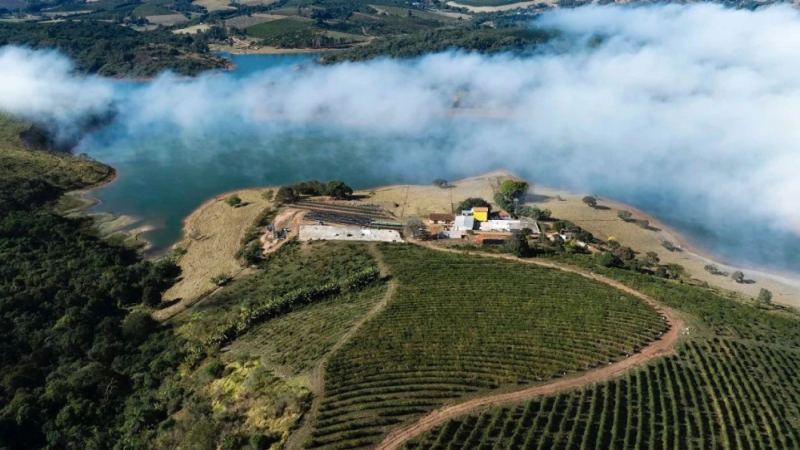
Yellow Bourbon coffee from Fazenda Rainha in Brazil is a specialty Arabica variety grown in the high-altitude Sul de Minas region, where average elevation reaches about 1,100 meters and average temperature sits near 22°C. The area's distinct wet and dry seasons and wide day-to-night temperature swings support the development of the variety's cup character, typically processed as pulped natural.
Brazil is the largest producer of Arabica coffee, with roughly 300,000 coffee farms across 1,950 municipalities, and Minas Gerais alone contributes about 50% of national output. The main Arabica coffee regions—Minas Gerais, São Paulo, Bahia, and Espírito Santo—account for 90% of exports, so Brazilian harvests directly shape international futures prices and specialty supply.
As the world's largest producer of Arabica coffee, Brazil's production fluctuations directly influence international coffee futures prices. This article systematically reviews Brazil's major specialty coffee regions—Minas Gerais, São Paulo, Bahia, and Espírito Santo—focusing on the terroir characteristics and cupping performance of the three high-altitude regions of Sul de Minas, Cerrado, and Mogiana. It also provides an in-depth analysis of the varietal characteristics of Yellow Bourbon coffee beans from Fazenda Rainha, the pulped natural processing method, and Front Street Coffee's brewing parameters and flavor descriptions, offering coffee enthusiasts a complete guide to Brazilian specialty coffee.
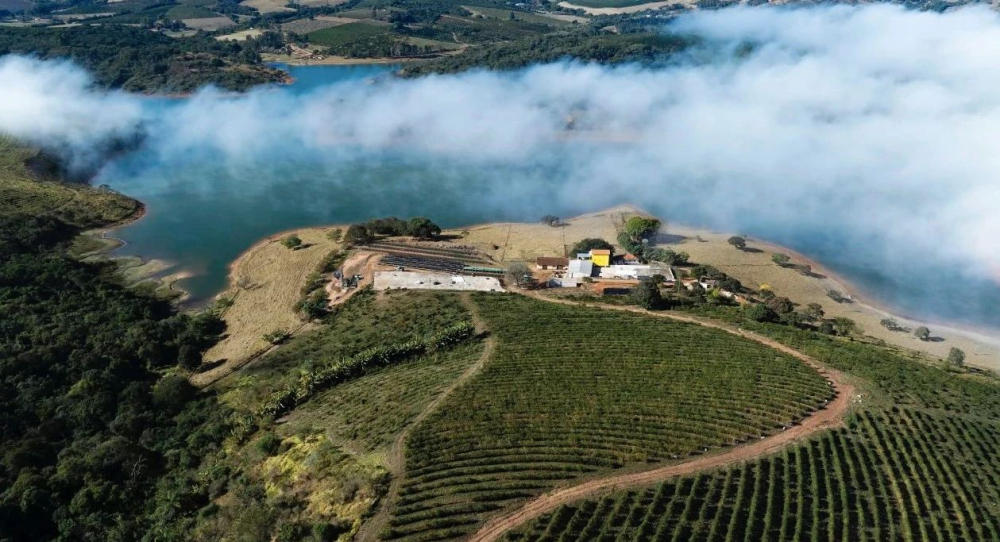
Brazil holds the top position in the global Arabica coffee landscape, and its production scale has a decisive impact on the entire industry chain. Most of the main Arabica stocks on the ICE coffee futures exchange come from Brazil, so the country's annual coffee harvest directly affects international coffee price trends.
Brazilian Coffee Growing Regions
Data shows that Brazil has approximately 300,000 coffee farms spread across 1,950 municipalities (Mello 2012). The state of Minas Gerais alone contributes about 50% of the nation's coffee production, thanks to lower land prices, abundant labor resources, and mountainous terrain and climate conditions suitable for coffee cultivation.
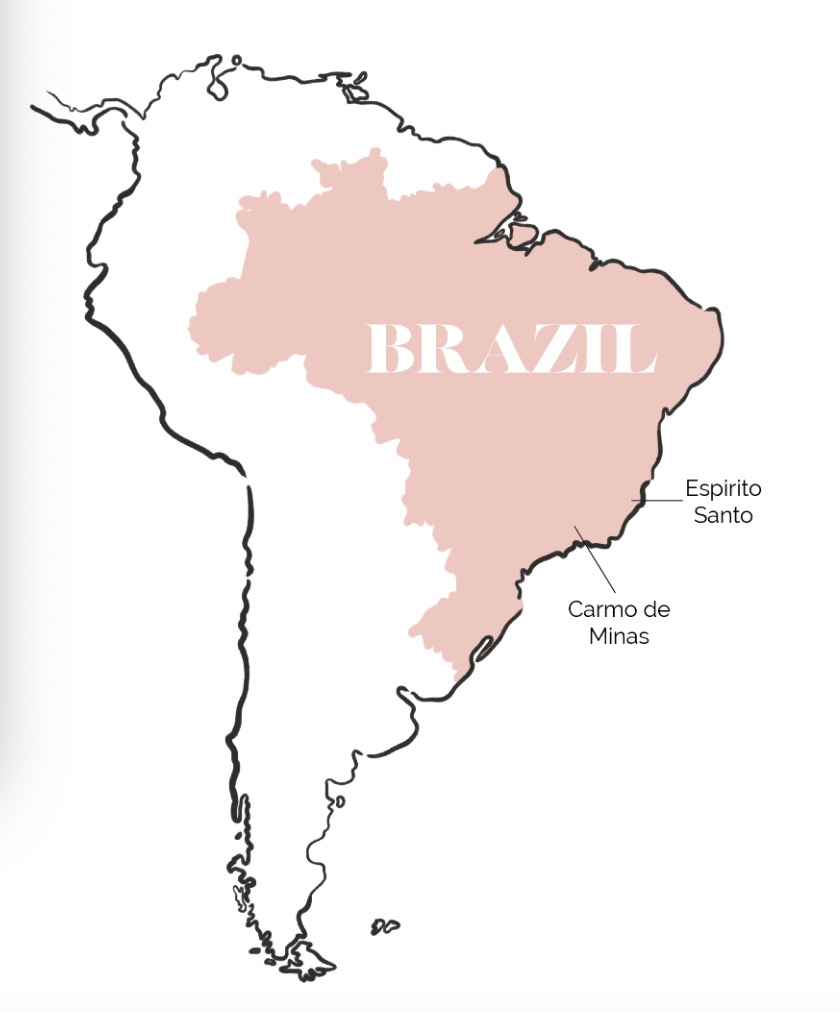
Brazil's core Arabica coffee regions include Minas Gerais, São Paulo, Bahia, and Espírito Santo, which together account for 90% of the country's exports. Mogiana is commonly grouped under São Paulo state, while Cerrado and Sul de Minas within Minas Gerais, due to their higher altitudes, are the main sources of specialty Brazilian coffee beans.
Minas Gerais
Sul de Minas (Southern Minas) has a higher elevation, with an average altitude of about 1,100 meters and an annual average temperature of about 22°C. The region has diverse terrain, a clear distinction between wet and dry seasons, significant temperature differences between day and night, and rich microclimates, making it suitable for growing excellent-flavored Bourbon and Yellow Bourbon, and it has naturally developed into a core specialty coffee region.
The main coffee varieties in this region are Catuai, Mundo Novo, and Icatu. Through cupping comparisons, Front Street Coffee has found that coffee beans from Sul de Minas often present a full-bodied mouthfeel, accompanied by slight citric acidity and fruity notes.
Cerrado
When people mention Cerrado, they often think of the extremely biodiverse Cerrado savanna. However, the Cerrado coffee region does not refer to all coffee grown on the savanna—only coffee planted at altitudes between 1,100 and 1,300 meters can bear the name Cerrado. This area encompasses the finest parts of the Cerrado savanna, with high altitude and fertile soil.
The coffee varieties grown in this region are mainly Catuai and Mundo Novo. After cupping comparisons, Front Street Coffee found that coffee beans from the Cerrado region typically carry nutty, caramel, or chocolate-like sweet aromas.
Among the regional everyday beans series selected by Front Street Coffee, the Brazilian coffee beans are sourced from the Cerrado region—pulped natural Red Bourbon. The flavor presented after brewing is highly representative of the Brazilian region—nutty, caramel, low acidity, and full-bodied, while also offering excellent value for money.
Mogiana
Mogiana is very close to southern Minas. Coffee trees grow intermingled with shrubs, grasses, and other vegetation. The region is home to many farming families, some following traditional large-farm models and others operating small-scale modern operations. The integration of modern technology with mountain coffee-growing culture has produced green coffee beans of the highest quality.
The coffee varieties grown in this region are mainly Catuai and Mundo Novo. Through cupping comparisons, Front Street Coffee found that coffee beans from the Mogiana region have nutty aromas and a cane-sugar-like sweetness. The pulped natural Yellow Bourbon coffee beans from Fazenda Rainha offered by Front Street Coffee come from the Mogiana region.
Fazenda Rainha is managed by José Renato G. Dias, an agricultural engineer specializing in coffee production. The estate covers a total area of 280 hectares, of which 200 hectares are mainly planted with Yellow Bourbon, Catuai, Yellow Catuai, Mundo Novo, and Acaiá. The estate holds BSCA and Utz certifications.
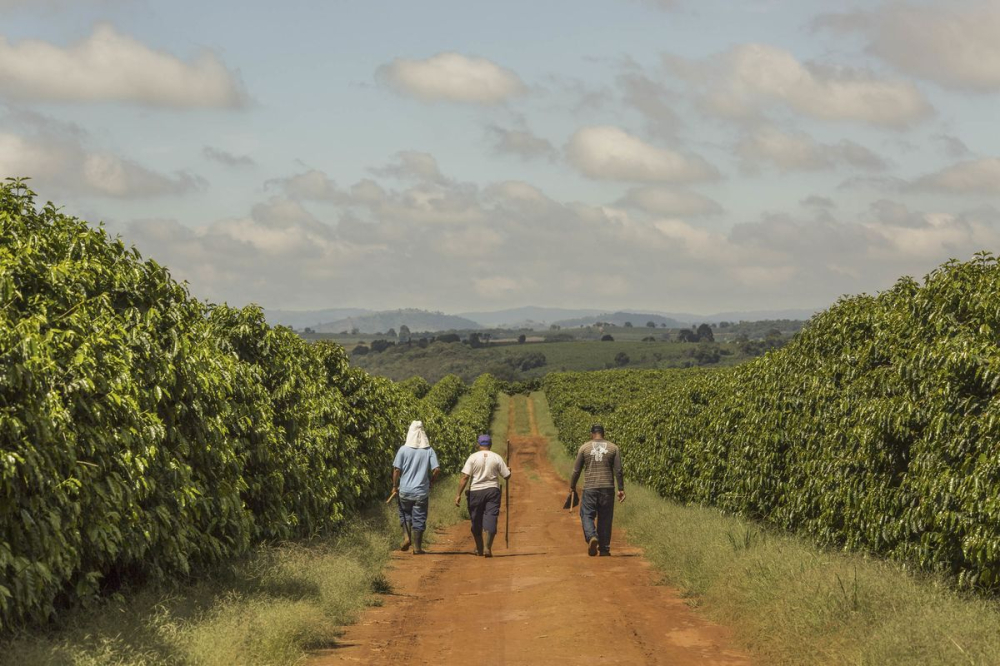
After the coffee cherries ripen, workers use handheld mechanical picking equipment to harvest on cloth sheets, avoiding contact between the fruit and the ground. After harvesting, the coffee cherries are pulped and spread out in the courtyard to dry. The coffee dries slowly in the sunlight until the moisture content drops to 11%. Once drying is complete, the beans are stored in wooden warehouses, which is why the Brazilian coffee beans from this estate have greater quality stability.
Bourbon Coffee Variety
Observant friends may have noticed that both coffee beans offered by Front Street Coffee belong to the Bourbon variety, differing only in fruit color. Bourbon is a subspecies resulting from a Typica mutation and, alongside Typica, is one of the oldest existing coffee varieties. The green fruit turns bright red when ripe, hence the name Red Bourbon—which is simply normally ripened Bourbon coffee.
Yellow Bourbon is a Bourbon variant unique to São Paulo state, Brazil. Its ripe fruit does not turn red but instead presents an orange-yellow color, hence the name "Yellow Bourbon." When Yellow Bourbon is grown at high altitudes, it can display exceptionally excellent flavors, typically with nutty and chocolate notes, balanced and gentle acidity, a faint and clean bitterness, and an overall bright and refreshing character.
Pulped Natural Processing Method
Before 1990, Brazil used almost entirely crude natural processing, which made the beans prone to picking up woody or earthy flavors. Because the coffee fruit had to be sun-dried for two to three weeks, if rain caused moisture to return, moldy flavors could easily develop. To escape this dependence on weather, in 1990 Brazil developed the pulped natural method (Pulped Natural) based on the country's relatively dry climate to shorten the processing cycle. The two methods are similar in operation; the difference lies in whether water is used to assist during processing. The pulped natural method significantly reduces the difficulty of quality control, effectively minimizes defects, produces a neat and attractive appearance, and yields higher sweetness.
Semi-dry Processing is divided into two stages: first, sun drying is used to reduce the moisture content to 20%–25%, then the beans are sent to a dryer to further reduce the moisture content to 10%–14%, completing the entire drying process.
How to Brew Brazilian Coffee Beans for the Best Taste?
Front Street store brewing parameters: use a Kono dripper, water temperature 88°C, 15 grams of coffee powder, coffee-to-water ratio 1:15, grind size medium-fine (70%–75% passing through a Chinese standard No. 20 sieve).
Front Street Coffee uses staged extraction, also known as three-stage brewing: first bloom with 30 grams of water for 30 seconds, then pour in a thin stream in circles until 125 grams for the first stage, wait until the water level drops and is about to expose the coffee bed, then continue pouring until 225 grams and stop. When the water level again drops and is about to expose the coffee bed, remove the dripper. (Timing starts from the beginning of the bloom.) The extraction time is 2 minutes 05 seconds to 2 minutes 15 seconds.
Front Street - Brazil Fazenda Rainha Coffee Brewing Flavor: fresh sweetness like sugarcane juice, black tea, smooth fruit sweetness, pronounced nutty flavor, balanced and gentle acidity, faint and clean bitterness, rich chocolate aroma and nutty flavor, bright and refreshing mouthfeel, smooth and delicate.
Front Street - Brazil Cerrado Coffee Brewing Flavor: prominent sweetness on entry, accompanied by a faint lemon aroma, rich nutty flavor, with an obvious dark chocolate note in the finish, and an overall rounded impression.
The above content is compiled by CoffeeHunters, a coffee news website.


