







How Does K72 Washing Shape Kenyan Coffee Beans?
Kenyan coffee cultivation centers on the highland areas around Mount Kenya and the Aberdare range, where volcanic soil and distinct wet and dry seasons shape the crop. Most farms are smallholdings that deliver cherry to centralized factories for processing the same day. Altitude commonly runs between 1,400 and 2,000 meters, and the cool nights slow cherry development, which helps build the dense bean structure behind Kenya's trademark acidity.
In the conventional washed process, cherries are floated to remove defects, pulped, then fermented for 18 to 36 hours to break down mucilage. What remains is rinsed with clean water before drying. Kenya originally used that ordinary method, and the K72 approach developed from it. The currently selling lot comes from the Asalia processing station in the Thika region.
Kenyan coffee is renowned for its bright and rich notes of dark plum, cherry tomato acidity, and juicy sweetness. This is closely tied to the country's suitable geography and climate, high-quality varieties such as SL28 and SL34, and, more crucially, its unique K72 washed processing method. How exactly did the K72 processing method evolve? How does it differ from ordinary washed processing? From the perspective of Front Street Coffee, this article will sort out the causes of Kenyan coffee's flavor, the historical origins and craft details of the K72 processing method, and introduce Front Street Coffee's currently on-sale K72 washed coffee beans from the Asalia processing station in the Thika region.

For more specialty coffee knowledge, please follow: Front Street Coffee (Frontsteet Coffee)
Kenya and Ethiopia both belong to East Africa and are neighboring countries, yet the coffees they produce have distinctly different flavor characteristics. Ethiopian coffee is usually known for floral notes, refreshing citrus acidity, and tea-like body, while Kenyan coffee tends toward bright dark plum, cherry tomato acidity, and juicy sweetness.
The reason Kenyan coffee can develop such a unique flavor is partly due to the local geographical conditions and climate, which are very suitable for coffee cultivation. At the same time, the high-quality varieties mainly planted in the country, such as SL28 and SL34, combined with the unique Kenyan K72 washed processing method, allow it to show outstanding acidity and juicy sweetness. This also makes one wonder: how was the K72 processing method born? How is it different from ordinary washed processing?
According to Front Street's understanding, Kenya initially also used ordinary washed processing, that is, the wet process. In the conventional washed process, after coffee cherries are picked, they are first poured into a tank for flotation to remove unripe and defective cherries. Next, the skin and pulp are removed, and then the coffee beans with mucilage and parchment are soaked and fermented. The fermentation time is usually 18 to 36 hours, with the purpose of removing the mucilage layer.
After fermentation ends, some fermentation bacteria and mucilage still remain on the bean surface, so they need to be rinsed again with a large amount of clean water. The coffee beans are then dried by machine or sun-drying, reducing the moisture content to 10% to 14%. Finally, a huller is used to remove the remaining endocarp and silver skin, and the process is complete.
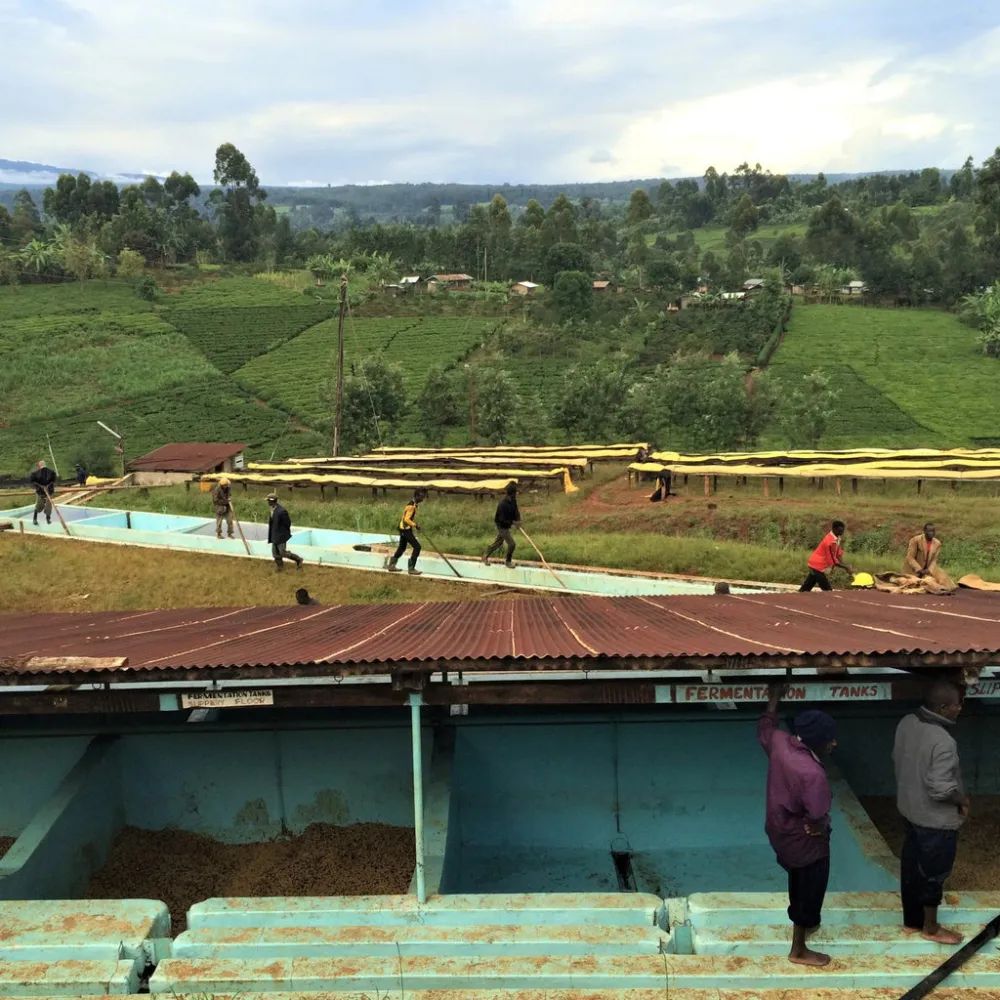
However, coffee cultivation in Kenya mostly adopts the cooperative model common in Africa, where smallholder farmers deliver ripe cherries to designated processing stations for processing. In the past, pulping and fermentation did not require too much time, but sun-drying took at least 5 to 7 days. In addition, Kenya had a limited number of processing stations in its early years. When the amount of coffee beans waiting to be processed was very large, a situation would arise in which a large number of already washed beans had nowhere to be dried. At this point, people could only put the wet beans back into the water tank to prevent contamination or spoilage, and wait until there was space in the drying yard before taking them out for sun-drying.
This practice of soaking twice is called double washing, and because it was first adopted by Kenya, this washed processing method is also called the Kenyan processing method. Later, it was discovered that this method not only helped stabilize varieties in production, but also brought coffee a rich, layered fruity acidity.
Through continuous improvement and extension, today's Kenyan 72-hour washed processing method, abbreviated as the K72 processing method, was eventually formed. Today's K72 washing pays more attention to controlling fermentation time. The early stage of processing is the same as ordinary washed processing. The biggest difference lies in the fermentation stage: first, a 24-hour washed fermentation is carried out, then the mucilage is cleaned off, the water is changed to clean water, and fermentation continues for another 24 hours. After fermentation, residual components are removed, then the water is changed to clean water again for another 24 hours of fermentation, totaling 72 hours. Finally, it is dried.
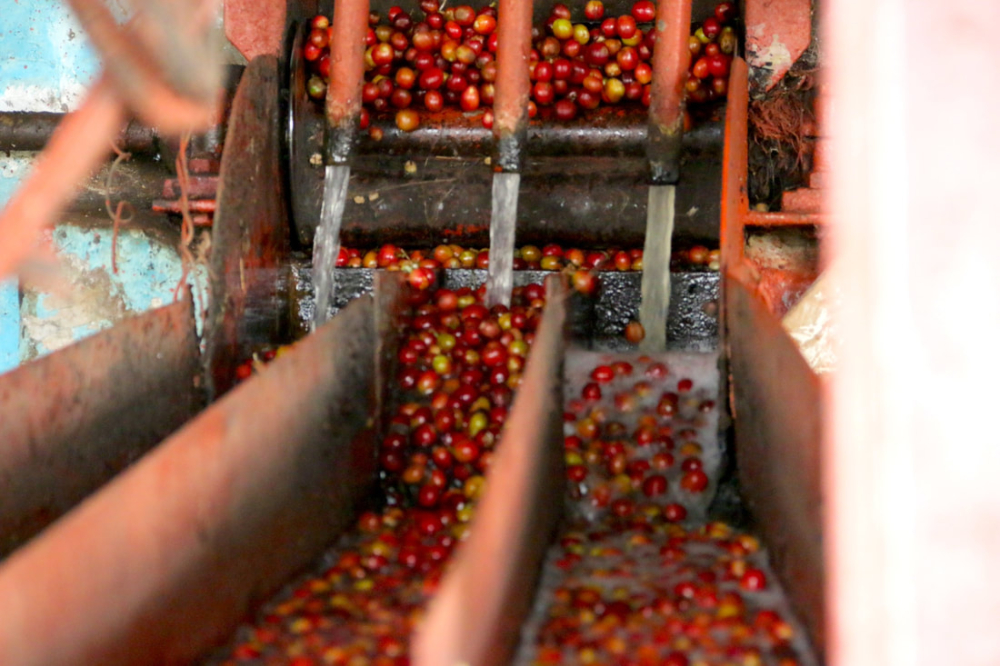
The fermentation process of ordinary washed processing lasts at most only 36 hours, while Kenyan washed processing undergoes fermentation 3 times, totaling 72 hours. This repeated processing method of washing after fermentation gives Kenyan coffee beans strong acidity and a delicate mouthfeel.
However, it should be noted that this processing method consumes a large amount of water and requires frequent water changes to prevent the coffee beans from developing off odors, so its cost is higher than ordinary washed processing. But because it can produce coffee beans with unique flavor and high quality, many processing stations in Kenya still insist on using the K72 processing method.
At present, Front Street Coffee's Kenyan coffee beans come from the Thika region, produced by the Asalia processing station, using K72 washed processing technology, and the coffee varieties are Kenya's main SL28 and SL34. After brewing, they present flavors of cherry tomato and dark plum, with bright acidity, juicy sweetness, and a clean, refreshing mouthfeel.
The above content is compiled by CoffeeHunters, a coffee news website.


