







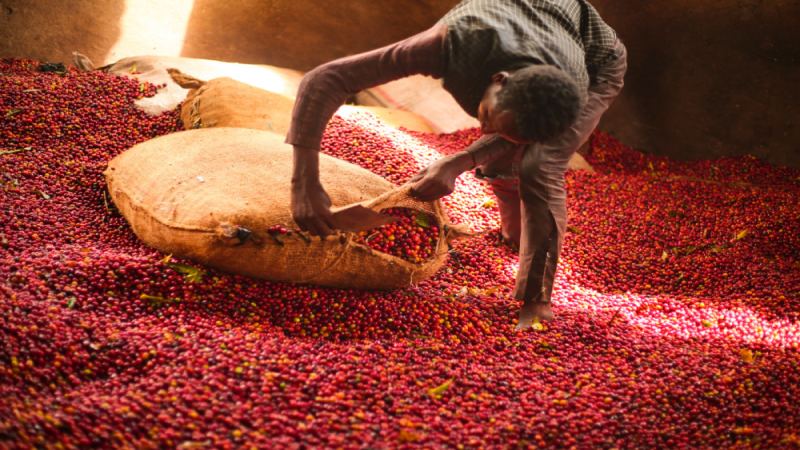
What defines Shakisso arabica coffee from Guji?
Shakisso is a micro-region inside Guji, in southern Ethiopia, and it once served as a gold mining site. Washed lots from Shakisso cup with bright lemon and citrus acidity, layers of white grape juice and blackcurrant, and an Earl Grey tea finish, a profile that separates it from the sweeter, fuller coffees found elsewhere in Guji.
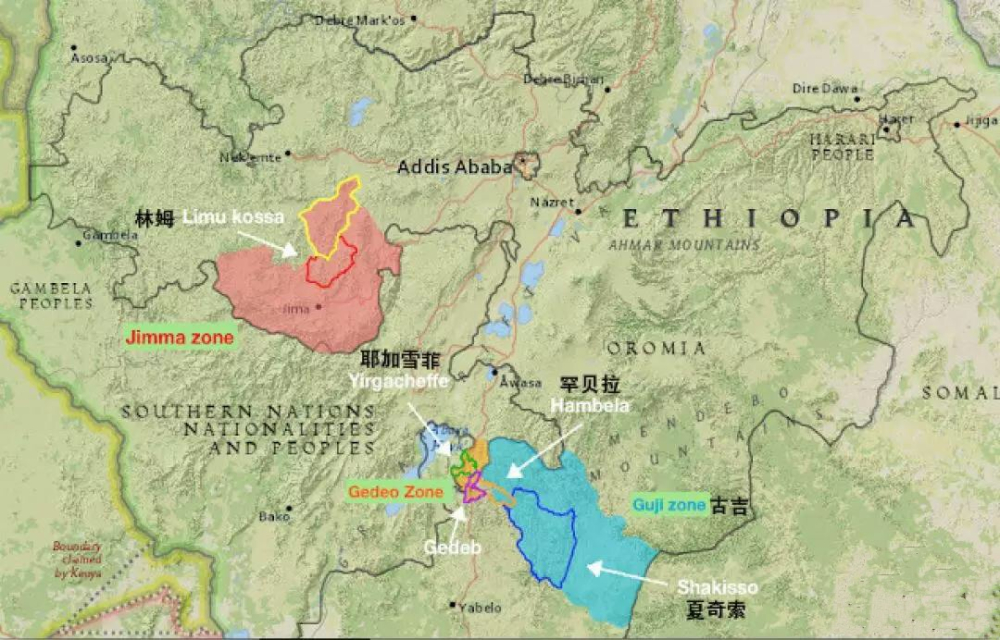
Guji was part of Sidamo until the Ethiopian Commodity Exchange split it off in 2010. Its fields sit above 1,800 meters on deep black Vertisol soil, with wide day-to-night temperature swings. Shakisso lies near Sidama and Gedeo, close to Yirgacheffe, and the area's abandoned pits mean careful walking through the coffee plots.
In the Guji region of Sidamo, Ethiopia, besides the renowned Hambela, there lies a distinctive micro-region—Shakisso. Once a gold mining site, this area is blessed with unique terroir that produces coffee beans with lively flavors and bright acidity. Through cupping, Front Street Coffee discovered that Shakisso coffee exhibits bright acidity reminiscent of lemon and citrus, accompanied by layers of white grape juice and blackcurrant, with an Earl Grey tea-like finish, contrasting sharply with the sweeter and fuller-bodied style of other Guji areas. This article will delve into Shakisso's geographical environment, historical background, and washed processing techniques, and share Front Street Coffee's roasting insights and brewing parameters, offering a comprehensive understanding of this unique Ethiopian coffee.
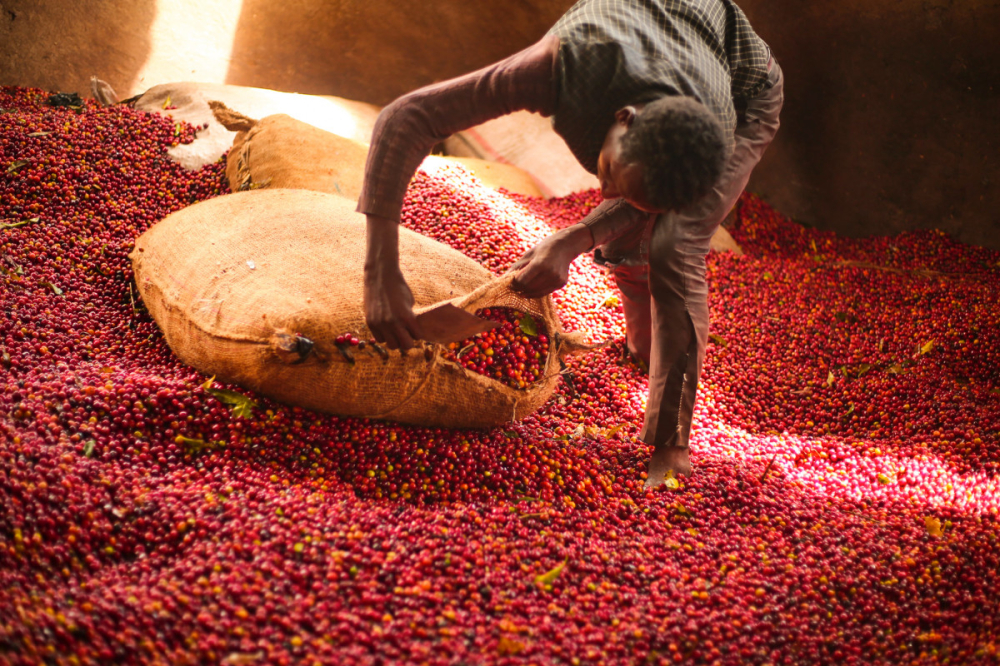
When it comes to Sidamo, Ethiopia, the Guji region is likely known to all. The Hambela-produced Huakui coffee beans from Guji have long been famous—in 2017, Hambela Buku Processing Station's Huakui won the Ethiopian Coffee Competition. Although subsequent seasons' Huakui failed to replicate that year's brilliance, enthusiasm for it remains undiminished. In Guji, besides Hambela, there is another micro-region called Shakisso that is equally distinctive. Front Street Coffee found in cupping that although Shakisso is within the Guji region, its coffee flavor differs noticeably from other parts of Guji.
Guji Region
Guji
Guji was originally part of the Sidamo region but was officially separated by the Ethiopian Commodity Exchange (ECX) in 2010 to become an independent region. It is located to the southeast of Yirgacheffe, with complex and varied terrain featuring interlaced high mountains, canyons, and plains.
The soil in this area is fertile black soil (Vertisol), nearly two meters deep, with an average altitude exceeding 1800 meters. The unique geographical conditions create significant temperature differences between day and night, providing an ideal terroir foundation for producing high-quality specialty coffee.
Shakisso Micro-Region
Shakisso
Shakisso (Shakiso) is located in the Guji region of Sidamo, in the southern part of the Oromia area, adjacent to Sidama and Gedeo. This area is dotted with many abandoned gold mining pits from early years, requiring extra caution when walking through coffee plantations.
Shakisso stands out as a unique region within Guji/Sidamo; even within Sidamo, it is a remote area far from most coffee-producing locations. Another well-known local product is gold. Factors such as miners, land, and ethnicity once led the region into turmoil in 2006. Therefore, the biggest challenge today is the need for sufficient manpower to maintain plantations and complete coffee harvesting.
Local smallholders began growing organic coffee in 2001 and work closely with medium-sized coffee producers, as they are well-versed in cultivating forest coffee at high altitudes, making Shakisso one of the most distinctive micro-regions in Sidamo. The coffee style here is quite unique, and its beans have repeatedly garnered market attention.
Front Street Coffee found through cupping that Shakisso coffee has bright acidity like lemon and citrus, along with flavors of white grape juice and blackcurrant, and an Earl Grey tea-like finish. Compared to the sweetness and body of Guji coffee beans, Shakisso is more lively and rich. Of course, this is also closely related to the processing method. Most of Guji uses natural processing; Front Street Coffee believes natural beans have prominent sweetness and soft acidity, more likely to present berry-like notes, while washed processing makes the flavor cleaner and acidity brighter. The Shakisso coffee beans Front Street Coffee procured are washed processed.
Washed Processing Method
Washed
The washed method removes impurities (stones, debris, etc.) and defective beans through multiple steps, resulting in uniform green beans that are generally considered higher quality and command higher prices than naturally dried coffee beans. However, the more refined the process, the more operational and hygiene management steps are involved, increasing risks, so washed processing does not necessarily equate to high quality.
The specific process: screened coffee cherries are sent to a pulper to remove skin and pulp; beans with residual mucilage are fermented in water for about 18 to 36 hours; after fermentation, beans with parchment are moved to flowing water channels for washing to remove pulp and mucilage; after washing, they are sun-dried or machine-dried to reduce moisture content to about 12%; finally, the parchment is removed.
Coffee Bean Variety
Heirloom
Front Street Coffee's Shakisso coffee beans use the Heirloom native variety. Ethiopia has nearly 2000 recorded coffee varieties, of which 1927 are native and 128 are introduced. In appearance alone, Ethiopian coffee varieties are like a "grand garden," with long, short, thin, and plump beans all present.
This is because Ethiopia has so many varieties, making it a natural gene pool for Arabica. On one hand, the abundance of varieties makes identification and classification difficult; on the other hand, the Ethiopian government, for protection reasons, is unwilling to disclose variety information, so they are collectively referred to as Heirloom native species.
Region: Sidamo Guji Shakisso
Altitude: 1950-2300m
Processing Method: Washed
Grade: G1
Variety: Local Heirloom
Front Street Coffee Roasting Insights
To highlight the rich and lively acidity of this bean, Front Street Coffee's roaster decided to use a medium-light roast.
Yangjia 800N, 300g charge: increase temperature to 170°C to load, set airflow to 3, heat at 100.2; turning point at 1'42", at 140°C keep heat unchanged, open airflow to 3.5; when bean surface turns yellow and grassy smell completely disappears, entering dehydration phase, at 180°C reduce heat to 70, open airflow to 4.
At 7'50", ugly wrinkles and dark spots appear on the bean surface, toast aroma clearly turns to coffee fragrance, which can be defined as the prelude to first crack; listen carefully for the sound of first crack; at 8'20" first crack begins, reduce heat to 50, adjust airflow to 5 (adjust heat very carefully, not so low that cracking stops), develop for 1'28" after first crack, discharge at 192°C.
Front Street Coffee Cupping Report
Front Street Coffee conducts cupping 8 to 24 hours after sample roasting. Front Street Coffee baristas typically use 200ml ceramic cupping bowls marked with 150ml and 200ml lines. According to SCAA standards, water TDS is controlled at around 150ppm; too low TDS can cause over-extraction, while too high affects taste and can cause under-extraction. Cupping water temperature is 94°C. Grind size is controlled to 70%-75% passing through a No. 20 standard sieve (0.85mm). The ratio is 11g coffee grounds to 200ml hot water, i.e., 1:18.18, so the extracted concentration falls within the golden cup range of 1.15%-1.35%, with a steeping time of 4 minutes.
Dry aroma: floral, lemon
Wet aroma: orange
Flavor: lemon, jasmine, vanilla, honey, orange, sucrose
Front Street Coffee Brewing Insights
Dripper: V60 #01
Water temperature: 90-91°C
Dose: 15g
Coffee-to-water ratio: 1:15
Grind size: medium-fine/fine sugar size (80% passing No. 20 sieve)
Front Street Coffee brewing method: First rinse the filter paper and preheat the dripper and carafe. Bloom with 30g water for 30 seconds, then pour in a slow circular motion until 125g for a stage, continue pouring when the water level is about to expose the coffee bed until 225g, stop, and when the water level is about to expose the bed again, remove the dripper. (Timing starts at bloom) Total extraction time is 2'05".
Brewing flavor: Prominent lemon acidity on entry, with jasmine, cream, sucrose, nuts at slightly lower temperatures, an oolong tea-like finish, and a long-lasting sweet aftertaste.
For more specialty coffee beans, add private WeChat Front Street Coffee, WeChat ID: kaixinguoguo0925
The above content is compiled by CoffeeHunters, a coffee news website.


