







How Blending Coffee Balances Cost, Flavor, and Consistency
Blending coffee is not just tossing beans together. It is a design process built around three goals: controlling cost, shaping flavor, and keeping the cup consistent over time. There are two routes, blending green coffee beans before roasting, or roasting each component separately and mixing afterward. Green blending demands more roasting skill; roasted blending solves evenness but multiplies the number of roasts.
Origins play set roles in a blend coffee. Brazil Cerrado adds base and body, Costa Rica Tarrazu and Colombia Huila bring sweetness and balance, and Ethiopia Yirgacheffe supplies the top note. A workable method is to build recipes with Yirgacheffe as the lead, cup them side by side, fine-tune the ratios, then verify the result on an espresso machine before locking the formula.
Blending coffee is not simply mixing beans together, but a systematic design built around three major goals: cost control, flavor shaping, and consistency in the cup. Drawing on Front Street Coffee's practice, this article sorts through the trade-offs between two methods—blending green beans and blending roasted beans—and analyzes the roles that beans such as Brazil Cerrado, Costa Rica Tarrazú, Colombia Huila, and Ethiopia Yirgacheffe play in a blend. Using Yirgacheffe as the main note, it designs three recipes for cupping comparison, further fine-tunes the ratios, and verifies them with an espresso machine, ultimately arriving at a blend that balances flavor completeness with mouthfeel performance.
For more specialty coffee knowledge, please follow the WeChat official account: FrontStreet Coffee (前街咖啡).
Blending coffee is an art that requires reaching the optimal solution under various factors. Therefore, it needs some blending knowledge and ideas to support it. In this installment of Barista Development Diary, we will share Front Street Coffee's (FrontStreet Coffee) approach to blending coffee.
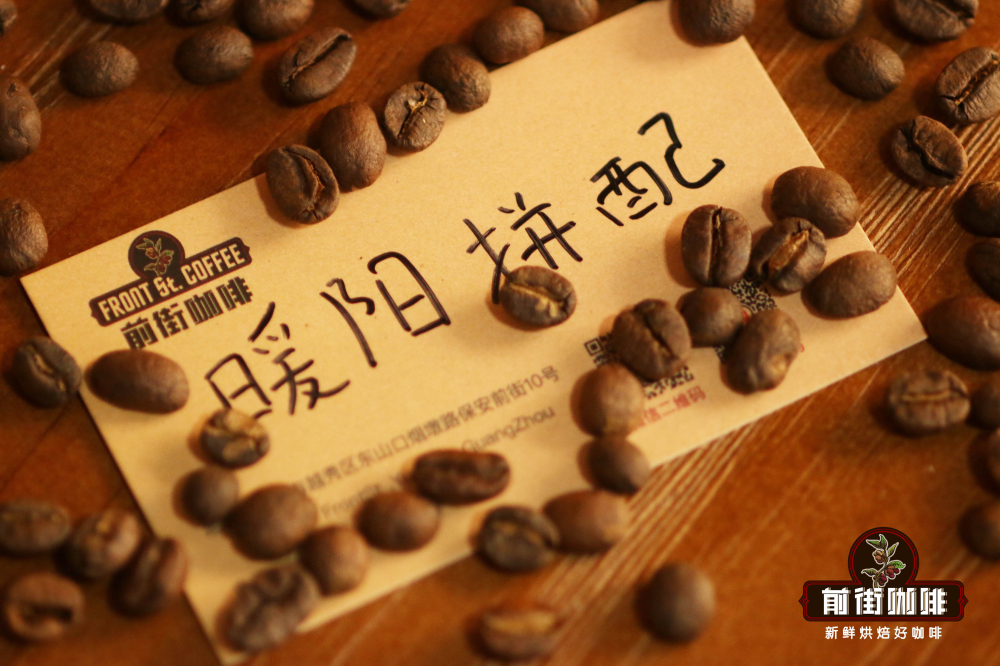
Blending Coffee First, blending coffee means mixing coffee beans from different origins to achieve the effect the blender wants. Generally speaking, there are only three reasons for blending coffee: reducing costs, improving flavor, and ensuring long-term consistency. Front Street insists on blending stable, great-tasting coffee beans within a certain cost, and has even produced blends that disregard cost in order to highlight flavor (yes, we're talking about Front Street Warm Sun Blend coffee beans).
Next, blending methods fall into two categories: green blending and roasted blending. Green blending means mixing the green coffee beans first and then roasting them all at once. This method places higher demands on roasting, because the greater the size differences between beans, the greater the skill required to roast them evenly.
Roasted blending means roasting each coffee separately first and then mixing them. This method can effectively solve the problem of even roasting. The downside is that it is too cumbersome: where you would originally need to roast only once, roasted blending requires roasting at least twice as many times (as many roasts as there are blend components).
Blending Approach First, let's understand the general flavor profiles of coffee from the major origins. For example, medium-dark roasted Front Street Brazil Cerrado is a very balanced coffee and is generally used as an excellent component for increasing a coffee's body. Medium-roasted Front Street Costa Rica Tarrazú has very fine sweetness and a sweet fruity aroma.
Medium-dark roasted Front Street Colombia Huila has smooth fruity notes and a layered, full-bodied mouthfeel, and can serve as the main note of a blend. Medium-roasted Front Street Ethiopia Yirgacheffe has rich fruity notes and floral aromas.
First, determine the main note of the blend, because the flavor you want to express directly determines the base coffee bean. If we want this coffee to show a fresh, floral, and soft基调, we can choose Front Street Yirgacheffe as the base.
Once the main note is determined, choose the coffee beans that will complement the base bean. Generally, selecting 1–2 types as complements is best. At this point, the candidates are Front Street Brazil Cerrado and Front Street Colombia Huila to make up for body, as well as Front Street Costa Rica Tarrazú to supplement sweetness. First determine the flavors of these beans separately, then carry out the ratio. Among these, the following blending plans were formulated:
Plan One: Yirgacheffe, Tarrazú, Huila at a ratio of 6:3:1;
Plan Two: Yirgacheffe, Huila, Brazil at a ratio of 6:2:2;
Plan Three: Yirgacheffe, Tarrazú, Brazil at a ratio of 6:3:1.
Through cupping, it was found that Plan Three performed well in both flavor and mouthfeel, with an overall good experience. But we still wanted to test whether adjusting the ratio could yield even better flavor, so we made 5:3:2, 6:2:2, and 7:2:1 respectively. It was found that the 6:2:2 ratio performed better in mouthfeel without lacking in flavor. After that, we used an espresso machine for further testing.
This approach allows you to quickly blend the coffee beans you want once you are clear about what flavor you want to create.
The above content is compiled by CoffeeHunters, a coffee news website.


