







What Are the Colombian Coffee Beans Characteristics by Region
Colombian coffee beans characteristics center on rich sweetness, full aroma, and strong balance, often with nutty notes and elegant fruit acidity. The beans sourced for the Front Street lineup come from southern Colombia above 1,500 meters, mainly Huila, Cauca, and Santander, where cups show delicate berry notes and caramel sweetness.
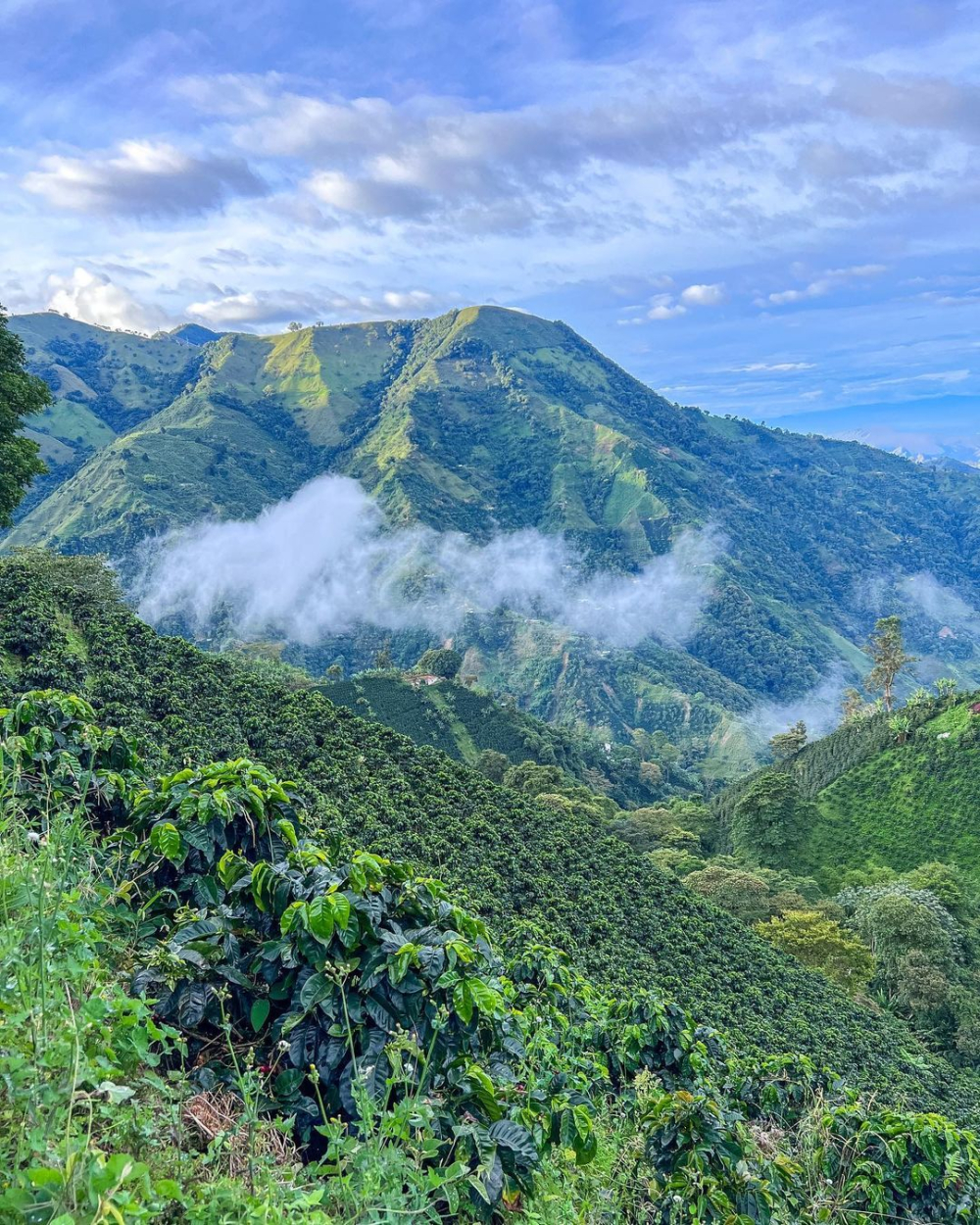
Huila stands out for its fertile volcanic soil, steady rainfall, and high-altitude microclimate, giving a balanced, gentle flavor. Farming there is mostly smallholder: about 80 percent of growers work less than 3 hectares, and family members usually handle the work themselves, so farm care and processing stay detailed. A V60 pour-over suits these lots and keeps the berry and caramel notes readable.
Colombian coffee has always been famous for its rich sweetness, full-bodied aroma, and exceptional balance, often accompanied by nutty notes and elegant fruit acidity, and is regarded by many baristas as a top-grade coffee. The Colombian beans selected by Front Street Coffee mainly come from producing regions in the south at elevations above 1,500 meters, such as Huila, Cauca, and Santander. Coffee from these areas carries delicate berry notes and caramel sweetness. This article will go through the producing region background, processing methods, and brewing flavors of each Front Street Colombian single-origin bean, including Huila, Flower Moon Night, Rose Valley, and Finca El Paraiso Sakura, and share Front Street's V60 brewing parameters and technique, giving you a comprehensive understanding of the diverse charm of Colombian coffee.
For more specialty coffee knowledge, please follow our WeChat official account: Front Street Coffee (FrontStreet Coffee)
In the eyes of many coffee professionals, Colombian coffee combines richness and sweetness, with a full aroma, sometimes showing excellent fruit acidity, outstanding balance, and often a nutty note, with a long lingering finish. Whether judged by appearance or quality, Colombian coffee always ranks among the finest. Today, Front Street will take stock of which Colombian single-origin coffee beans are worth trying, and their respective taste and flavor profiles.
The Colombian coffee beans purchased by Front Street are concentrated in southern Colombia, generally at elevations above 1,500 meters, mainly covering Huila, Cauca, and Santander. Coffee produced in these regions often has delicate acidity and berry notes, along with caramel-like aromas, and quite prominent sweetness.
Colombian Huila Representative — Front Street Coffee (FrontStreet Coffee) Colombia Huila & Front Street Coffee (FrontStreet Coffee) Colombia Flower Moon Night
Coffee from Huila benefits from fertile volcanic soil, just the right rainfall, and a high-altitude microclimate, giving it a particularly balanced and gentle flavor. Local production is mainly by smallholder farmers, with about 80% of growers farming less than 3 hectares. Because most farms are managed personally by family members and labor is rarely outsourced, farm care and coffee processing are more detailed and intensive.
Product name: Front Street Colombia Huila Coffee Beans
Region: Huila, San Agustin
Altitude: 1,750–1,950 meters
Processing method: Washed
Variety: Caturra, Catuai
Brewing flavor & taste: Nutty aroma, smooth chocolate mouthfeel, caramel sweetness, soft fruit acidity.
Acevedo Gatin Farm is located in Acevedo, Huila. The estate owner, Ramirez, came from a coffee-growing family and began working in coffee production at the age of 18. He worked in professional coffee roles in Acevedo, and later bought this estate named Acevedo Gatin and started growing Caturra. Caturra is a natural mutation of Bourbon and usually presents a refreshing fruit acidity and light sweetness in flavor. The previous estate owner of Gatin Farm launched a special processing program three years ago and guided Ramirez on how to advance the special processing project. With his passion for coffee growing, Ramirez changed the originally unsatisfactory fermentation process to anaerobic natural.
The specific method is to first anaerobically ferment the whole coffee cherry, then dry it in the sun. Overall, the anaerobic process makes the coffee beans ferment more evenly and is easier to monitor; the aerobic process is more complex and difficult to control. In an oxygen-free environment, the breakdown of sugars in the mucilage slows down, and the pH value also decreases more slowly, allowing the fermentation time to be extended, thus developing better sweetness and a more balanced flavor. The temperature of anaerobic fermentation must be controlled below 10 to 15 degrees. In a sealed, clean stainless steel fermentation vessel, the coffee beans ferment under oxygen-free conditions for three days.
Product name: Front Street Colombia Flower Moon Night
Region: Acevedo Gatin Farm, Huila, Colombia
Altitude: 1,800 m
Processing method: Anaerobic natural
Variety: Caturra
Brewing taste & flavor: Intense strawberry aroma, strawberry acidity on the palate, jam-like sweetness in the middle, a slight cocoa finish, and a juicy mouthfeel.
Santander Producing Region Representative — Front Street Coffee (FrontStreet Coffee) Colombia Finca El Arbol Rose Valley
The Santander producing region is located in northern Colombia and is a famous coffee-producing area, adjacent to the Magdalena River on the west, with a growing elevation of about 1,400 to 1,600 meters. Coffee beans from this region are known for their strong taste, long finish, and unique fresh herbal flavor.
Finca El Arbol is run by farm owner Vargas, who has been growing coffee for 20 years. At Finca El Arbol, only fully ripe coffee cherries that are bright red on the outside are picked. They are then washed to remove defective floating beans, followed by two rounds of anaerobic fermentation, and then fermentation with a special enzyme group. The farm also attaches importance to the drying stage of the coffee beans, avoiding excessively high temperatures during drying and using a slow method.
Anaerobic enzyme washed first removes defective beans through washing, and finally places the processed coffee beans into a sealed container, injecting carbon dioxide to expel oxygen. In an oxygen-free environment, the breakdown of sugars in the coffee mucilage slows down, and the pH value also decreases more slowly, extending the fermentation time, thereby developing better sweetness and a more balanced flavor.
Product name: Front Street Colombia Rose Valley
Region: Santander, Colombia
Estate: Finca El Arbol
Altitude: 1,700 m
Processing method: Anaerobic enzyme washed
Variety: Caturra
Brewing taste & flavor: Stunning peach character, accompanied by the aroma of roses and liqueur chocolate, fragrant and rich, entering the mouth like drinking peach juice. It has both the high-quality sweet-and-sour feel of black grapes and the silky mouthfeel of creamy toffee.
Cauca Representative — Front Street Coffee (FrontStreet Coffee) Colombia Finca El Paraiso Sakura
Cauca is a certified Colombian coffee region of origin, with an average altitude of 1,758 m, rising to as high as 2,100 m. The local terrain, rainfall, temperature, and volcanic soil provide suitable conditions for coffee growing. About 80% of the province is mountainous, with parallel mountain ranges distributed in the east and center, belonging to part of the Andes. The central range includes two major volcanoes, Sotara and Petacas. In terms of boundaries, Cauca is similar to other southwestern producing regions, with rainfall showing a clear monomodal distribution. The dry season mainly occurs from August to September each year, and the subsequent rainy season brings a concentrated coffee flowering season, followed by the concentrated coffee harvest season the next year.
Finca El Paraiso was started by Mr. Diego Samuel in 2008 and was initially just a small family estate of 2.5 hectares. The estate owner invested the surplus from each year's harvest into coffee agricultural research, continuously studying how to present specialty flavors better. In 2015, he participated in a local regional competition for the first time, and Colombian Finca El Paraiso coffee beans took first place. After becoming famous overnight, he gained industry recognition, which also gave him more motivation to promote specialty coffee cultivation. Through his company Indestec (Innovacion y Desarrollo Tecnologico para la Caficultura), Diego created new innovative technologies to improve and stabilize coffee quality. He said he likes to step out of his comfort zone because it always helps him keep improving.
Product name: Front Street Colombia Finca El Paraiso Sakura
Region: Cauca, Colombia
Altitude: 2,050 m
Processing method: Anaerobic natural
Variety: Bourbon
Brewing taste and flavor: Berry juice-like mouthfeel, strawberry jam, mint tea tea-like sensation, and a finish of mugwort and basil.
How Front Street Coffee (FrontStreet Coffee) Brews Front Street Colombia Coffee
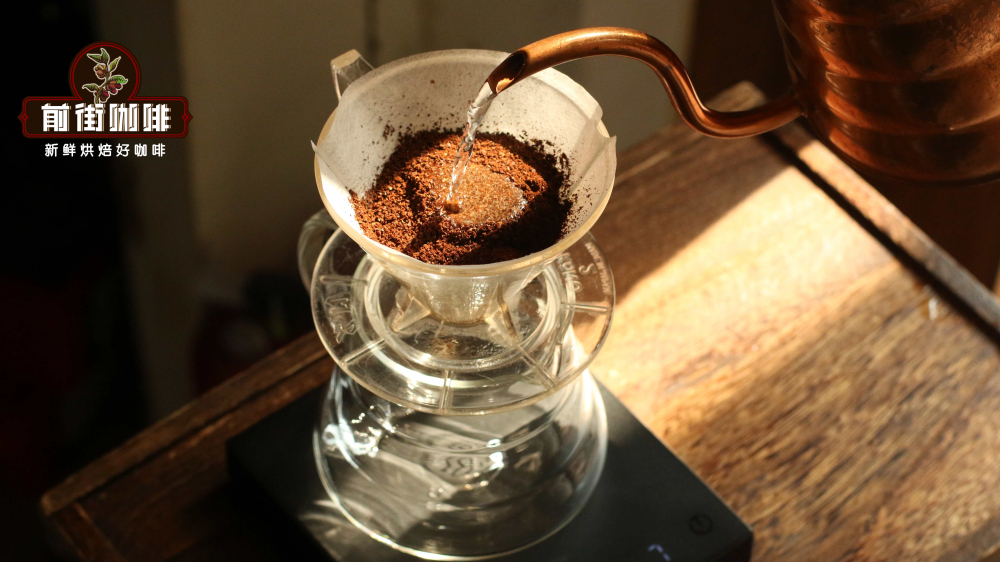
Front Street Coffee (FrontStreet Coffee) uses a V60 dripper to brew Front Street Colombian coffee beans. The V60 conical dripper has a larger opening, and together with its unique spiral curve ribs, it allows air to escape more easily, thereby improving extraction quality. The mouthfeel may not be thick enough, but the sweet-and-sour taste and distinct aroma brought out by its high concentration are exactly one of its major characteristics.
Front Street brewing parameters
Water temperature: 90–91 degrees
Grind size: EK43s setting 9 (caster sugar size)
Coffee-to-water ratio: 1:15
Front Street brewing method: In the first stage, pour 30 grams of water for a 30-second bloom, then pour 95 grams (the electronic scale shows about 125 grams), finishing the pour in about 1 minute. When the water level drops to 2/3 of the coffee bed, pour the remaining 100 grams (the electronic scale shows about 225 grams), finishing the pour in about 1 minute 40 seconds. Dripping is completed in 1 minute 55 seconds to 2 minutes. Remove the dripper and extraction is complete.
The above content is compiled by CoffeeHunters, a coffee news website.


