







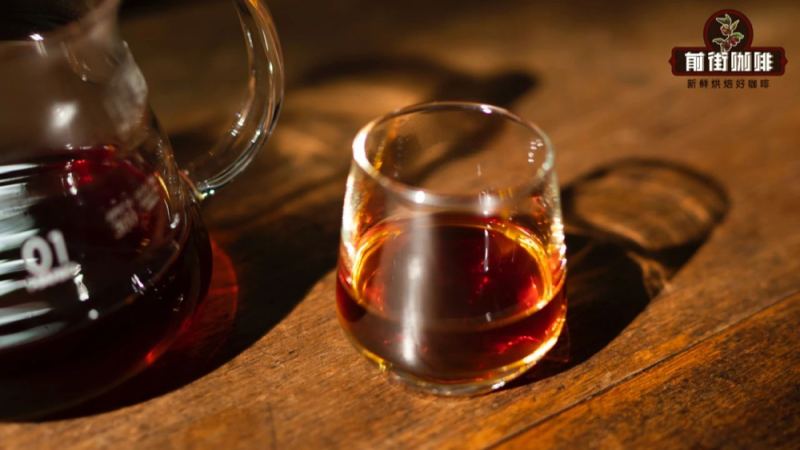
Can blending coffee beans work for pour-over brewing?
Blended coffee beans can be used for pour-over, though they behave differently from single-origin lots. A blend is built for balance and stability, so the cup tends to taste consistent rather than showing one region's terroir. Single-origin beans remain the common choice for pour-over because they highlight a specific origin's character, while blends usually serve espresso.
Freshness matters more than the single-origin or blend label. Choose roasters that print the roast date instead of a shelf-life date, and check the one-way exhaust valve on the bag. Squeeze the bag gently and smell the gas: a rich coffee aroma suggests the beans are still fresh, while a weak or rancid smell means the coffee has deteriorated.
In today's world where specialty coffee is increasingly popular, single-origin beans and blended beans each play an important role. The former is often used for pour-over to showcase the terroir of the region; the latter is mostly used for espresso, pursuing stability and balance. But can blended beans really not be used for pour-over? Is it feasible to use single-origin beans for espresso? This article will, from the perspective of Front Street Coffee, deeply analyze the essential differences between the two, answer the feasibility of using blended beans for pour-over, and emphasize the importance of coffee bean freshness. Whether you are a pour-over enthusiast or an espresso player, you can gain practical bean selection and brewing ideas from it.
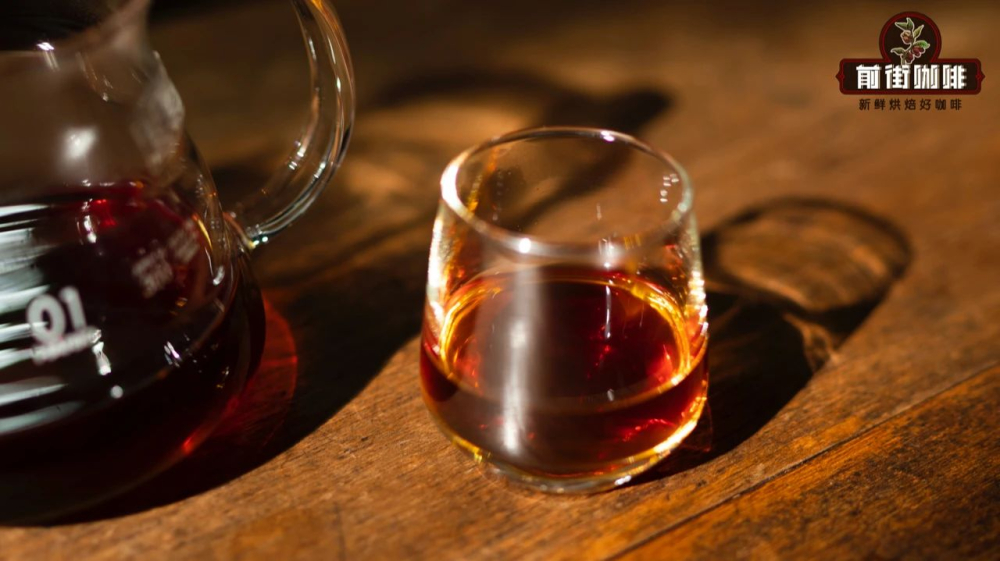
With the rise of the specialty coffee wave, more and more people are beginning to fall in love with single-origin coffee. As a result, two major camps have formed in the market: one is single-origin coffee beans, and the other is blended coffee beans. Generally speaking, single-origin beans are more commonly seen in pour-over coffee production, though quite a few specialty coffee shops also use them to extract espresso. Blended beans, on the other hand, mainly serve espresso, providing stable flavor performance for espresso. This time Front Street will talk about the differences between single-origin beans and blended beans.
Before discussing single-origin beans and blended beans, Front Street Coffee always adheres to one core principle—the freshness of coffee beans.
First, whether choosing single-origin beans or blended beans, you should choose professional roasters that clearly indicate the roasting date (rather than the expiration date or shelf life), have brand credibility, and emphasize fresh roasting. In addition, high-quality coffee packaging bags are usually equipped with a "one-way exhaust valve" (that is, the small button-like hole at the top of the coffee bag), so that the coffee beans can release naturally produced carbon dioxide.
Bring the one-way exhaust valve close to your nose, gently squeeze the coffee bag, and sniff the gas released. If it gives off a rich and tempting coffee aroma, it means the freshness is still acceptable; on the contrary, if the aroma is weak or even has a rancid smell, it indicates that this bag of coffee has long deteriorated and lost its flavor, and is not suitable for purchase. Every bag of beans produced by Front Street Coffee uses one-way exhaust valve packaging to ensure that it is still in the freshest state when it reaches enthusiasts. The reason Front Street repeatedly emphasizes fresh roasting is that after 50 days from the completion of roasting, the aroma
Single-Origin Coffee Beans
Single-origin coffee refers to coffee produced from a specific country, a specific region, or a specific estate, possessing a unique flavor that showcases the characteristics of its local terroir. For example, Front Street Coffee's Huakui coffee comes from the Buku processing station in the Guji region of Ethiopia.
The reason single-origin coffee is so distinctive is that during the purchasing process, quality control can be applied to every batch, even every single green bean. This process is like picking strawberries: "Imagine you could only pick a small bowl of the ripest, sweetest, and softest strawberries. Single-origin coffee is the same — because quality is monitored throughout, you can taste more sweetness, floral notes, and syrupy flavors in the coffee while avoiding defects and negative tastes, which is why single-origin coffee commands a relatively higher price." The roast level of single-origin coffee beans varies widely, and different roast levels will bring out vastly different flavor profiles from the same single-origin bean.
Blended Coffee Beans
Blended beans, also called mixed coffee or espresso beans, are a combination of multiple single-origin coffee beans that allows each of their strengths to be fully expressed. Blends are composed of coffee beans from different origins, aiming to achieve a more balanced taste. For instance, if one type of bean is smooth but lacks aroma, another bean rich in aroma can be added so that the strengths of different beans complement each other — whether in flavor complementing or enhancing one another — thereby creating a richer, entirely new taste experience. Sometimes the green beans are blended first and then roasted, which is called pre-roast blending; other times they are roasted separately and then blended, which is called post-roast blending. Whether pre-blending green beans or blending after separate roasting, the decision must be based on the characteristics of the coffees in the recipe — both methods are viable. Post-roast blending allows each bean to receive a different degree of roasting, bringing out the best in each component.

Front Street would like to remind you that before blending, one must first understand the flavor characteristics of different coffee varieties from around the world. Beans from different origins each have their own distinctive features, which requires the roaster to have a clear grasp of the characteristics of coffee beans from multiple regions in order to adjust the roasting curve accordingly. Different coffee beans have different personalities due to differences in variety and origin, with subtle differences in acidity, bitterness, sweetness, aroma, body, and other flavors, while single-origin coffee beans tend to focus more on showcasing the unique characteristics of a particular type of coffee.
Is Single-Origin Espresso (SOE) Just Pulling a Shot with Pour-Over Beans?
Conceptually, making espresso from single-origin pour-over beans is indeed SOE — "Single Origin Espresso" — but in practice, it is far from as simple as one might imagine.
Compared to traditional blended espresso, SOE should be an espresso with more prominent flavors. This characteristic determines that when selecting beans for SOE, one should choose coffee beans with high flavor辨识度 and intensity. If beans with weaker flavor intensity are used for SOE, the resulting espresso will taste thin and lifeless. Just think — such an SOE that has neither distinctive character nor the balance and stability of a blend would hardly be worth the trade-off.
Secondly, the roast level should be neither too dark nor too light. A darker roast will greatly diminish the regional flavors, while a lighter roast will cause the espresso machine to amplify the acidity of the light roast under high pressure, easily making the espresso sharply acidic and hard to bear; at the same time, a lighter roast also makes the beans harder, prone to under-extraction. Diminishing regional flavors and the imbalance caused by sharp acidity both deviate from the original intention of highlighting single-origin flavors. Therefore, the roasting curve for the same bean used for SOE and the roasting curve used for pour-over should be two different approaches.
Can Blended Coffee Beans Be Used to Make Pour-Over Coffee?
Blend refers to a mixture of two or more different coffee beans. In many people's impressions, blends are still associated with the traditional blend beans used for espresso. But in fact, a blend is not equivalent to espresso beans — blending is simply the concept of mixing different coffee beans for a certain purpose, not exclusive to espresso. In other words, blended beans ≠ espresso beans. Pour-over coffee is just an extraction method, and blending is just a type of coffee bean — there is no direct determining relationship between the two. Can blended coffee beans be used for pour-over? The answer is yes.
Front Street Espresso Blend Coffee Beans:
Creating blends by mixing coffee beans from different origins is also a very common blending method from the old days.
1. Stable Flavor
Coffee beans are an agricultural product — even for the same type of bean, the flavor can vary from year to year. Therefore, blending several coffee beans together can effectively solve this problem, keeping the taste basically consistent year after year.
2. Balanced Taste
Espresso machines have a characteristic of amplifying the most prominent flavor characteristics of coffee beans, so we almost never use a single variety of coffee to make Espresso — otherwise, if that bean is on the bitter side, the resulting Espresso will be exceptionally bitter; if it's on the acidic side, it will be very sour. Therefore, blending is needed to balance the various flavors.
Front Street's own roasted Front Street Strawberry Candy Espresso Blend is composed of beans from three origins — Ethiopia, Colombia, and Costa Rica. The espresso it produces has pronounced rose floral notes, raisin, and berry flavors, with a faint berry aroma lingering, rich fermentation and chocolate flavors, and a comfortable, sweet aftertaste.
Blended Beans for Pour-Over Single-Origin Coffee:
This is blending coffee beans of different varieties from the same origin. As the name suggests, it is a mixed bean produced by blending different varieties. For example, a popular Front Street Panama Butterfly Geisha Blend is famous for mixing about 70% Geisha variety with 30% Caturra and Catuai; and a recently launched Front Street Costa Rica Mirazu Estate Geisha Blend mixes half Geisha variety with half SL28, ET47, and Maico.
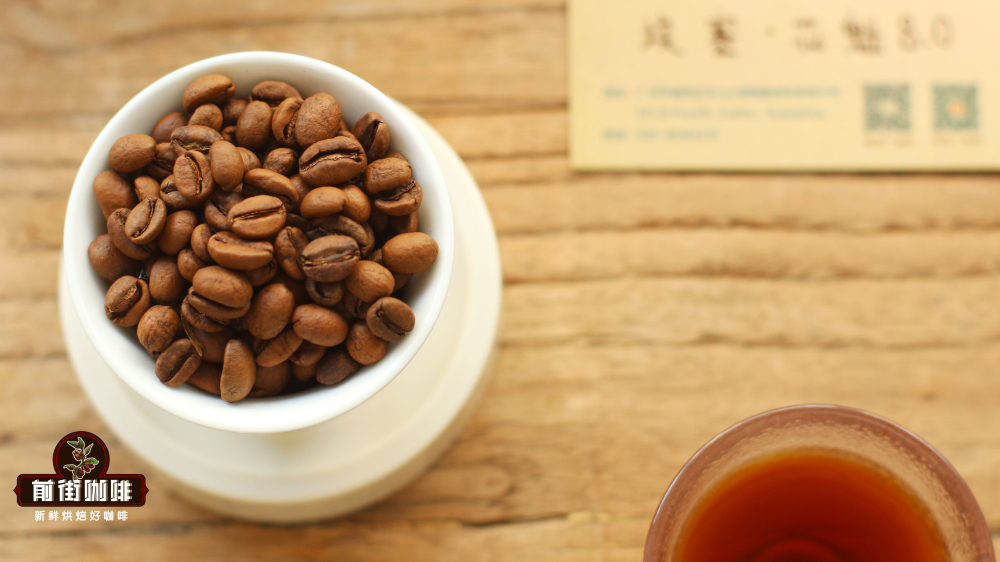
However, Front Street believes that calling coffee beans made from a mix of different varieties a "blend" is merely to highlight one particular variety, and is not a blend in the traditional sense.
Interestingly, if we also call coffee beans made from a mix of different varieties a blend, then most of the coffee beans we commonly see would also become blends — for example, common Kenyan coffees often mix SL28 with SL34, Ethiopian local heirloom varieties, and so on.
The above content is compiled by CoffeeHunters, a coffee news website.


