







How do AeroPress and French press coffee brewing differ?
AeroPress and French press coffee brewing differ in pressure, filtration, and cup style. The AeroPress combines immersion, paper filtration, and pressure extraction to make a concentrated, clean, full-bodied cup quickly. The French press uses full immersion and a metal filter, with no extra pressure when plunging, so it keeps more oils and body but leaves sediment.
Extraction principles explain the gap. The AeroPress has a chamber, filter cap, and plunger: grounds and hot water mix, then air pushed through the plunger forces liquid through the cap. The French press simply lets coffee steep, then separates liquid from grounds. Grind size and water temperature should be adjusted to each device, and beginners often start with the French press for its low barrier to entry.
The AeroPress and the French press are two coffee brewing devices that are both easy to operate yet very different in style. The AeroPress combines immersion, paper filtration, and pressure extraction to quickly produce a highly concentrated, clean, and full-bodied coffee liquid; the French press, on the other hand, separates the grounds through full immersion and a metal filter, has a low barrier to entry, and can present the complete flavor of the coffee beans. This article will compare them from the dimensions of extraction principles, grind size requirements, and water temperature recommendations, and use Ethiopian Gutingting coffee beans as a sample to record respectively the brewing parameters, operating steps, and flavor performance of Front Street AeroPress and French press, helping coffee lovers choose the appropriate device and brewing plan according to their own needs.
For more specialty coffee knowledge, please follow: Front Street Coffee ( Frontsteet Coffee )
When mentioning the differences between the Front Street AeroPress and French press, it can be understood this way: the AeroPress uses a small amount of hot water and pressure to extract a higher-concentration coffee, with a full-bodied yet clean taste; when the French press is pressed down, it does not generate additional pressure, but only completes the step of filtering out the coffee grounds. Because the barrier to entry is low and it can retain the complete flavor of the coffee beans, Front Street usually suggests that friends who are just getting into coffee start with a French press.
First, let's understand the respective extraction principles of the AeroPress and the French press.
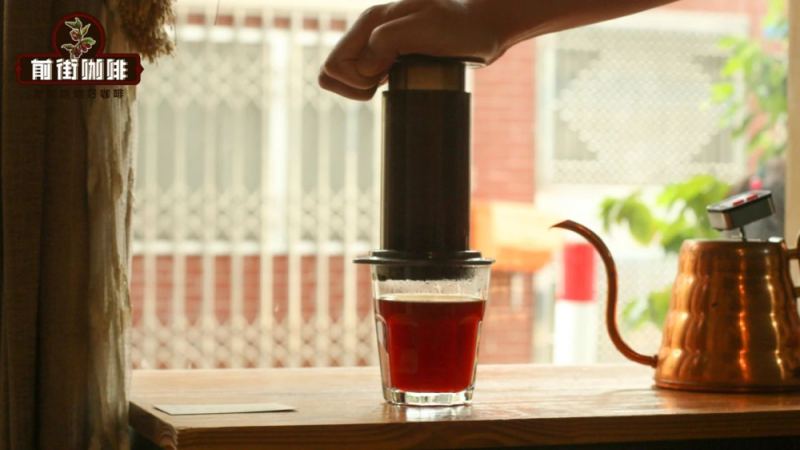
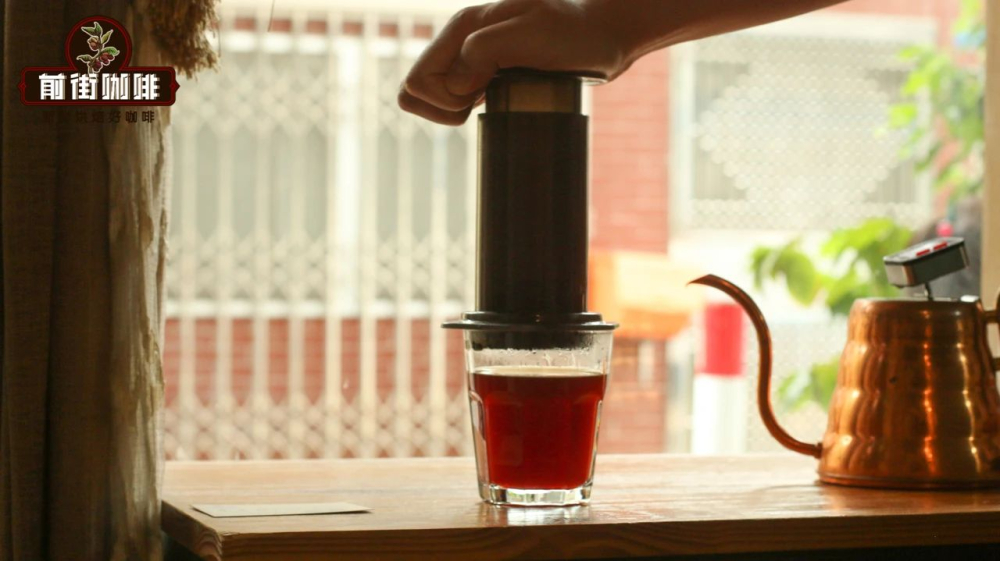
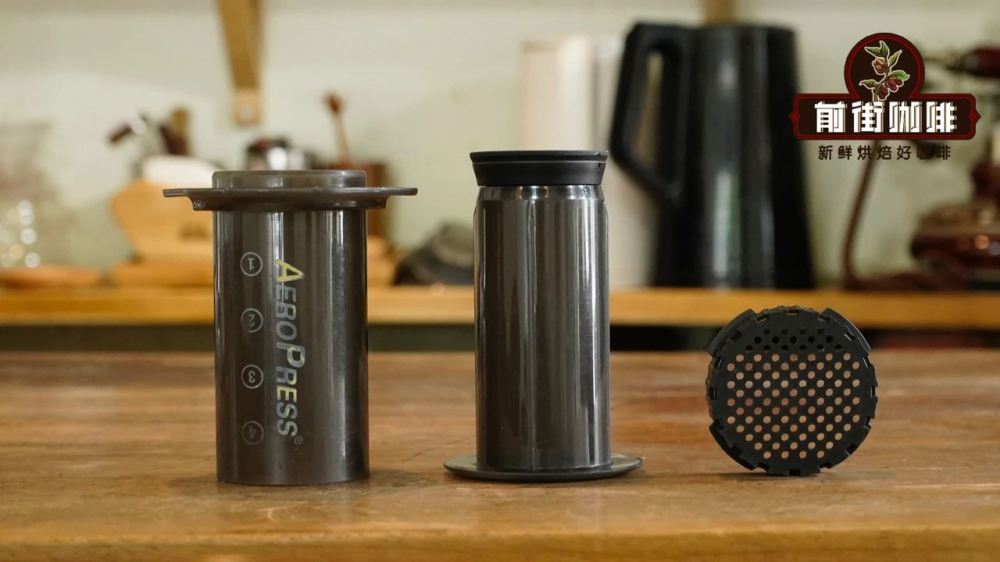
The AeroPress consists of three parts: the chamber, the filter cap, and the plunger. It combines three ideas: the immersion extraction of a French press, the paper filtration of pour-over coffee, and the pressure extraction of an espresso machine. During operation, the coffee grounds and hot water are first stirred and mixed, then air is squeezed through the plunger, forcing the liquid through the filter cap, thereby obtaining a clean-flavored coffee.
The French press method is to let the coffee fully immerse in the pot, then use a plunger with a metal filter to separate the coffee liquid from the coffee grounds. The coffee obtained in this way has a prominent full-bodied feel, can enhance texture and oils, and the final cup is also quite clean. Compared with the requirements of pour-over coffee for blooming and pouring techniques, the French press does not require much operating skill, while also offering quite a lot of room for flexible adjustment.
From the extraction principles of the two devices, it can be seen that the AeroPress can quickly obtain a highly concentrated coffee liquid, while the French press extracts the flavor of the coffee beans themselves in the simplest and most convenient way.
Next, let's look at the grind size requirements of the AeroPress and the French press.
The AeroPress is essentially a convenient and quick device that can extract espresso. Therefore, Front Street suggests that when making coffee with an AeroPress, the grind size should be adjusted to the coarseness level of espresso (very fine powder). Only very fine powder can create enough resistance with the high-pressure hot water when the plunger is pressed down, thereby truly extracting the essence of the coffee.
Front Street suggests that the coffee powder for a French press be ground coarser, roughly equivalent to granulated white sugar. If the grind is too fine, too many ultrafine particles will pass through the filter mesh, making the coffee taste not clean enough and affecting the mouthfeel. Front Street recommends a grind size for the French press the size of coarse granulated sugar.
Next, Front Street Coffee (FrontStreet Coffee) selects a Front Street Gutingting coffee from Ethiopia for brewing, to compare how the coffee flavors made by the two devices differ.
Product name: Front Street Ethiopian Gutingting Coffee Beans
Region: Ethiopia Yirgacheffe Kochere
Region altitude: 1800-2200 meters
Coffee bean variety: Heirloom local native species
Processing method: washed
Brewing water temperature
Coffee beans with different roast levels are also suited to different water temperatures. Front Street Coffee (FrontStreet Coffee) generally recommends controlling the brewing temperature between 86-93°C. When brewing dark-roasted beans, Front Street suggests a lower water temperature, about 86-88°C, because dark-roasted beans are looser in texture, absorb water efficiently, and are easy to extract; if the water temperature is too high, it easily brings out bitter and burnt notes. For brewing light-roasted beans, 90-93°C is recommended; a higher water temperature helps extract the aromatic substances and acidity of light-roasted beans (floral aromas and fruity acidity), because light-roasted beans are harder in texture, and increasing the water temperature can enhance extraction efficiency and avoid unpleasant flavors such as sharp acidity. For medium roast, 88-90°C can be chosen. This time, the Ethiopian Kochere used by Front Street is brewed at 91-92°C.
Front Street AeroPress brewing parameters
Grind size: very fine powder
Water temperature: 92 degrees
Coffee dose: 20g
Coffee-to-water ratio: 1:9
Steps for using the Front Street AeroPress:
1. Take out the filter cap, install the special AeroPress filter paper, and wet it with hot water so that the filter paper fits tightly against the filter cap.
2. Place the AeroPress upside down and steady it, pour 20 grams of ground coffee powder into the chamber, then pour in 180 grams of 92°C hot water, and start timing at the same time.
3. After pouring is complete, gently stir with a stirring stick for 50 seconds. Put on the filter cap and push upward to release excess air.

4. Flip the AeroPress over so that the filter paper and filter cap face down and the coffee grounds face up, then press down to extract, completing in about 30 seconds. At this point, about 150ml of highly concentrated coffee liquid is obtained. The total extraction time is 1 minute 30 seconds.
5. Pour the coffee liquid into 120ml of hot water to dilute it; the diluted coffee liquid makes it easier to distinguish the flavors.
6. Stir evenly and enjoy.
AeroPress brewing flavor: After dilution with hot water, a citrus acidity can be felt, the mouthfeel is clean, and the middle section has a sweet black tea note, very pleasant.
Front Street Coffee (FrontStreet Coffee) French press brewing parameters
Grind size: coarse granulated sugar size
Water temperature: 91 degrees
Coffee dose: 15g
Coffee-to-water ratio: 1:13
How to use the Front Street French press:
1. First preheat the French press with warm water; pour the ground coffee powder into the pot, then pour in 195ml of hot water (91°C). The pouring can be done with a larger flow (finish pouring in about 3 seconds), so that the coffee grounds tumble and extraction efficiency is improved.
2. After pouring is complete, pull up the filter mesh, cover the pot with the lid, and wait 4 minutes.
3. After four minutes, gently press down the plunger, pressing only to 1/4 of the pot to avoid fine grounds from the bottom surging upward.
Brewing flavor: light floral aroma, full citrus acidity, clean mouthfeel, and the sweet aftertaste of oolong tea.
The above content is compiled by CoffeeHunters, a coffee news website.


