







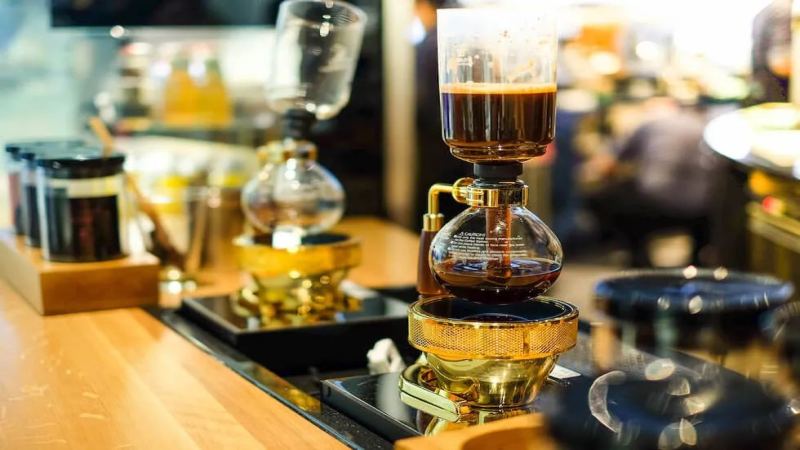
How does the siphon brewer extract coffee, and what pairs well?
The siphon brewer works by pressure difference between two chambers. Heating the lower chamber turns water into steam, raising internal pressure and pushing water into the upper chamber where it meets the coffee grounds. Removing the heat source lets the brewed coffee fall back down through the filter, completing extraction. Water temperature, grind size, and coffee-to-water ratio are the key parameters to control.
Bean choice follows flavor preference. Jamaica Blue Mountain suits a clean, balanced cup, while golden mandheling coffee brings a fuller body and low acidity that holds up in the siphon. Brazil Queen's Farm, Natural Red Cherry, Costa Rica Mozart, and Natural Huakui are also listed as options, so the same principle applies: match the bean to the profile you want.
With its unique appearance resembling chemical apparatus, the siphon pot often appears in nostalgic film and television works, carrying a touch of mystery. For coffee professionals and enthusiasts, what deserves more attention is its extraction principle and actual brewing performance. This article will start with the structure of the siphon pot, gradually dismantle its pressure-difference extraction mechanism, explain in detail the key parameters and operating procedures such as water temperature, grind size, and coffee-to-water ratio, and recommend suitable coffee beans for different flavor preferences, including Front Street brand's Jamaica Blue Mountain, Golden Mandheling, Brazil Queen's Farm, Natural Red Cherry, Costa Rica Mozart, and Natural Huakui, helping readers comprehensively master the essentials of making siphon coffee.
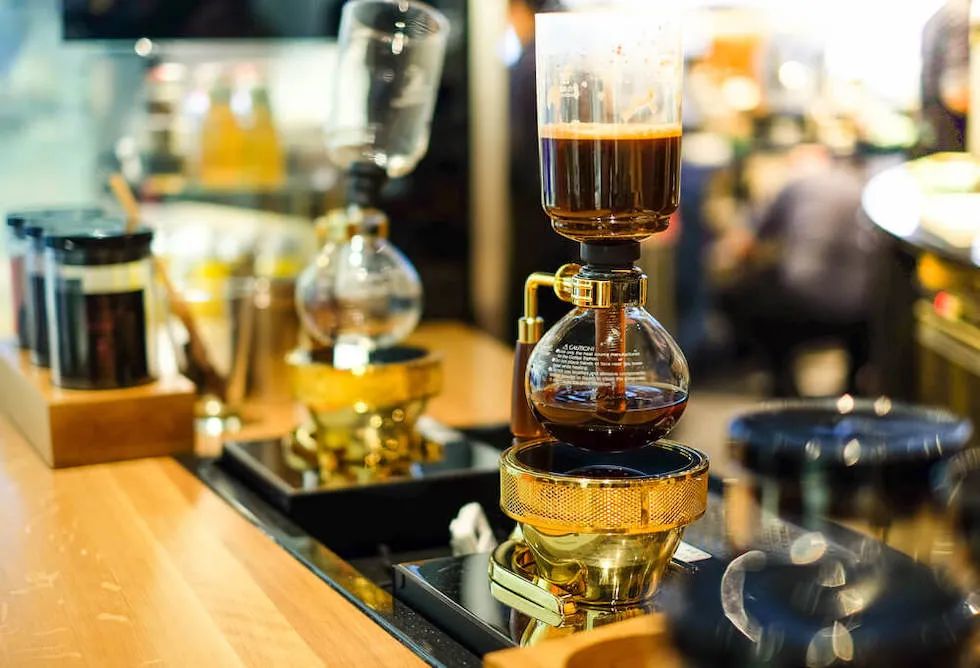
The consistent impression of siphon coffee is its distinctive appearance like chemical laboratory equipment, and because it often appears in film and television scenes with a sense of age, it always exudes a mysterious flavor. As a practitioner in the coffee industry, Front Street is most concerned with the actual operation method of the siphon pot and the flavor direction of the final extracted coffee.
The structural composition and extraction mechanism of the siphon pot
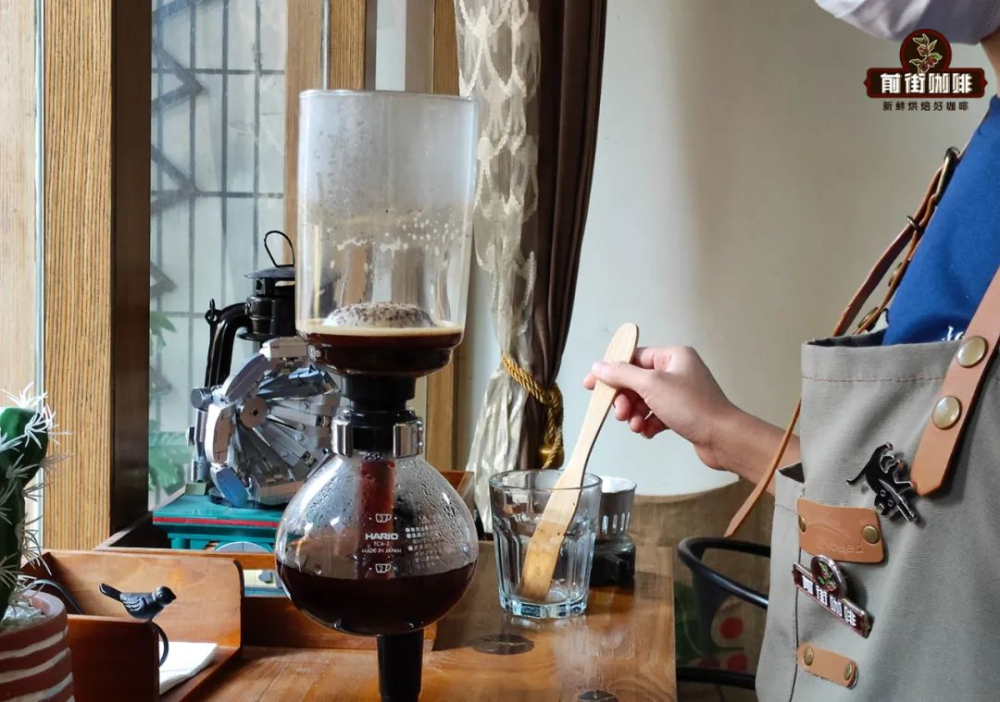
Overall, the siphon pot consists of upper and lower chambers plus a stand, with the stand connected to the lower chamber and serving the function of fixation and support. The lower chamber is basically spherical, and this shape helps distribute heat evenly during heating. The upper chamber is cylindrical, narrowing at the bottom and extending into a slender guide tube, with a rubber ring fitted at the joint. When the upper chamber is placed on top of the lower chamber, the rubber ring provides a seal. At this point, heating the lower chamber causes the water inside to heat up and vaporize into steam, increasing the internal pressure of the lower chamber and pushing the water up into the upper chamber. The upper chamber is precisely where the coffee grounds and water come into contact. Once the heat source is removed, the coffee liquid falls back into the lower chamber, and the siphon coffee extraction is thus completed.
Common heating methods include alcohol lamps, gas burners, and halogen lamps, and Front Street uses an alcohol lamp. The components used to intercept coffee grounds are mainly flannel filter cloth and round filter paper. Flannel is a more traditional siphon filtration material, and its advantage lies in its ability to retain oils in the coffee; its drawback is that use and cleaning are relatively cumbersome. Filter paper is a newer filtration option, characterized by more thorough filtration, capable of blocking out some fine substances (including but not limited to oils). If it is only for personal drinking and coffee is not brewed frequently, Front Street recommends using flannel, as this allows a more complete experience of the original taste of siphon coffee. The bead connecting the filter serves, on one hand, to prevent sudden boiling when the upper chamber is inserted into the lower chamber, and on the other hand, it can also help judge the water temperature through the small bubbles around the bead. In addition to the siphon pot set and heating equipment, making siphon coffee also requires a stirring spoon and a wet cloth.
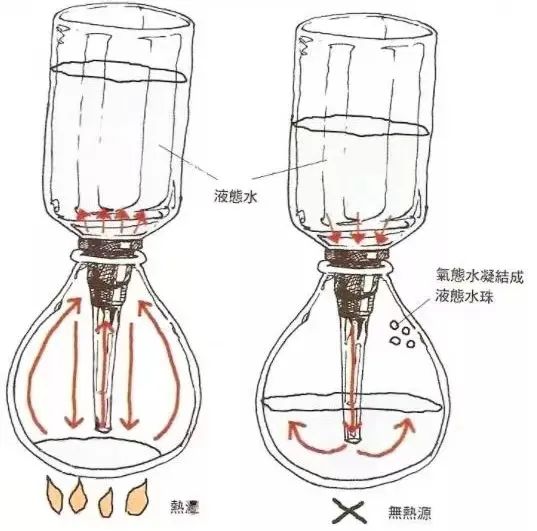
Siphon pot extraction relies on pressure difference: first heat the water in the lower chamber to boiling, then insert the upper chamber, causing a high-pressure state inside the lower chamber. The pressure difference between the upper and lower chambers pushes the hot water upward, where it mixes with the coffee grounds in the upper chamber and completes extraction. After extraction ends, remove the heat source from the lower chamber, and the pressure difference between the upper and lower chambers suddenly decreases. The siphon effect causes the coffee extract to flow back into the lower chamber. If you want to speed up the return flow, you can wipe the lower chamber with a wet cloth to further reduce the pressure difference between the upper and lower chambers, and the coffee liquid will flow back more quickly.
How to operate the siphon pot
To make a delicious cup of siphon coffee, some brewing details still need attention. Here, Front Street uses its own roasted Front Street Brazil Queen's Farm coffee beans to demonstrate the specific operation.
Water temperature: 88℃
Grind size: 90% passing through a No. 20 sieve
Coffee dose: 18 grams
Coffee-to-water ratio: 1:10
1. Pour 180ml of warm water into the lower chamber, and wipe the moisture on the outside of the pot body with a dry cloth (to prevent the pot from cracking during heating). Light the alcohol lamp and place it under the lower chamber to heat.
2. Take out the upper chamber of the siphon pot, secure the filter cloth onto the upper chamber, hang the fixing hook onto the wall of the glass tube at the bottom of the upper chamber, and insert it into the lower chamber at an angle.
3. Pay attention to the state of the lower chamber. When continuous small bubbles appear, straighten the upper chamber and insert it vertically into the lower chamber so that the upper and lower chambers connect tightly.
4. After the water in the lower chamber rises into the upper chamber, pour in the ground coffee powder, and stir clockwise from outside to inside with a stirring rod for 10 seconds to ensure all coffee grounds are saturated with water.
5. Then start timing. After 40 seconds, stir the coffee liquid clockwise again with the stirring rod for 5 seconds; immediately afterward, quickly remove the alcohol lamp and extinguish the heat source, and the coffee liquid begins to flow back from the upper chamber to the lower chamber; during the return flow, you can wipe the lower chamber of the siphon pot with a wet cloth to speed up the return flow. The total extraction time is about 1 minute 10 seconds.
6. Then gently remove the upper chamber, pour the coffee liquid from the lower chamber into a cup, and it is ready to enjoy. The siphon coffee made this way has a very rich aroma. Although it is not as transparent and clean as pour-over coffee, the oils floating on the surface bring a lot of body.
What coffee beans are suitable for pairing with the siphon pot?
In the past, people mainly pursued rich and mellow coffee flavor and mouthfeel. When using a siphon pot, the vast majority chose medium-dark roasted coffee beans. The extracted siphon coffee had both a rich and mellow aroma and a round, balanced mouthfeel. Therefore, priority can be given to medium-roast coffee beans such as Front Street Jamaica Blue Mountain Coffee, Front Street Golden Mandheling Coffee, Front Street Brazil Queen's Farm Coffee, and Front Street Papua New Guinea Bird of Paradise Coffee.
Now, as everyone's pursuit of refined coffee flavors increases, choices on the market are also becoming more and more abundant. In addition to the several mentioned above, all of the more than fifty single-origin coffee beans on Front Street's bean list can be used to make siphon coffee. Here, Front Street recommends several relatively classic flavor-oriented coffee beans, and everyone can choose the coffee beans that suit their own taste according to their preferences.
Recommendation for siphon coffee beans with refreshing tropical fruit acidity and sweetness—Front Street Yirgacheffe Natural Red Cherry
This Front Street Natural Yirgacheffe coffee bean on Front Street's bean list was originally used for pour-over drip brewing. Coffee cherries at just the right ripeness retain complete fruit pulp and are dried under sunlight. The inner bean absorbs a large amount of sugar from the fruit pulp, and the coffee shows very high sweetness and a strong fruity aroma. When Front Street daily extracts Front Street Natural Red Cherry in pour-over form, one can taste obvious ripe fruit acidity and sweetness, reminiscent of red berries, with a finish carrying the aroma of fermented tea. When extracted with a siphon pot, the black coffee presents a ripe fruit mouthfeel and a pleasant sweet-and-sour sensation, with almost no bitterness detectable, tasting like a cup of fruit tea.
Recommendation for siphon coffee beans with rich fermented fruit aroma—Front Street Costa Rica Mozart
Raisin honey processing is a method that retains 100% of the coffee's pectin and uses zero water. Ripe, plump fruits retain the pectin layer before drying for sealed fermentation, maximizing the sweetness of the coffee beans. The Front Street Costa Rica Mozart coffee beans recommended by Front Street present rich rose fragrance, raisins, and the high sweetness of white wine when pour-over brewed. The coffee brewed with a siphon pot presents full tropical fruit acidity and sweetness, with a round mouthfeel and pleasant sweet-and-sour balance.
Recommendation for siphon coffee beans with refreshing floral and fruity aroma—Front Street Natural Huakui
Front Street Natural Huakui coffee beans are produced in the Guji Hambela region of Ethiopia, and the geology of this area is nutrient-rich black soil. The coffee beans produced carry a rich fruity aroma, and the natural processing method highlights the coffee's clear floral and citrus flavors. After medium-light roasting, its creamy strawberry flavor is emphasized.
The above content is compiled by CoffeeHunters, a coffee news website.


